Key Findings
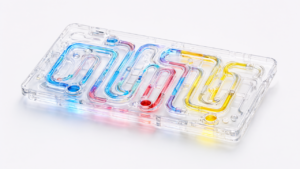
An innovative CRISPR/Cas13-based one-pot dual-channel biosensor has been developed for the rapid and accurate detection of Escherichia coli O157:H7. This novel technology enables the simultaneous detection of two gene markers, achieving exceptionally high sensitivity with a detection limit of 54 colony-forming units per milliliter (CFU/mL).
Technical / Clinical Details
The developed biosensor leverages the CRISPR/Cas13 system, known for its ability to specifically recognize target RNA sequences and subsequently exhibit non-specific RNA cleavage activity. Key features of this system include:
- Dual-Gene Detection: The biosensor simultaneously targets two distinct gene markers specific to E. coli O157:H7: the ‘rfbEO157’ gene associated with the O157 serotype and the ‘fliCH7’ gene linked to the H7 flagellar antigen. This dual targeting significantly enhances the diagnostic reliability and specificity compared to single-marker detection approaches.
- One-Pot Reaction: All reaction steps proceed within a single vessel, eliminating the need for complex sample preparation or multiple transfers. This simplifies the operational procedure and minimizes the risk of contamination. Combined with isothermal amplification techniques (e.g., RPA or LAMP), the entire process from DNA/RNA extraction to detection can be performed at room temperature or a constant low temperature.
- High Sensitivity: The biosensor achieves a remarkably low limit of detection (LOD) of 54 CFU/mL. This performance surpasses many conventional microbiological testing methods, enabling detection of very low-level contamination in early stages.
- Colorimetric or Fluorescent Output: The detection results can be obtained as a colorimetric change visible to the naked eye, or as a fluorescent signal readable by a portable fluorimeter. This allows for rapid on-site interpretation without the need for sophisticated laboratory equipment.
When specific guide RNAs (crRNAs) and the Cas13 enzyme bind to target viral RNA, Cas13 is activated, inducing non-specific cleavage of nearby reporter RNAs (e.g., those labeled with a fluorescent dye and a quencher). This action generates a fluorescent signal or color change, indicating the presence of the pathogen.
Background & Context
E. coli O157:H7 is a major cause of foodborne illness, capable of causing severe conditions like hemolytic uremic syndrome (HUS), which can be fatal. Current detection methods often require several days for culture-based identification or rely on expensive and complex instrumentation like real-time PCR. Such prolonged detection times increase the risk of contaminated food reaching the market, leading to large-scale recalls and public health hazards. CRISPR-based biosensors address this critical gap by enabling rapid, highly sensitive, and on-site detection, thereby significantly contributing to public health protection.
Strategic Significance & Outlook
This CRISPR/Cas13-based biosensor holds vast potential for broad applications in food safety monitoring, infectious disease surveillance, and environmental pathogen detection. Its value as a rapid diagnostic tool is particularly significant for developing countries and resource-limited settings. Future research is expected to focus on further expanding its multiplexing capabilities, adapting it for different pathogens, and advancing field testing and standardization for practical implementation. This technology promises to fundamentally improve early intervention and management of infectious diseases and strengthen food security.