Key Findings
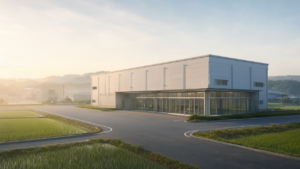
GlobalFoundries is proceeding with a substantial $16 billion U.S. investment plan, significantly bolstered by funding from the U.S. CHIPS Act. This initiative aims to triple the production capacity at its Malta fabrication facility over the next decade. The plan also encompasses an 11 billion Euro expansion at its Dresden plant, which is already Europe’s largest semiconductor factory, with a target of producing 1.5 million wafers annually by the end of 2028.
Technical Details
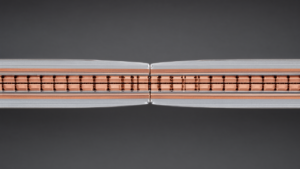
This massive investment primarily targets strengthening the production capacity of mature node semiconductors for the automotive, industrial, and IoT markets. Amidst accelerating demand for AI chips, leading foundries like TSMC and Samsung are allocating vast resources to cutting-edge nodes and advanced packaging (e.g., 2nm, 3nm). This shift has created a tightening supply in mature nodes, where GlobalFoundries plays a crucial role in bridging this market gap. Furthermore, EXTOLL and Chip Interfaces have announced the industry’s first integrated UCIe (Universal Chiplet Interconnect Express) IP solution for GlobalFoundries’ FDX (FD-SOI) technology. This solution promotes the standardization of chiplet-to-chiplet connections and facilitates broader chiplet adoption across diverse applications, further strengthening GlobalFoundries’ ecosystem.
Background and Context
The global semiconductor supply chain is undergoing a significant restructuring driven by geopolitical risks and AI-led demand. As the U.S., Europe, and Japan strive to restore and strengthen domestic semiconductor manufacturing capabilities, government incentives like the CHIPS Act are playing a pivotal role. TSMC, for instance, is reallocating 40-90nm production capacity for CoWoS advanced packaging and silicon interposer manufacturing for AI accelerators, resulting in a reduction of mature node wafer supply. In this scenario, mature node foundries like GlobalFoundries are significantly benefiting as customers previously using advanced nodes now seek alternative capacity.
Strategic Significance and Outlook
GlobalFoundries’ investments in its Malta and Dresden fabs are indispensable for substantially enhancing the resilience of the U.S. and European semiconductor supply chains and increasing geopolitical autonomy. The production target of 1.5 million wafers per year will meet robust demand in growing sectors such as AI, automotive, and industrial, contributing to the stable supply of mature node markets. The integration of the UCIe IP solution is expected to expand GlobalFoundries’ role in the chiplet ecosystem and contribute to increased integration density in AI and HPC applications. This is projected to lead to improved profitability and market share for the company in the long term.
Source: https://www.tomshardware.com/tech-industry/semiconductors/the-trailing-edge-foundry-roadmap-examined