Key Findings
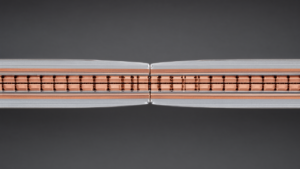
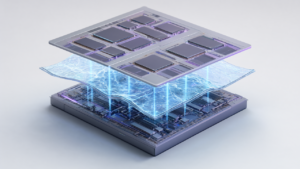
Hybrid bonding is an innovative 3D integration technology in semiconductor packaging that achieves both electrical continuity and mechanical integrity by combining metal-to-metal (primarily Cu-Cu) and dielectric-to-dielectric (oxide-to-oxide) bonding in a single interface. This technology eliminates the need for solder or microbumps and enables simultaneous bonding at ultra-fine pitches, dramatically advancing 3D IC stacking for AI accelerators and chiplet platforms.
Technical Details
The primary advantage of hybrid bonding lies in its ability to perform simultaneous Cu-to-Cu and oxide-to-oxide bonding at sub-micron pitches. This dramatically miniaturizes interconnect pitches and substantially reduces parasitic capacitance and inductance compared to traditional packaging. Consequently, data transfer speeds between chips are enhanced, and power consumption is mitigated. For instance, conventional microbumps in HBM (High-Bandwidth Memory) stacks create parasitic capacitance issues, acting as bottlenecks for speed and performance. A transition to hybrid bonding is considered the only appropriate method to fundamentally resolve this issue. Hybrid bonding also offers potential fundamental solutions for challenges like increased HBM PHY power and thermal management.
Background and Context
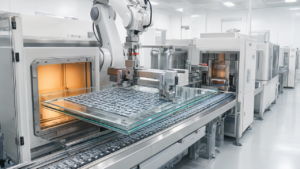
With the rapid advancement of AI, AI chips are becoming increasingly complex, demanding high-density and high-speed data processing capabilities. As Moore’s Law approaches its limits, 3D integration has emerged as a crucial means to enhance semiconductor performance and optimize power efficiency. Hybrid bonding stands at the forefront of this 3D integration, holding the potential to significantly boost AI hardware performance. Equipment manufacturers like KLA and Applied Materials also anticipate increased demand for high-end inspection systems and manufacturing equipment to address the growing complexity of packaging due to the proliferation of chip stacking and hybrid bonding, accelerating industry-wide investment in this technology.
Strategic Significance and Outlook
The evolution of hybrid bonding technology will establish new benchmarks for performance and efficiency in AI accelerators, HPC systems, and chiplet-based designs. Enhanced interconnect density and reduced parasitic effects will alleviate data movement bottlenecks, enabling the development of smaller, more powerful AI chips. This technology is key to realizing next-generation 3D packaging solutions such as Intel’s Foveros Direct, which achieves over 12 Gb/s for HBM4e and 64 Gb/s for UCIe interfaces, and TSMC’s SoIC. Hybrid bonding will continue to be an indispensable technology driving semiconductor innovation in the AI era, pushing the limits of computational capability.