Background
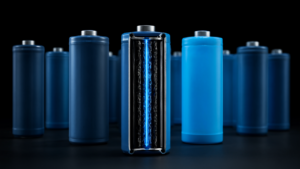
The proliferation of electric vehicles (EVs), the evolution of portable electronic devices, and the integration of renewable energy sources (solar, wind) into the grid have dramatically escalated the demand for high-performance energy storage devices in modern society. While existing lithium-ion batteries and supercapacitors continue to improve, there is a pressing need for next-generation devices offering higher energy density, greater power output, longer lifespan, and enhanced safety. MXene is emerging as a novel material to meet these demands, drawing attention alongside graphene and other 2D materials. Its multifunctionality holds the potential to address multiple challenges with a single material, opening new frontiers in material science and energy engineering.
Key Findings
Recent research has underscored the diverse multifunctional properties of MXene and MXene hybrid composites, including high electrical conductivity (approximately 2.5 × 10⁶ S/m), large surface area, and exceptional electrochemical performance. Particularly in the energy storage sector, these composite materials demonstrate superior performance, achieving a specific capacitance of approximately 405 F g⁻¹ and a volumetric capacitance of approximately 370 F cm⁻³ in supercapacitors, alongside a cycle stability of approximately 92% in lithium-ion batteries. These achievements significantly contribute to the realization of next-generation, high-efficiency energy storage devices.
Technical Details
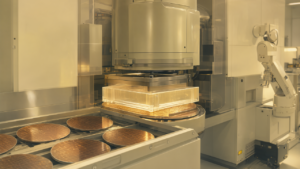
MXene is a family of 2D materials composed of transition metal carbides, nitrides, or carbonitrides, exhibiting exceptional properties due to their unique layered structure and surface functional groups. High electrical conductivity facilitates rapid charge carrier movement, enhancing electrochemical reaction kinetics. Furthermore, a large specific surface area provides numerous sites for ion adsorption and desorption, which is crucial for achieving high capacitance in supercapacitors. In hybrid composites, MXene is integrated with polymers or other nanomaterials, further improving structural stability and electrochemical performance. For instance, introducing polymers between MXene layers can suppress restacking (aggregation) of MXene sheets and promote ion transport. The significant specific capacitance (approximately 405 F g⁻¹) and volumetric capacitance (approximately 370 F cm⁻³) are critical performance indicators for supercapacitors, demonstrating their high energy storage capability. A cycle stability of approximately 92% in lithium-ion batteries signifies that performance is maintained over long periods of repeated charging and discharging, thereby extending device lifespan and reliability. Manufacturing strategies involve top-down etching for MXene exfoliation, followed by subsequent composite fabrication processes.
Outlook
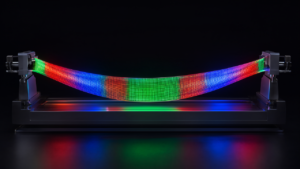
MXene and its hybrid composite materials are highly likely to form the foundation for next-generation energy storage technologies. Future research and development will focus on further optimizing material synthesis processes, reducing manufacturing costs, and scaling up for integration into practical devices and large-scale production. Specifically, demonstration tests are anticipated across diverse application areas, including flexible electronics, wearable sensors, fast-charging EV batteries, and long-life, high-capacity energy storage systems (ESS) for smart grids. The widespread adoption of this technology will play an indispensable role in achieving an energy-efficient society and building sustainable energy systems.