Key Findings
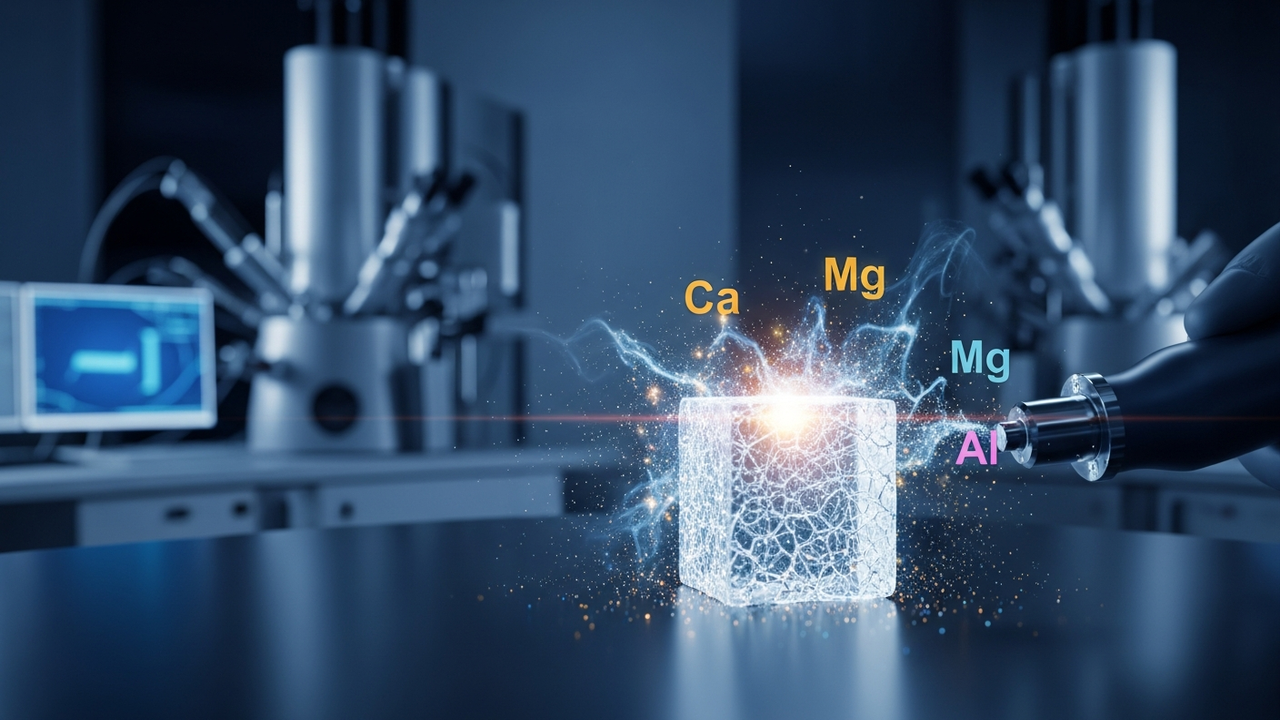
In research aimed at improving all-solid-state lithium battery performance, it has been discovered that cation doping with elements such as Ca, Mg, and Al significantly enhances the ionic conductivity and reduces the activation energy of halide solid electrolytes (Li3InCl6 and Li3ScCl6). Specifically, certain doped structures, including Li2.5InCa0.25Cl6 and Li2.5ScMg0.25Cl6, exhibit optimal conductivity and the lowest activation energy, contributing substantially to improved ion transport efficiency. This finding provides novel guidelines for the design of high-performance halide solid electrolytes.
Technical & Clinical Details
- The study employed a method of doping small amounts of cation elements with different valences, such as Ca, Mg, and Al, into the crystal structure of halide solid electrolytes. This doping strategy allowed for the precise tuning of lithium ion vacancy concentrations within the electrolyte, optimizing the pathways for lithium ion migration.
- The doped cations were observed to increase the ionic potential (ratio of ionic charge to radius), which in turn promotes cooperative ion migration—a phenomenon where multiple ions move in a concerted manner. Cooperative migration is a critical mechanism for efficient ion transport within solid electrolytes.
- As a result, the doped electrolytes exhibited significantly higher ionic conductivity and lower activation energy required for ion migration compared to their undoped counterparts. This suggests that batteries using these electrolytes could perform better at low temperatures and enable faster charging and discharging.
- Specific optimal compositions, such as Li2.5InCa0.25Cl6 and Li2.5ScMg0.25Cl6, were identified, indicating their potential as new benchmarks for high-performance halide solid electrolytes.
Background & Context
All-solid-state batteries are considered a next-generation technology poised to resolve the safety and energy density issues of conventional liquid-electrolyte lithium-ion batteries. Among various candidates, halide solid electrolytes are regarded as promising due to their high ionic conductivity, excellent chemical stability, and relatively good processability. However, further improvements in ionic conductivity and interfacial stability, including suppression of dendrite formation, were crucial for their enhanced performance and practical application. This research addresses these challenges from a materials design perspective.
Strategic Significance & Outlook
This cation doping strategy opens new avenues for the molecular design of high-performance halide solid electrolytes. Improvements in ionic conductivity and reductions in activation energy directly translate to enhanced energy density, power output, low-temperature performance, and lifespan of all-solid-state batteries. Moving forward, it is anticipated that these optimized doped halide electrolytes will be integrated into actual all-solid-state battery cells for practical validation. This technology holds the potential to contribute to the realization of next-generation batteries for a wide range of applications demanding high power and safety, including electric vehicles (EVs), portable electronic devices, and aerospace.
Source: https://pubs.acs.org/doi/10.1021/acssuschemeng.6c01721