Key Findings
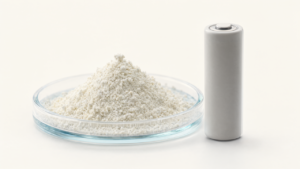
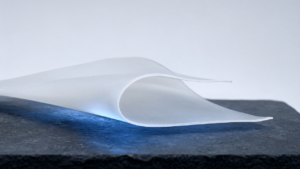
Towards the realization of high-performance all-solid-state lithium metal batteries (ASSLMBs), a molecularly designed solid polymer electrolyte (PH-PVDC SPE) has been developed. This electrolyte modifies polyvinylidene fluoride-hexafluoropropylene (PVDF-HFP) with polyvinylidene chloride (PVDC). The optimized PH-PVDC-10% SPE achieves high ionic conductivity, a favorable lithium-ion transference number, and excellent interfacial stability, enabling stable cycling for over 3000 hours in Li||Li symmetric cells.
Technical & Clinical Details
- The developed PH-PVDC-10% SPE demonstrated a high ionic conductivity of 7.07 × 10⁻⁴ S cm⁻¹ and a lithium-ion transference number (contribution ratio of Li⁺) of 0.62. High ionic conductivity reduces internal battery resistance and improves charge-discharge efficiency.
- This SPE exhibited excellent interfacial stability with the Li metal anode, achieving remarkably stable charge-discharge cycling in Li||Li symmetric cells for over 3000 hours. This suggests effective suppression of lithium dendrite growth.
- In practical battery cell tests, a Li||LFP cell, combining a Li metal anode with a lithium iron phosphate (LFP) cathode, achieved a high capacity retention of 97.5% after 300 cycles at a fast charge/discharge rate of 0.5C.
- Furthermore, a Li||NCM811 cell, using a high-nickel cathode (NCM811), maintained a capacity retention of 90.3% after 100 cycles at a 0.2C rate. This demonstrates high compatibility with various cathode materials.
- The PVDC modification is suggested to promote the formation of a LiCl-LiF composite solid electrolyte interphase (SEI) layer, which plays a crucial role in inhibiting lithium dendrite growth.
Background & Context
All-solid-state lithium metal batteries are considered superior to conventional liquid-electrolyte lithium-ion batteries in terms of higher energy density, enhanced safety, and longer lifespan, making them highly anticipated next-generation batteries for electric vehicles (EVs) and portable electronic devices. However, ensuring interfacial stability between the lithium metal anode and the solid electrolyte, and suppressing lithium dendrite growth, have been major challenges for practical implementation. Polymer solid electrolytes, in particular, are considered promising due to their flexibility and simpler manufacturing processes, but improvements in ionic conductivity and mechanical strength have been required.
Strategic Significance & Outlook
The development of this PVDC-modified PVDF-HFP electrolyte significantly advances the practical application of high-performance all-solid-state lithium metal batteries. The ability to achieve both long lifespan and high capacity retention directly translates to extended EV driving ranges and improved battery reliability. Future efforts will focus on reducing the manufacturing cost and scaling up this SPE, as well as evaluating its long-term reliability under more demanding conditions. If commercialized, this technology is expected to have a revolutionary impact on a wide range of sectors, including next-generation electric vehicles, aerospace, and high-capacity electronic devices.