Key Findings
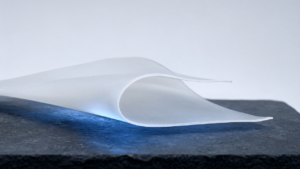
To significantly enhance the performance of lithium-sulfur (Li-S) batteries, an innovative nanofiber-constructed hybrid composite polymer electrolyte (CPE) has been developed. This CPE integrates poly(ionic liquid)-modified aramid nanofibers (PIL@ANFs) with sulfide-based lithium thiophosphate (Li3PS4, LPS) nanoparticles. The new CPE demonstrates high ionic conductivity of approximately 10⁻³ S cm⁻¹, a high lithium-ion transference number (Li⁺ contribution ratio) exceeding 0.7, and robust interfacial stability even at 60°C.
Technical & Clinical Details
- The developed composite polymer electrolyte (CPE) primarily consists of two innovative components. One is poly(ionic liquid)-modified aramid nanofibers (PIL@ANFs), which construct a ‘dual pathway’ for Li⁺ transport. These PIL-coated nanofibers function as a three-dimensional scaffold for Li⁺ transport, enhancing ionic conductivity.
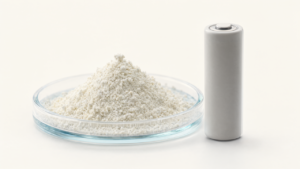
- The other key component is sulfide-based lithium thiophosphate (Li3PS4, LPS) nanoparticles, which increase the mechanical strength of the CPE and simultaneously provide a catalytic sulfide interface. LPS nanoparticles also act as a catalyst, promoting the reaction of the sulfur cathode and suppressing the polysulfide shuttle effect in Li-S batteries.
- This hybrid composite achieves both high ionic conductivity (approximately 10⁻³ S cm⁻¹) and a high Li⁺ transference number (>0.7). This signifies that lithium ions efficiently move within the electrolyte and constitute the majority of charge carriers in the electrolyte.
- Furthermore, robust interfacial stability was confirmed even in high-temperature environments of 60°C. This is highly important for extending the practical operating temperature range of Li-S batteries and improving their reliability.
Background & Context
Lithium-sulfur batteries theoretically possess an energy density approximately five times higher than conventional lithium-ion batteries and attract significant attention as a next-generation battery due to the low cost and abundance of sulfur. However, low electrical conductivity of sulfur, volume changes during charge-discharge, and the shuttle effect of soluble polysulfides (irreversible loss of active material) have been major challenges hindering their practical implementation. In particular, the interfacial stability between the sulfur cathode and electrolyte is a critical factor determining the cycle life and efficiency of Li-S batteries.
Strategic Significance & Outlook
The development of this nanofiber-constructed CPE offers a comprehensive solution to long-standing challenges in lithium-sulfur batteries. The combination of high ionic conductivity, Li⁺ transference number, robust interfacial stability, and catalytic action has the potential to significantly improve the energy density, cycle life, and charge-discharge efficiency of Li-S batteries. Future efforts will focus on scaling up the manufacturing process and reducing the cost of this technology. If commercialized, this CPE is expected to be a powerful driving force for the widespread adoption of Li-S batteries in a wide range of fields requiring high energy density, such as electric vehicles (EVs), aerospace, and large-scale energy storage.