Key Findings
A new research preprint reports the successful development of feeder-free protocols for generating mature and functional iPSC-derived natural killer (iNK) cells, utilizing the high-throughput combinatorial screening platform, CombiCult®. This innovative protocol demonstrated successful translation to stirred-tank bioreactor systems, proving a significant increase in iNK cell productivity. The iNK cells generated exhibited robust cytotoxic activity against tumor cells in vitro, positioning this as a critical manufacturing breakthrough for the development of scalable allogeneic immunotherapy products. This represents an important step forward in accelerating the commercialization of iNK cell therapies.
Technical and Clinical Details
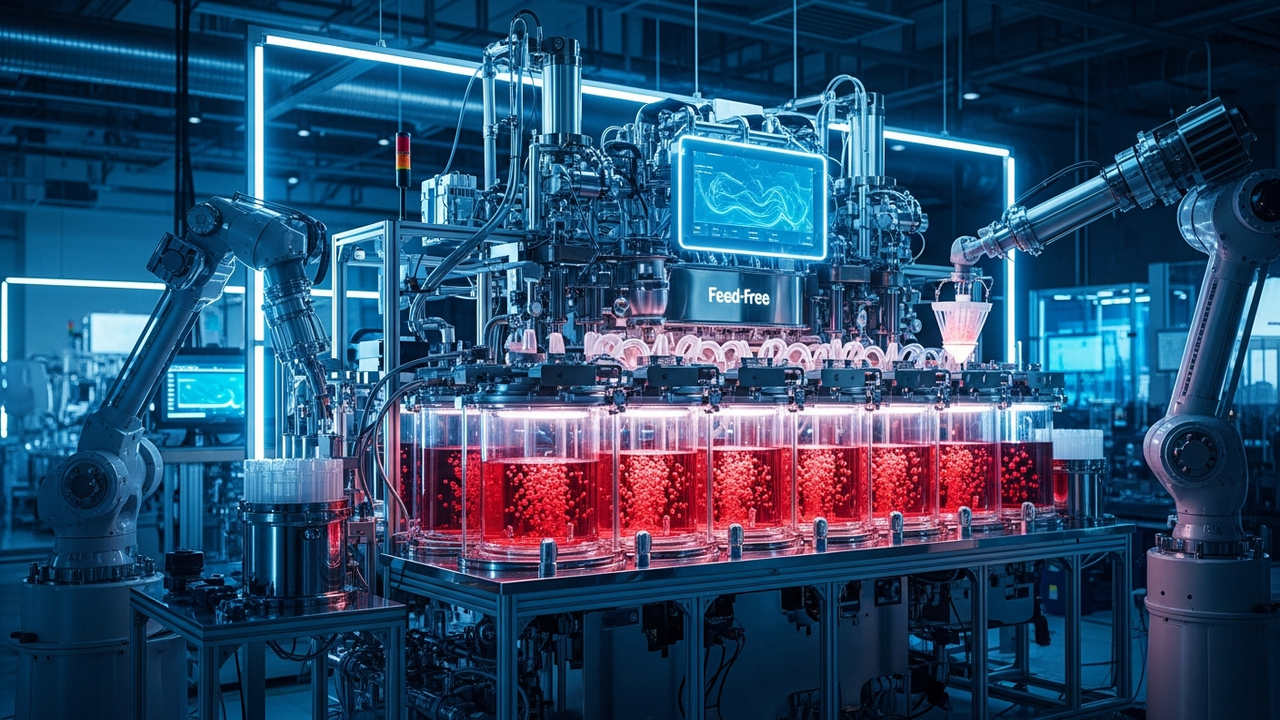
The CombiCult® screening platform provides a high-throughput methodology to efficiently evaluate various combinations of culture factors and conditions, optimizing cell differentiation, proliferation, and functionality. In this study, CombiCult® was employed to identify protocols that promote iPSC differentiation into NK cells while simultaneously enabling culture without feeder cells (an auxiliary cell layer that supports growth). Feeder-free culture is crucial for reducing manufacturing costs and complexity, and for simplifying GMP (Good Manufacturing Practice)-compliant production. Furthermore, the developed protocols were successfully adapted for stirred-tank bioreactor systems, which are capable of much larger-scale production than traditional static cultures. Bioreactor cultivation offers significantly higher cell densities per volume and a controlled environment, dramatically enhancing iNK cell productivity. The generated iNK cells expressed high levels of NK cell markers such as CD16, NKG2D, and NKp46, and demonstrated potent effector functions against multiple cancer cell lines (e.g., K562, Daudi) in vitro. These iNK cells achieved both efficient proliferation and high cytotoxic activity, validating their potential as an allogeneic off-the-shelf product.
Background and Industry Context
Natural killer (NK) cells are vital components of the innate immune system that directly eliminate cancer cells and virus-infected cells. Their potent anti-tumor activity has generated significant excitement in cancer immunotherapy. iPSC-derived NK cells (iNK cells) offer the potential for large-scale, homogeneous cell production from an unlimited source, overcoming the scalability challenges inherent in autologous NK cell therapies. However, efficient differentiation and large-scale production of iNK cells have been major bottlenecks for commercialization. The development of feeder-free culture and large-scale production techniques using bioreactors is key to resolving this bottleneck, reducing the cost of iNK cell therapeutics, and making them accessible to more patients. This advancement, coupled with improvements in cell and gene therapy CDMO (Contract Development and Manufacturing Organization) capabilities, will accelerate the development of next-generation immune cell therapies.
Strategic Significance and Outlook
The establishment of feeder-free, bioreactor-based manufacturing protocols for iPSC-derived NK cells using the CombiCult® platform is a significant breakthrough in the field of cancer immunotherapy. This technology enables cost-effective, large-scale production of clinical-grade iNK cells, bringing the commercialization of iNK cell therapies closer to reality. Moving forward, the safety and efficacy of iNK cells manufactured using this protocol will be validated in preclinical and clinical trials. If successful in the clinic, iNK cell therapy holds the potential to become a powerful treatment option for solid tumors and hematologic cancers, either complementing or serving as an alternative to existing CAR T-cell therapies. This manufacturing advancement will accelerate the development of allogeneic off-the-shelf immune cell therapies overall, paving the way for a future of more accessible cancer treatments.
Source: https://www.frontiersin.org/journals/microbiology/articles/10.3389/fmicb.2026.1865548/full