Key Findings
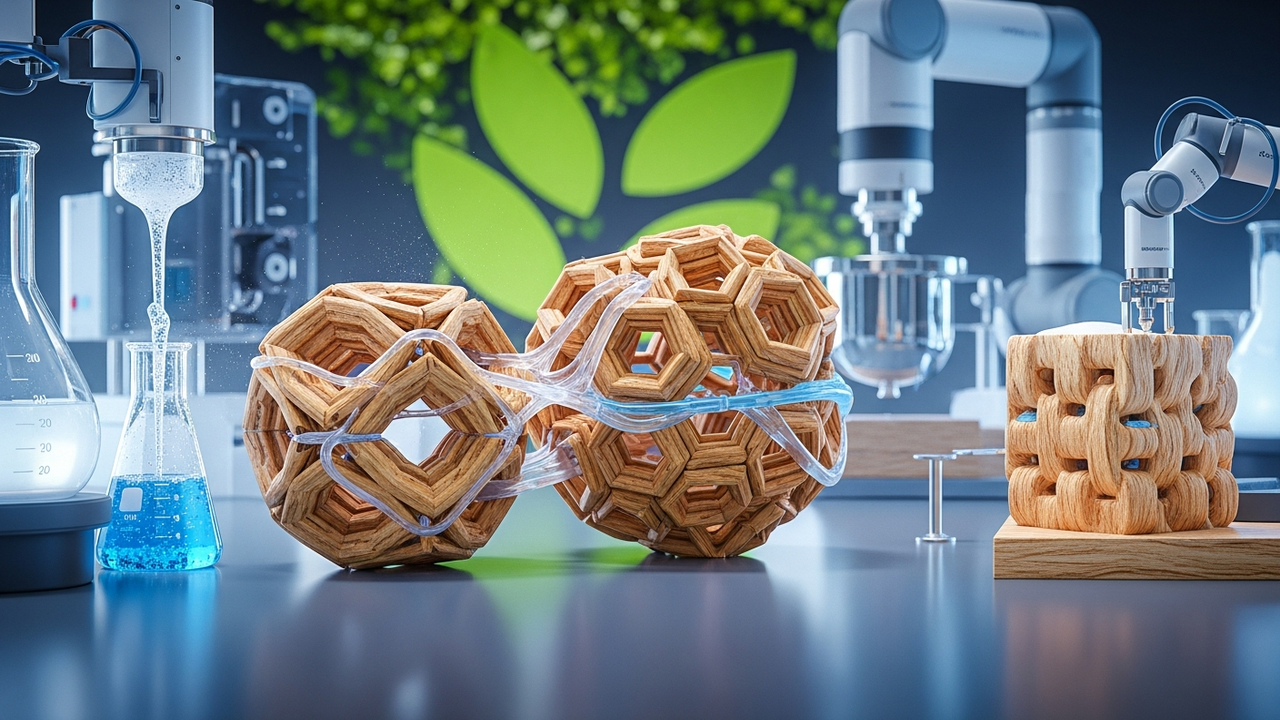
A comprehensive review paper has been published, detailing the latest applications and research trends of environmentally friendly starch-based adhesives specifically for bonding high-performance wood composites. This review thoroughly evaluates the potential and challenges of bio-based alternatives to conventional synthetic adhesives, driven by increasing global interest in sustainable material solutions.
Technical Details
The review paper thoroughly explores the inherent advantages of starch-based adhesives and the technical challenges in their application to high-performance wood composites. Starch, as an abundantly available natural polymer, is biodegradable and non-toxic, making it a highly promising raw material for eco-friendly adhesives. However, traditional starch-based adhesives have faced challenges in terms of water resistance, adhesive strength, curing speed, and long-term durability, often performing inferiorly to synthetic resins like phenol-formaldehyde or isocyanate-based adhesives. This review analyzes various modification approaches aimed at overcoming these limitations. These include chemical modifications of starch (e.g., esterification, etherification), compounding with nanofillers (e.g., cellulose nanocrystals, clay), and hybridization with small amounts of synthetic resins such as isocyanates or epoxies. Through these modifications, significant improvements in water resistance, enhanced shear strength, and increased thermal stability of the adhesive layer have been reported, with some starch-based adhesives beginning to demonstrate performance comparable to synthetic counterparts.
Background and Industry Context
From the perspective of sustainability and environmental protection, the wood industry is actively seeking to move away from synthetic adhesives, which can pose health concerns due to formaldehyde emissions. Given that large quantities of adhesives are used in the production of wood composites (e.g., plywood, OSB, MDF), the transition to bio-based and environmentally friendly adhesives is crucial for significantly reducing the environmental footprint of this industry. Furthermore, for promoting a circular economy, the biodegradability and recyclability of adhesives are strongly demanded. Against this backdrop, the review indicates that starch-based adhesives can serve as a practical solution for implementing green chemistry principles within the wood industry.
Future Outlook
This review strongly suggests the potential for starch-based adhesives to become a leading adhesive for high-performance wood composites in the future. Progress in addressing remaining technical challenges, particularly optimizing production costs and scaling up for large-scale manufacturing, will further accelerate the commercialization of starch-based adhesives. Furthermore, new chemical modifications to optimize the balance between adhesive performance and biodegradability, as well as the development of customized starch-based adhesives for specific applications, are anticipated. This will lead to the widespread adoption of sustainable adhesive solutions not only in the wood industry but also in broader sectors such as furniture, construction, and automotive interiors, contributing to reducing reliance on petroleum resources while offering safer and healthier products.