Key Findings
In the field of quantum computing, the origin of noise—a long-standing challenge hindering the performance of silicon spin qubit processors—has been identified. Researchers have elucidated that high-frequency charge noise is a primary mechanism contributing to resonant frequency shifts in qubits, which consequently degrades gate fidelity. This discovery offers critical insights for enhancing the reliability and scalability of spin qubit technology.
Technical Details
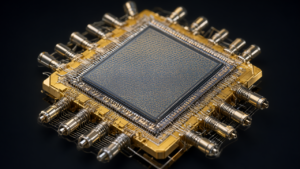
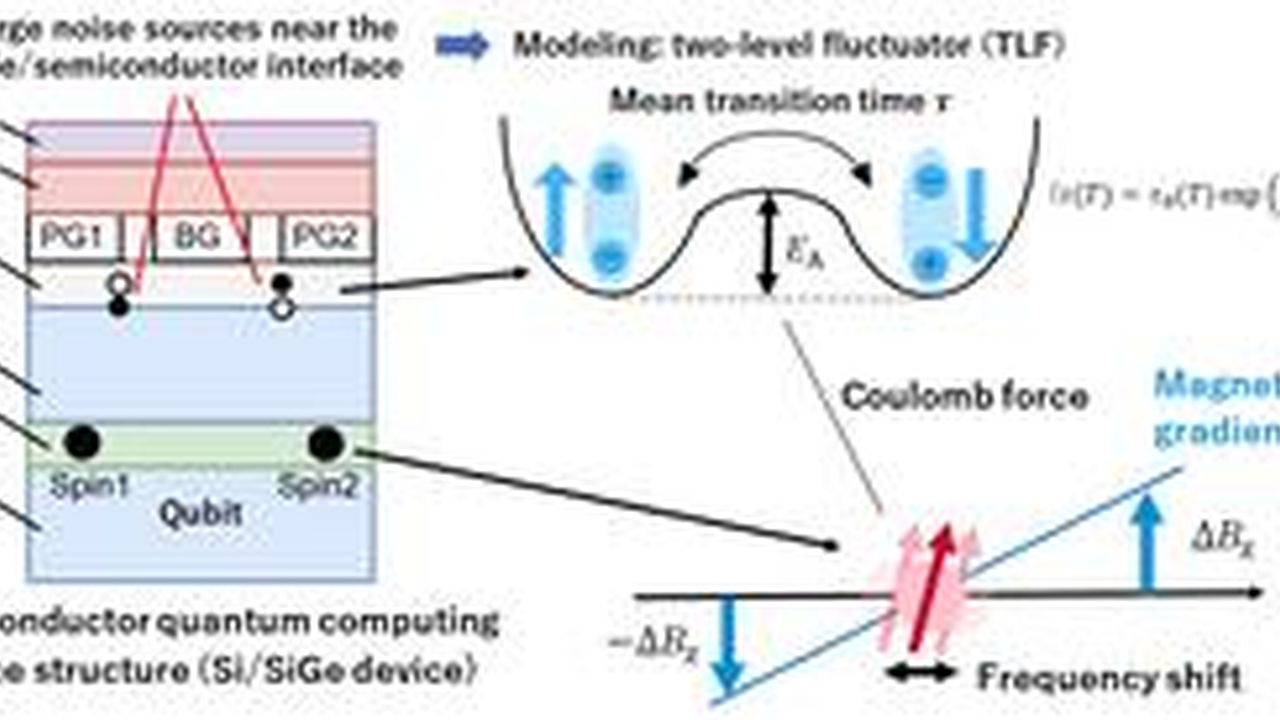
The study was conducted by combining theoretical modeling with extensive statistical simulations. Silicon spin qubits utilize the electron spin states within silicon, offering the significant advantage of compatibility with existing CMOS manufacturing technology. However, due to their nanoscale structures, they are highly sensitive to localized charge fluctuations and noise. The research team numerically demonstrated that these charge noises affect the energy levels of the qubits, causing their resonant frequencies to shift unpredictably. This frequency shift directly reduces the precision (fidelity) of quantum gate operations, leading to an increase in computational errors. The achievement lies in quantitatively describing this complex interaction and identifying the specific physical origin of the noise.
Background and Industry Context
The performance of quantum computers heavily depends on qubit fidelity (accuracy). Extremely high gate fidelity is indispensable for building large-scale, fault-tolerant quantum computers. Silicon spin qubits are considered a strong candidate for future large-scale quantum computers due to their potential for miniaturization and compatibility with existing semiconductor technology. Companies like Diraq are developing hot qubit approaches for silicon spin qubits, enabling operation at relatively higher temperatures (1 Kelvin), aiming to relax cooling requirements. However, understanding and mitigating the root causes of noise that limit gate fidelity is crucial for this technology to compete with other qubit modalities like superconducting and ion traps. This research will guide the next steps in the design and optimization of silicon spin qubits.
Strategic Significance and Outlook
With the identification of the noise origin, researchers and engineers can now implement specific measures to enhance the resilience of spin qubit processors against charge noise in their designs. This includes improvements in materials, optimization of device structures, and the development of noise-suppression circuits. As a result, the realization of higher-fidelity and more scalable silicon spin qubits will accelerate, making the path towards fault-tolerant quantum computing clearer. This progress is expected to solidify the foundation for silicon-based quantum computers to play a significant role in the future digital economy.