Key Findings
A new vendor guide has been released, profiling key companies in the silicon spin quantum computing sector. The guide emphasizes that silicon spin qubits possess a deeper path to manufacturing scale and compatibility with the existing semiconductor industry compared to other qubit modalities. This suggests that silicon spin technology occupies a strategically important position in the roadmap towards realizing future large-scale quantum computers.
Technical Details
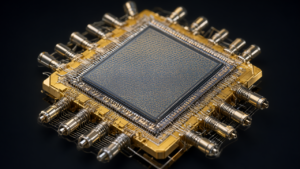
Silicon spin qubits, by their nature, currently have some limitations in terms of qubit count and individual gate fidelity when compared to superconducting or trapped-ion qubits. However, their primary strength lies in their ability to be manufactured directly using standard CMOS (Complementary Metal-Oxide-Semiconductor) foundry tools, which means leveraging existing semiconductor manufacturing infrastructure. This promises reduced manufacturing costs and increased production scale. Furthermore, Diraq’s ‘hot qubit approach’ demonstrates that silicon spin qubits can operate at relatively higher temperatures (1 Kelvin, or minus 272 degrees Celsius) than traditional cryogenic environments. This contributes to relaxed cooling system requirements and improved operational efficiency of quantum systems.
Background and Industry Context
The commercialization of quantum computing is accelerating, but scalability, fidelity, and manufacturing cost remain significant challenges. Superconducting qubits are fast but challenging for error management, while ion-trap qubits offer high fidelity but face scalability hurdles. In this landscape, silicon spin qubits offer a unique advantage by inheriting the manufacturing technologies developed by the mature semiconductor industry. This is highly appealing from a cost-efficiency and mass-producibility perspective for realizing fault-tolerant quantum computers at the million-qubit scale. The new vendor guide provides an overview of key players and their technological approaches in this field, detailing why silicon spin technology is poised for future competitiveness.
Strategic Significance and Outlook
The continuous development of silicon spin quantum computing will accelerate the realization of more practical and larger-scale quantum computers. CMOS compatibility is expected to attract substantial investment and technology transfer from the semiconductor industry, potentially driving down qubit manufacturing costs dramatically. Moreover, the ability to operate at higher temperatures will reduce the operational costs of quantum computers and allow for deployment in a broader range of environments. Moving forward, silicon spin technology is anticipated to become one of the main pillars driving quantum computing commercialization, in conjunction with other modalities, forming a foundation for innovative applications in areas such as materials science, drug discovery, and finance.
Source: https://quantumzeitgeist.com/top-silicon-spin-quantum-computing-companies/