Background
The burgeoning proliferation of artificial intelligence (AI) has ignited an unprecedented demand for high-performance High Bandwidth Memory (HBM), transforming HBM supply assurance and advanced packaging technology into a critical competitive frontier within the semiconductor industry. Samsung, alongside rivals SK Hynix and Micron, has been designated a key supplier for HBM4, destined for NVIDIA’s next-generation “Vera Rubin” AI accelerator platform, intensifying the technological race. NVIDIA CEO Jensen Huang has engaged in ongoing discussions with Samsung regarding future HBM solutions, encompassing HBM4, HBM4E, and HBM5, underscoring the strategic importance of this memory segment.
Beyond core technological advancements, global supply chain diversification and enhanced regional production capabilities are increasingly prioritized imperatives. In response, Samsung is expanding its international footprint, including a substantial $1.5 billion investment in a semiconductor test facility in Vietnam. The broader industry is also witnessing accelerated investments in advanced packaging from other key players, such as Amkor Technology, with a new facility in Arizona, and integrated device manufacturers like TSMC and Intel, all collectively striving to alleviate bottlenecks in HBM and AI chip production.
Key Findings
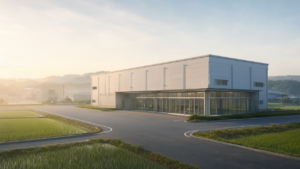
To decisively bolster its leadership in the HBM market, Samsung Electronics is reportedly exploring the construction of a new advanced semiconductor packaging plant in Gwangju, South Korea. This substantial investment, which could be formally announced as early as June 2026, is a cornerstone of Samsung’s strategy to significantly expand its HBM production capacity and accelerate a complete transition to Hybrid Copper Bonding (HCB), a pivotal next-generation HBM technology.
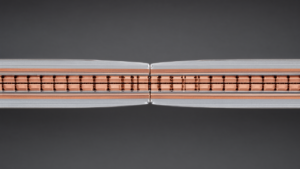
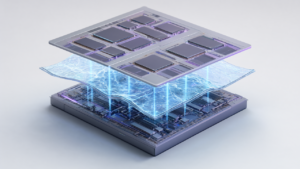
Samsung is aggressively enhancing its HBM post-processing capabilities at its existing Cheonan facility. By the close of 2026, the company targets a monthly capacity of 231,000 units for conventional Thermo-Compression Bonding (TCB), alongside a robust expansion to 19,500 units for the more advanced HCB. HCB represents a significant leap from traditional micro-bump bonding, enabling direct copper-to-copper interconnects. This innovation facilitates a connection pitch of less than 10 micrometers between stacked DRAM chips, resulting in a substantial reduction in HBM stack height, enhanced data transmission bandwidth, a thermal resistance reduction exceeding 20%, and improved power efficiency.
Samsung has positioned HCB technology as the core enabler for its HBM4 and future HBM5 generations, charting a complete migration from TCB to HCB across its HBM stacking roadmap by 2029. At NVIDIA GTC 2026, Samsung showcased the capability of HCB technology to enable HBM stacks of 16 layers or more, projecting that next-generation HBM4E will achieve a formidable 16 Gbps/pin and a bandwidth of 4.0 TB/s. Furthermore, by integrating advanced 4nm process technology for the HBM4 base die, strategically bypassing the traditional 12nm process, Samsung has demonstrated significant improvements in energy efficiency and achieved over 40% yield during test production.
Samsung’s proposed Gwangju facility and the pervasive adoption of HCB technology are set to decisively sharpen its competitive edge in the HBM market. HCB is a critical innovation that will unlock further memory chip stacking density and performance, pushing the computational limits for AI and High-Performance Computing (HPC) applications. Leveraging its inherent advantages as an Integrated Device Manufacturer (IDM), Samsung aims to differentiate itself by optimizing the entire semiconductor value chain, from DRAM manufacturing to advanced packaging. This integrated strategy is expected to play an indispensable role in powering the evolution of AI chips and realizing next-generation computing, while simultaneously reinforcing the resilience of the global semiconductor supply chain.