Key Findings
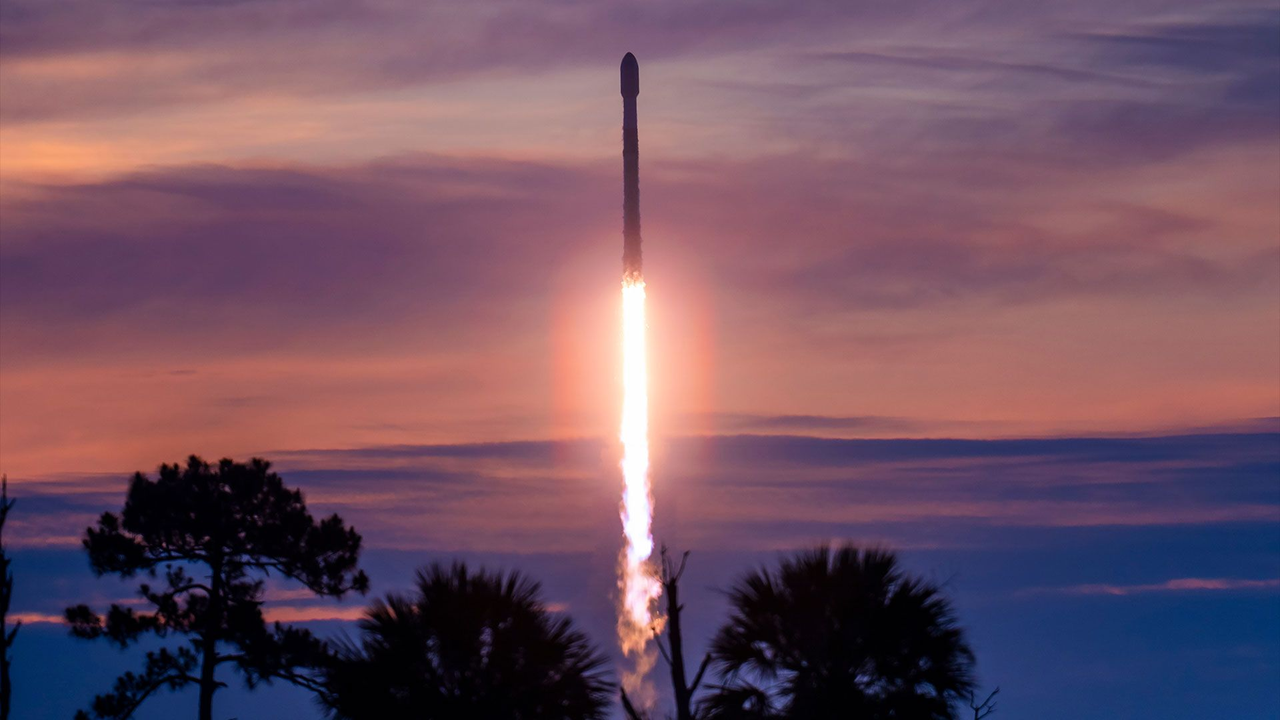
SpaceX has set a new world record for rocket reusability, successfully launching and landing the first-stage booster of its flagship Falcon 9 rocket for the 35th time. This monumental mission deployed 29 additional Starlink satellites into Low Earth Orbit (LEO), expanding the Starlink mega-constellation, SpaceX’s global broadband internet service, to over 10,580 active satellites. This achievement unequivocally validates SpaceX’s vision of fundamentally transforming the economics of space transportation through rocket reusability.
Technical Details
The 35th reuse of a Falcon 9 first-stage booster symbolizes an extraordinary advancement in rocket engineering and operations. Following each mission, the booster autonomously returns to Earth, executing a precise vertical landing. This intricate process is achieved through a complex sequence of operations, including a re-entry burn, attitude control using grid fins, and the deployment of landing legs. Reusability eliminates the need to manufacture a new rocket for each launch, significantly reducing manufacturing costs and time. This dramatically lowers the cost per kilogram of payload to orbit, making previously unattainable space missions commercially viable. Starlink satellites are designed to provide low-latency, high-bandwidth internet connectivity, establishing a globally accessible network. This contributes to bridging the digital divide by offering internet services to underserved regions, maritime vessels, and aircraft.
Background and Industry Context
SpaceX’s reusable rocket technology has dramatically reshaped the space economy over the past decade. By 2025, the Falcon 9 had grown to account for approximately 90% of the world’s commercial orbital launches, with the most flown booster completing 34 missions. This track record, nearing NASA’s Space Shuttle orbiter’s reusability record of 39 flights, marks a significant milestone in space transportation history. The company’s next-generation fully reusable super heavy-lift launch system, Starship, has been selected as the lunar lander for NASA’s Artemis program, and is expected to become a primary means of transport for future deep-space exploration. This reusability is central to SpaceX’s potential IPO, valued at approximately $1.75 trillion, indicating high investor and industry confidence in its business model.
Future Outlook
The record-breaking reusability of the Falcon 9 suggests SpaceX’s continued dominance in the space launch market. The ongoing expansion of the Starlink constellation will further enhance global internet connectivity, bolstering service provision to remote communities, maritime vessels, and aircraft. In the future, with Starship becoming fully operational, humanity’s plans for lunar and Martian settlement will grow increasingly tangible. Reusable rocket technology reduces the cost and increases the frequency of space exploration, thereby creating new business opportunities in scientific research, resource exploration, and space tourism. SpaceX’s success clearly demonstrates that the commercial space sector is becoming an indispensable component of global infrastructure and economy, playing a crucial role in the development of the space economy.
Source: https://www.space.com/space-exploration/launches-spacecraft/spacex-starlink-10-35-b1067-ccsfs-asog