Key Findings
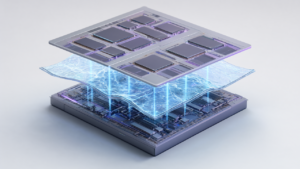
Ajinomoto Build-up Film (ABF) substrates, essential components in AI accelerators, High Bandwidth Memory (HBM), and chiplet-based designs, have emerged as a new bottleneck in semiconductor packaging. Nvidia’s high-performance H100 GPU requires over 12 layers of ABF due to its complex architecture, and the next-generation Blackwell B200, utilizing CoWoS-L, is positioned as one of the largest packages ever produced. A promising next-generation technology to address ABF challenges is glass substrates. Glass substrates are expected to resolve the primary ‘warpage wall’ issue of ABF, offering finer via density and superior dielectric properties, but mass production is anticipated to be several years away.
Technical & Economic Details
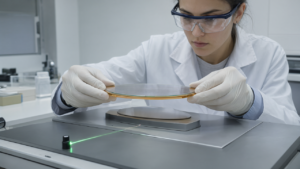
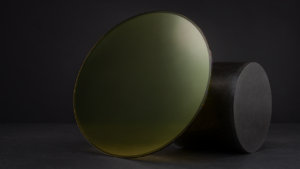
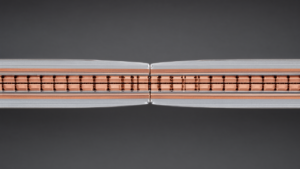
ABF substrates enable multilayer wiring and fine circuit formation, supporting high-density chip integration and high-speed signal transmission. However, warpage and dimensional stability issues during manufacturing are becoming increasingly severe, especially for the larger and more multilayered AI chip packages. State-of-the-art GPUs like Nvidia’s H100 and Blackwell B200 require massive transistor counts and HBM integration, necessitating extremely precise and complex ABF substrates. Glass substrates, with their superior mechanical strength and thermal stability, significantly reduce warpage problems compared to traditional organic ABF substrates. They also allow for finer Through-Glass Vias (TGVs) and wiring, along with excellent dielectric properties that reduce electrical signal loss. However, mass production of glass substrates requires dedicated manufacturing equipment development, stringent process qualification, and the establishment of new supply chain infrastructure, all of which demand substantial investment and time.
Background & Context
The explosive growth of AI is imposing unprecedented demands on the semiconductor industry. Specifically, advanced packaging, which tightly integrates HBM and logic chips, has become one of the most critical factors determining the performance of AI accelerators. The supply shortage and technological limitations of ABF substrates are impacting the overall production capacity of AI chips, driving a widespread search for solutions within the industry. Against this backdrop, major semiconductor companies, including Intel, are positioning glass substrate technology as key to next-generation packaging and are actively pursuing R&D and investment. Glass substrates have the potential to further advance chiplet technology and enable the realization of higher-performance heterogeneous integration packages.
Strategic Significance & Outlook
Glass substrate technology holds immense potential to resolve the major bottlenecks posed by ABF substrates and dramatically enhance the performance of AI accelerators and HPC (High-Performance Computing) chips. As companies like Intel invest heavily in glass substrates, technological development and supply chain establishment for mass production will accelerate. However, significant challenges remain on the path to commercialization, including the inherent brittleness of glass, the establishment of new manufacturing processes, and improvements in cost efficiency. How glass substrate technology overcomes these hurdles and establishes itself as a mainstream packaging technology in the coming years will be a crucial factor in shaping the development of the semiconductor industry in the AI era.
Source: https://www.datagravity.dev/p/the-abf-substrate-bottleneck
Get our weekly technology intelligence — free
Receive an infographic that lets you judge at a glance whether each field’s analysis report is worth reading.
Subscribe Free — Weekly Tech Intelligence
By subscribing, you’ll receive Troy-Technical’s weekly technology intelligence newsletter.
- Your email and selected fields are used only to deliver the newsletter.
- We never share your information with third parties.
- You can unsubscribe anytime via the link in each email.
See our Privacy Policy for details.
Takes about a minute · Unsubscribe anytime