Background
The pursuit of “quantum advantage” has long been a central objective in quantum computing, though its precise definition and demonstration continue to evolve. D-Wave, through its unique approach of quantum annealing, has consistently focused on showcasing computational advantage for specific optimization problems. Materials science, a field perennially facing bottlenecks in technological innovation, stands to be revolutionized by the exponential leap in computational power promised by quantum computing. Overcoming the limitations of classical simulation is critical for accelerating product development and fostering new innovations.
Key Findings
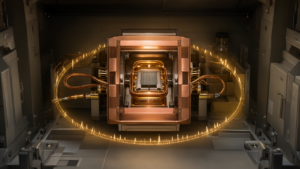
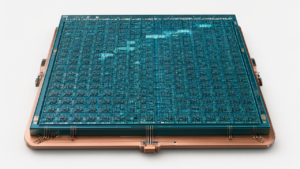
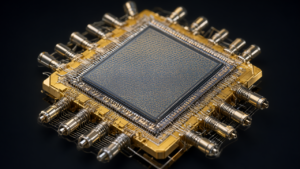
Andrew King, Senior Distinguished Scientist at D-Wave, recently highlighted peer-reviewed research confirming that D-Wave’s quantum processor achieved a computational advantage approximately one million times faster than classical supercomputers when tackling problems pertinent to materials discovery. Specifically, the study revealed that computations completed in mere minutes on a quantum processor would demand an estimated one million years on even the most powerful classical supercomputers. This stark performance difference marks a significant milestone in D-Wave’s journey toward the practical, real-world application of quantum computing.
Technical Details
- King elaborated that D-Wave’s quantum annealing processor completed calculations in minutes for specific materials discovery tasks, tasks that would realistically require about one million years for existing classical supercomputers. This definitively illustrates a “computational advantage,” wherein a quantum computer vastly outperforms classical machines in solving certain types of combinatorial optimization problems.
- The challenges tackled in this research involve the exploration and optimization of complex molecular structures and material properties, directly impacting the design of novel superconductors, high-performance battery materials, or advanced catalysts. Classically, identifying optimal configurations from an astronomical number of possibilities is computationally intractable. However, quantum annealing offers a powerful mechanism to efficiently navigate and explore such vast problem spaces.
- D-Wave’s quantum annealing technology excels at combinatorial optimization problems, where the system leverages quantum mechanical processes to identify the lowest energy state—the optimal solution. These groundbreaking results strongly suggest that quantum annealing capabilities could become an indispensable tool for addressing real-world challenges in materials science.
Strategic Significance & Outlook
D-Wave’s demonstrated million-fold computational advantage in materials discovery signals the profound potential of this technology to transform not only materials science but also broad industrial sectors. Applications could extend to optimizing blockchain operations, enhancing the learning efficiency of AI models, and refining financial portfolio management. This breakthrough is poised to accelerate the transition of quantum computing from the confines of the laboratory into concrete industrial applications. Enterprises and research institutions are now anticipated to harness quantum annealing technologies, such as those pioneered by D-Wave, to confront previously intractable exploration and optimization challenges, thereby securing competitive advantages. This represents a crucial step towards ushering in a new wave of innovation in the burgeoning quantum era.
Get our weekly technology intelligence — free
Receive an infographic that lets you judge at a glance whether each field’s analysis report is worth reading.
Subscribe Free — Weekly Tech Intelligence
By subscribing, you’ll receive Troy-Technical’s weekly technology intelligence newsletter.
- Your email and selected fields are used only to deliver the newsletter.
- We never share your information with third parties.
- You can unsubscribe anytime via the link in each email.
See our Privacy Policy for details.
Takes about a minute · Unsubscribe anytime