Key Findings
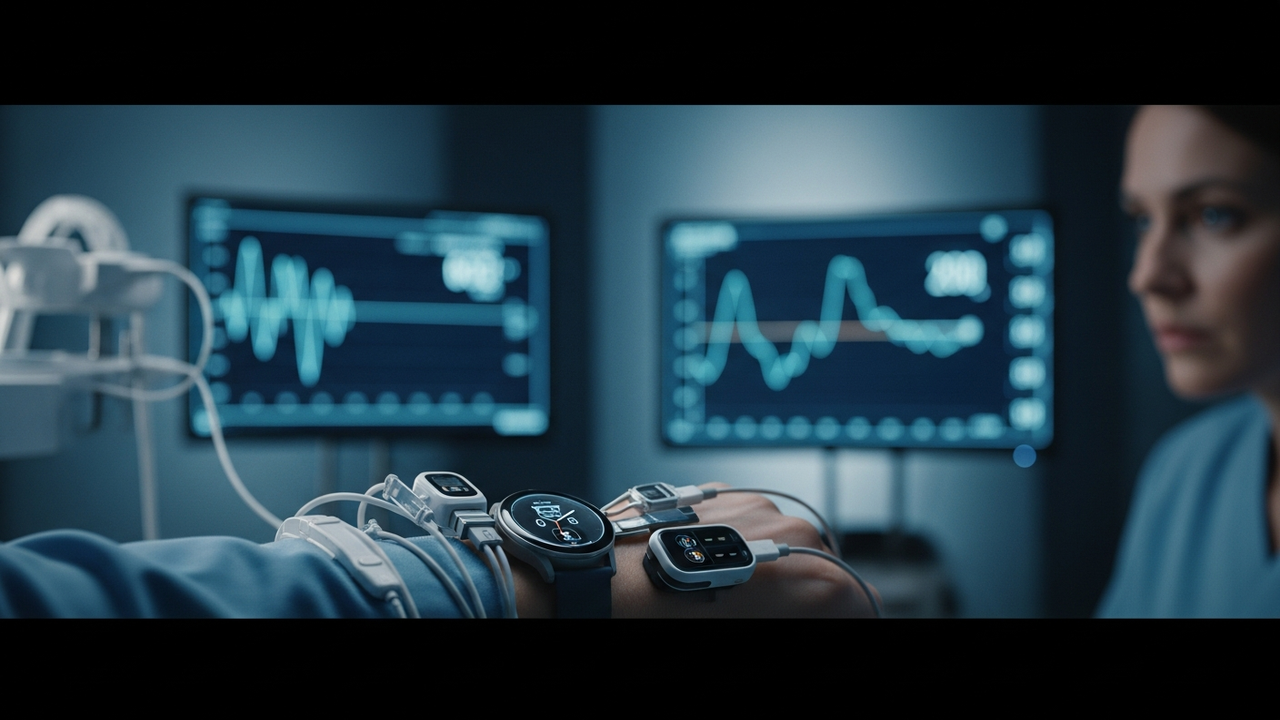
As of 2026, non-invasive blood glucose monitoring via consumer wearable devices such as smartwatches has not achieved medical-grade accuracy and reliability. Authoritative bodies like the U.S. Food and Drug Administration (FDA) and Johns Hopkins University explicitly state that no wrist-worn device currently exists that can accurately measure blood glucose levels without skin penetration. This is a crucial scientific fact that often contrasts with the marketing claims of some products on the market.
Technical/Clinical Details
Non-invasive blood glucose monitoring technologies primarily attempt to infer glucose concentrations from the skin surface using various methods, including optical (infrared spectroscopy, Raman spectroscopy), microwave, thermal detection, and electrochemical sensors. However, these technologies face inherent challenges: measurement results are highly susceptible to diverse physiological factors such as skin thickness, hydration levels, blood flow, body temperature, sweat, and even individual skin tone. Consistently achieving the high accuracy (e.g., Mean Absolute Relative Difference (MARD) below 10%) and reproducibility required for medical diagnosis, while excluding these noise factors, is exceedingly difficult. Consequently, while many smartwatches currently claim to offer ‘blood glucose monitoring’ functions, their readings are typically not approved for medical use and lack the clinical reliability of finger-prick tests or continuous glucose monitoring (CGM) devices.
Background & Context
The increasing number of diabetes patients and the need for more comfortable and continuous glucose management have created an immense market demand for non-invasive blood glucose monitoring technologies. However, riding on this rising expectation, there is also an increased risk of scientifically unsubstantiated products and non-FDA-approved devices entering the market. The FDA and medical professional organizations have repeatedly issued warnings to prevent consumers from making product choices based on misinformation. This is a critical endeavor to ensure the reliability of medical information and devices that can directly affect patient health.
Strategic Significance & Outlook
The development of truly non-invasive, medical-grade accurate blood glucose monitoring devices remains one of the top priorities in medical technology research. Future research will focus on leveraging advanced multi-sensing technologies, machine learning algorithms, and AI to compensate for physiological noise and obtain more robust measurement results. However, commercialization is still projected to require several more years. In the interim, diabetes patients and general consumers must exercise caution in selecting information sources and devices for blood glucose measurement, seeking advice from public bodies like the FDA and medical professionals, and avoiding overly optimistic expectations for the functionalities of unapproved devices.
Source: #
Get our weekly technology intelligence — free
Receive an infographic that lets you judge at a glance whether each field’s analysis report is worth reading.
Subscribe Free — Weekly Tech Intelligence
By subscribing, you’ll receive Troy-Technical’s weekly technology intelligence newsletter.
- Your email and selected fields are used only to deliver the newsletter.
- We never share your information with third parties.
- You can unsubscribe anytime via the link in each email.
See our Privacy Policy for details.
Takes about a minute · Unsubscribe anytime