Key Findings
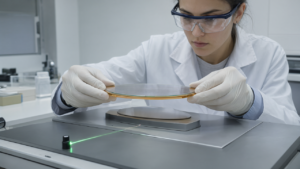
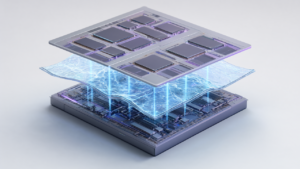
Glass core substrates are emerging as a critically important technology in the semiconductor industry, driven by the surging demand for higher performance in AI chips, High-Performance Computing (HPC), and next-generation advanced processor packaging. This innovative substrate offers distinct advantages over conventional organic substrates, including superior dimensional stability, a significantly lower coefficient of thermal expansion (CTE), and enhanced electrical performance at finer line widths. However, widespread mass production still confronts several technical and manufacturing hurdles, notably the inherent brittleness of glass, the development of scalable Through-Glass Via (TGV) formation processes, and the establishment of the necessary supply chain infrastructure.
Technical & Economic Details
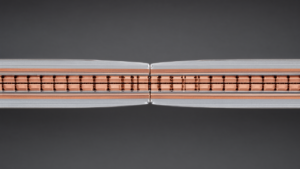
One of the most salient advantages of glass core substrates is their excellent dimensional stability. This is crucial for improving alignment accuracy between chips and substrates in increasingly larger and multi-layered advanced packages, thereby boosting manufacturing yield. Furthermore, glass’s CTE closely matches that of silicon, which helps mitigate stress caused by thermal expansion mismatches between the chip and substrate, enhancing package reliability. Glass also exhibits superior dielectric properties, reducing electrical losses in high-frequency signal transmission and enabling finer line widths and via pitches, which is advantageous for improving data transfer rates between HBM (High Bandwidth Memory) and logic dies. However, to fully harness these benefits, it is essential to develop manufacturing processes that address glass brittleness and establish high-throughput, reliable TGV formation technology. TGVs are electrical interconnections passing through the glass substrate, and their miniaturization and reliability improvement are key to mass production.
Background & Context
The evolution of AI and HPC applications demands pushing the integration density and performance of semiconductor chips to their limits. Traditional organic substrates are increasingly struggling to meet these requirements in terms of their thermal, electrical, and mechanical properties. Especially with the proliferation of chiplet technology, there is a strong demand for new substrate materials that can precisely integrate multiple chiplets and efficiently dissipate heat. Glass core substrates are one of the most promising solutions to this challenge, with many companies, including industry giants like Intel, TSMC, and Samsung, accelerating their R&D and investments. This places the semiconductor packaging industry at the cusp of a new materials revolution.
Strategic Significance & Outlook
While glass core substrates hold great potential for the future of semiconductor packaging, their commercialization requires significant technological breakthroughs and large-scale infrastructure investments. Key challenges remain in overcoming glass brittleness, developing technologies to ensure high yield across the entire manufacturing process, and establishing cost-effective TGV formation techniques. If these hurdles are overcome, glass core substrates could become a mainstream technology for packaging AI chips, HPC processors, and next-generation mobile devices, bringing new dimensions to semiconductor performance and functionality. Over the next few years, accelerated progress toward the mass production of glass core substrates is expected through industry-wide collaboration and innovation.
Source: https://pandaily.com/glass-core-substrate-chip-packaging-commercialization-jun2026
Get our weekly technology intelligence — free
Receive an infographic that lets you judge at a glance whether each field’s analysis report is worth reading.
Subscribe Free — Weekly Tech Intelligence
By subscribing, you’ll receive Troy-Technical’s weekly technology intelligence newsletter.
- Your email and selected fields are used only to deliver the newsletter.
- We never share your information with third parties.
- You can unsubscribe anytime via the link in each email.
See our Privacy Policy for details.
Takes about a minute · Unsubscribe anytime