Key Findings
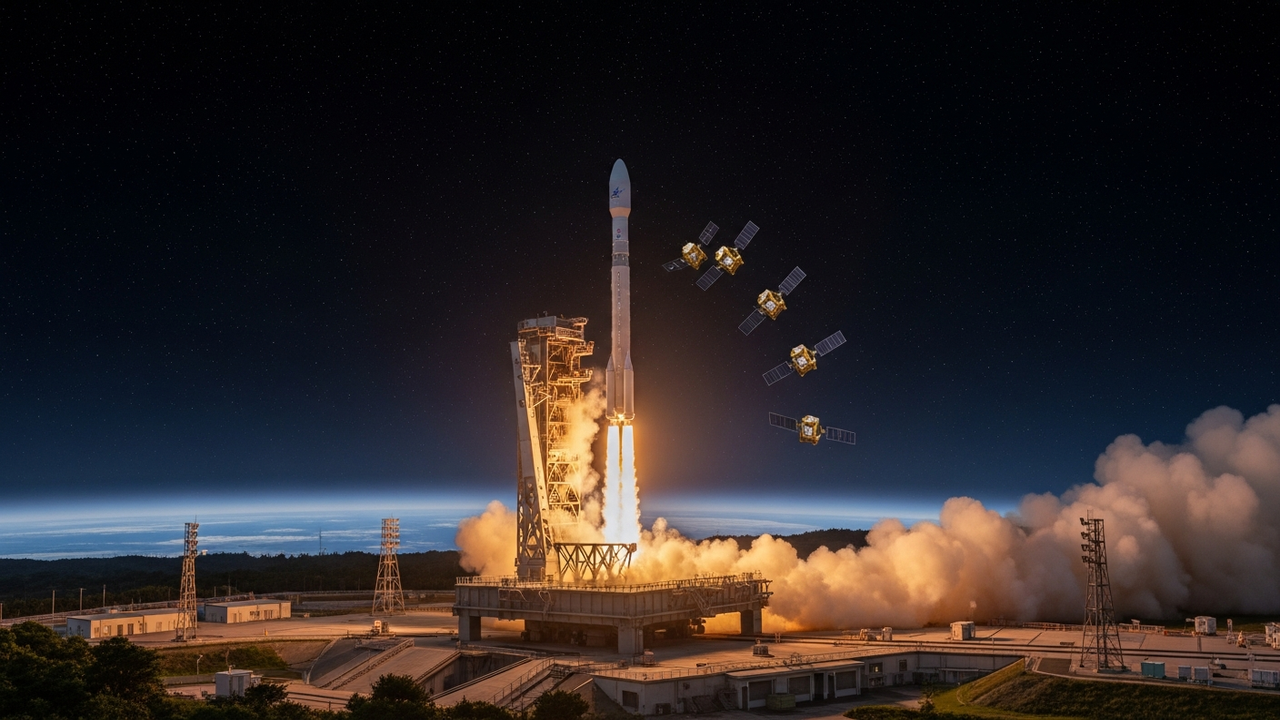
The Japan Aerospace Exploration Agency (JAXA) successfully completed the return-to-flight mission for its H3 rocket on June 12, deploying six small satellites, including an ocean observation satellite and a space debris removal technology test satellite, into their designated orbits from the Tanegashima Space Center. This triumphant launch is a crucial milestone for JAXA, signaling a robust recovery after the rocket’s previous failure in December, and definitively re-establishes confidence in the H3 program’s capabilities and reliability.
Technical / Clinical Details
The successful mission utilized a modified, lighter configuration of the H3 rocket, operating solely with its liquid-fueled LE-9 main engines and omitting solid rocket boosters. This design aims to enhance cost-efficiency and payload flexibility. Among the deployed satellites, the ocean observation satellite will provide critical data for climate monitoring and marine resource management, while the space debris removal demonstrator will test technologies essential for mitigating the growing orbital junk problem. The H3 rocket, designed as the successor to the H-IIA, represents Japan’s commitment to independent access to space and a competitive presence in the global launch market.
Background & Context
The H3 program is pivotal for Japan’s strategic space ambitions, aiming to offer reliable and affordable launch services in an increasingly competitive global landscape. Following the initial flight failure in March 2023, JAXA conducted an exhaustive investigation, implementing significant design and operational adjustments to prevent recurrence. The successful return to flight demonstrates JAXA’s rigorous engineering capabilities and its determination to overcome technical challenges. This achievement is not just a technological win but also a strong statement about Japan’s capacity to maintain and advance its national space infrastructure.
Strategic Significance & Outlook
Building on this success, JAXA has announced the next H3 launch is scheduled for August 7, 2026, which will carry the Michibiki 7 satellite, a key component of Japan’s Quasi-Zenith Satellite System (QZSS). The establishment of a reliable and cost-effective H3 launch vehicle is essential for Japan’s contributions to international lunar exploration initiatives like the Artemis program and for securing commercial launch contracts. Lower launch costs are expected to democratize access to space, fostering innovation among startups and research institutions and accelerating the broader space economy.
Get our weekly technology intelligence — free
Receive an infographic that lets you judge at a glance whether each field’s analysis report is worth reading.
Subscribe Free — Weekly Tech Intelligence
By subscribing, you’ll receive Troy-Technical’s weekly technology intelligence newsletter.
- Your email and selected fields are used only to deliver the newsletter.
- We never share your information with third parties.
- You can unsubscribe anytime via the link in each email.
See our Privacy Policy for details.
Takes about a minute · Unsubscribe anytime