Background and Industry Context
Anion exchange membranes (AEMs) are emerging as a compelling alternative to conventional proton exchange membranes (PEMs) in next-generation fuel cells and water electrolyzers. AEMs are pivotal for significantly lowering costs and fostering the widespread adoption of clean energy technologies, primarily because they facilitate the use of inexpensive, non-precious metal catalysts, in contrast to the costly platinum-group metals often required with PEMs. Addressing this critical need, Kyushu University’s latest innovation aims to overcome the inherent complexities of advanced materials design, setting the stage for faster advancements in clean energy technologies.
The Challenge of AEM Material Development
Despite their immense promise, the development of high-performance AEM materials faces significant hurdles. The core challenge lies in designing molecular structures that simultaneously optimize two critical, often competing, properties: achieving high ionic conductivity for efficient energy conversion and ensuring robust long-term chemical and mechanical stability under operational conditions. Traditional materials discovery processes, often reliant on extensive trial-and-error experimentation, are prohibitively time-consuming and resource-intensive, hindering the rapid identification and deployment of optimal AEM candidates.
Key Findings: The Human-in-the-Loop Framework
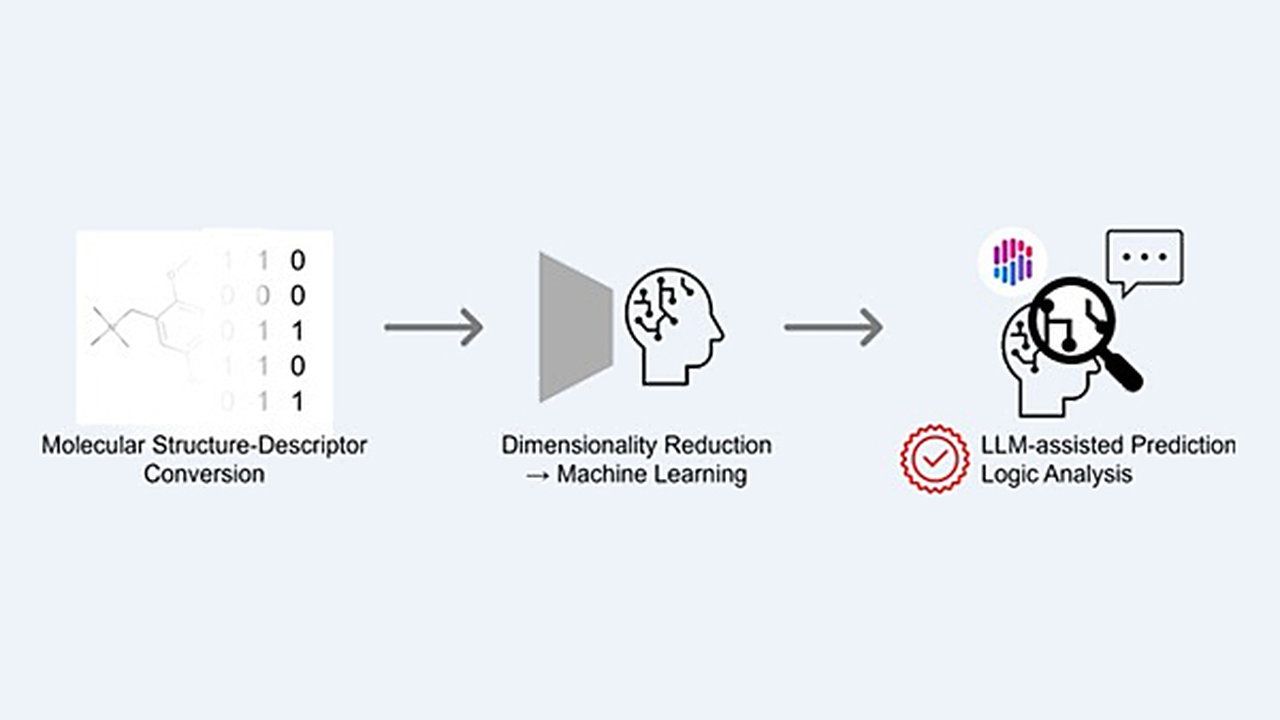
A research group at Kyushu University has pioneered a groundbreaking ‘Human-in-the-Loop (HITL)’ framework designed to dramatically accelerate and optimize the development of anion exchange membrane (AEM) materials. This innovative framework redefines the paradigm of materials discovery by seamlessly integrating Explainable AI (XAI), a Large Language Model (LLM) such as ChatGPT, and the invaluable knowledge of materials science experts. Crucially, the HITL approach empowers human researchers to not only comprehend the rationale behind AI’s predictions but also to directly infuse their insights and expertise back into the iterative design cycle, fostering a more intelligent and efficient development pathway for these critical components of fuel cells and water electrolyzers.
Technical Deep Dive: How the HITL Framework Works
The efficacy of Kyushu University’s HITL framework stems from the symbiotic combination of several cutting-edge components:
- Explainable AI (XAI): At its core, the custom-developed AI model is trained to discern the intricate relationships between AEM material structures and their performance properties, such as ionic conductivity and chemical stability. Beyond mere prediction, this XAI component is engineered to provide transparent explanations for its output, elucidating why specific predictions are made in a format readily interpretable by materials scientists. This capability allows the AI to highlight how particular atomic groups or molecular motifs directly influence AEM material performance, offering invaluable mechanistic insights.
- Leveraging Large Language Models (LLMs) like ChatGPT: LLMs, exemplified by ChatGPT, serve as a crucial interface, translating the complex data and nuanced patterns generated by the XAI into intuitive, natural language descriptions. This significantly streamlines the process for scientists, enabling them to rapidly assimilate critical design guidelines without the need for painstaking analysis of vast datasets or computational outputs. Furthermore, ChatGPT can synthesize insights from extensive scientific literature and databases to aid in the generation of novel molecular design concepts.
- Integration of Expert Human Knowledge: Materials science experts play an indispensable role, validating the AI’s predictions and explanations. They then blend this AI-derived intelligence with their own accumulated experience, domain-specific intuition, and scientific foresight to formulate highly refined molecular design proposals. This expert intervention is vital for bolstering the reliability of the design process, identifying potential unforeseen challenges, and fostering the development of truly creative and innovative solutions.
- Closed-Loop Iterative Learning: A defining feature of the HITL framework is its continuous feedback mechanism. The refined design proposals generated by human experts are systematically fed back into the AI model. The AI then incorporates this new knowledge, updating its understanding and informing subsequent predictions and experimental strategies. This closed-loop learning ensures that the AI model continuously evolves and optimizes the efficiency of AEM material development over successive iterations.
Impact and Future Outlook
This innovative HITL framework is projected to drastically reduce the protracted trial-and-error cycles characteristic of conventional materials development. By doing so, it enables the identification of optimal AEM material candidates within a timeframe of weeks to months, a significant acceleration over traditional methods.
The versatility of Kyushu University’s HITL framework extends far beyond AEMs; it holds immense potential for the design of a broad spectrum of other complex functional materials, including those critical for advanced batteries, catalysts, and semiconductors. Looking ahead, the research group plans to further enhance the framework’s capabilities and integrate it with robotic automated synthesis and characterization systems. This strategic integration aims to pave the way for fully autonomous materials discovery processes, often referred to as ‘self-driving labs.’ This transformative technology is anticipated to solidify Japan’s international prominence in materials informatics research and make substantial contributions to developing innovative material solutions essential for a sustainable global society.
Source: https://sj.jst.go.jp/news/202606/n0618-01k.html
Get our weekly technology intelligence — free
Receive an infographic that lets you judge at a glance whether each field’s analysis report is worth reading.
Subscribe Free — Weekly Tech Intelligence
By subscribing, you’ll receive Troy-Technical’s weekly technology intelligence newsletter.
- Your email and selected fields are used only to deliver the newsletter.
- We never share your information with third parties.
- You can unsubscribe anytime via the link in each email.
See our Privacy Policy for details.
Takes about a minute · Unsubscribe anytime