Key Findings
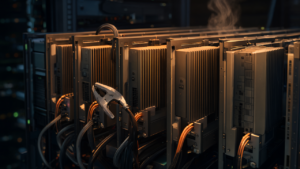
Liquid cooling is rapidly becoming an indispensable technology for AI data centers, primarily driven by the escalating thermal loads generated by modern AI servers equipped with multiple GPUs. These advanced servers are pushing rack densities well beyond 100 kilowatts (kW), a threshold where conventional air cooling systems become inefficient, noisy, and energy-intensive.
Technical / Clinical Details
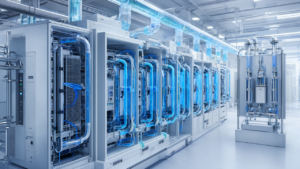
Traditional air cooling systems, which rely on moving large volumes of air to dissipate heat, are effective for rack densities up to around 30 kW. However, as compute demands for AI training and inference have soared, so has the power consumption and heat generation within each server rack. Air’s low thermal conductivity and specific heat capacity make it a poor medium for efficient heat transfer at high densities. Liquid cooling solutions, conversely, bring a cooling fluid (such as water or dielectric coolants) much closer to the heat source, often directly to the chip or through cold plates mounted on components. Liquids are significantly more efficient at absorbing and transferring heat than air, boasting orders of magnitude higher thermal conductivity and heat capacity. This fundamental advantage translates into several critical benefits for AI data centers:
- Higher Rack Densities: Liquid cooling enables ultra-high-density racks exceeding 100 kW, optimizing data center footprint and maximizing compute per square foot.
- Improved Energy Efficiency: By reducing reliance on powerful fans and air conditioners, liquid cooling significantly lowers the Power Usage Effectiveness (PUE) of data centers, leading to substantial energy savings.
- Reduced Noise Levels: The elimination of high-speed airflow dramatically decreases operational noise, improving working conditions and site flexibility.
- Support for Next-Generation AI Hardware: Future AI accelerators and CPUs are expected to generate even more heat, making liquid cooling a foundational requirement for their successful deployment and sustained performance.
Specific liquid cooling technologies include direct-to-chip (DTC) systems using cold plates, immersion cooling where servers are submerged in dielectric fluid, and rear-door heat exchangers that attach to server racks.
Background & Context
The proliferation of generative AI and large language models (LLMs) has led to an unprecedented surge in data center compute demand. These AI workloads necessitate massive clusters of GPUs, generating thermal outputs far exceeding those of conventional enterprise servers. The inability to effectively dissipate this heat directly limits the operational capacity and performance of AI infrastructure. Globally, data centers already consume a significant portion of electricity, and AI’s rapid growth is projected to exacerbate this. Therefore, liquid cooling is no longer a niche solution but a strategic imperative for any organization building or expanding its AI capabilities. Major AI chip manufacturers, including NVIDIA, are designing their next-generation platforms, such as the Rubin platform, with 100% liquid cooling compatibility across all critical components, signaling a decisive industry-wide shift.
Strategic Significance & Outlook
Liquid cooling is poised to become the default thermal management solution for AI data centers within the next few years. Data center operators must prioritize the adoption and implementation of liquid cooling technologies when upgrading existing facilities or constructing new ones. This ensures that the advancement of AI is not constrained by thermal bottlenecks, allowing for continuous and sustainable innovation. The liquid cooling market itself is expected to grow substantially, driven by ongoing research and development in coolants, pumps, distribution units, and comprehensive management systems. From an environmental perspective, the enhanced energy efficiency offered by liquid cooling will also contribute to reducing the carbon footprint of AI, supporting the global push for greener data center operations. This technological evolution is critical for powering the future of AI and maintaining the competitive edge in a rapidly accelerating digital economy.
Source: https://mepacademy.com/liquid-cooling-for-ai-data-centers-explained/
Get our weekly technology intelligence — free
Receive an infographic that lets you judge at a glance whether each field’s analysis report is worth reading.
Subscribe Free — Weekly Tech Intelligence
By subscribing, you’ll receive Troy-Technical’s weekly technology intelligence newsletter.
- Your email and selected fields are used only to deliver the newsletter.
- We never share your information with third parties.
- You can unsubscribe anytime via the link in each email.
See our Privacy Policy for details.
Takes about a minute · Unsubscribe anytime