Key Findings
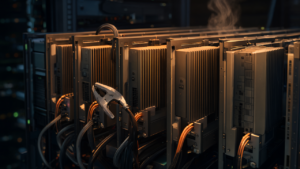
The burgeoning power consumption of modern AI servers, particularly those equipped with multiple GPUs, has escalated cooling requirements in data centers to unprecedented levels, with individual servers drawing 10, 20, or even exceeding 100 kilowatts. This dramatic increase has pushed traditional air cooling methods to their operational limits for high-density AI environments, firmly establishing liquid cooling as the essential new standard for efficient heat dissipation.
Technical / Clinical Details
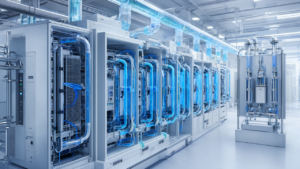
AI workloads, especially large language model training and inference, demand massive parallel processing from GPUs, leading to exceptionally high power densities and corresponding heat generation. Conventional air cooling systems, which rely on circulating chilled air, become inadequate when rack densities surpass 100 kW, as the physical limitations of airflow volume and heat exchange capacity are exceeded. Liquid cooling, by contrast, leverages the far superior volumetric heat capacity and thermal conductivity of fluids, enabling it to remove heat significantly more efficiently—approximately 1,000 times more effectively by volume than air. Techniques like Direct-to-Chip (D2C) liquid cooling or immersion cooling, which involve direct contact of fluid with heat sources or submerging entire servers in dielectric liquid, respectively, provide unprecedented cooling performance. This supports much higher power densities, optimizes data center footprint, and allows for the concentrated deployment of cutting-edge AI compute resources.
Background & Context
The explosive growth of AI has placed unprecedented demands on data center infrastructure. While the global data center market is projected to grow from $416 billion in 2024 to $620 billion by 2029, the AI segment alone is expanding at over 25% annually. This rapid expansion has highlighted critical challenges related to power consumption and heat. The stagnation of global data center Power Usage Effectiveness (PUE) at 1.54 since 2018 underscores that incremental efficiency gains are no longer sufficient. Innovative cooling technologies like liquid cooling are now recognized as indispensable for ensuring the sustainability and performance of AI-era data centers, addressing both operational costs and environmental impact.
Strategic Significance & Outlook
Liquid cooling technology is set to become the de facto standard for AI data centers and will continue to evolve and proliferate. Major hardware vendors, such as NVIDIA, are integrating 100% liquid cooling into the design of their next-generation platforms like Rubin, signifying a industry-wide shift. This transition will enable data centers to efficiently and stably operate increasingly dense and powerful AI hardware, providing the foundational physical infrastructure for the continued advancement of AI technologies. Moreover, by contributing to improved energy efficiency, liquid cooling will play a crucial role in reducing the environmental footprint of data centers, making it an essential component for building a sustainable AI ecosystem.
Source: https://mepacademy.com/liquid-cooling-for-ai-data-centers-explained/
Get our weekly technology intelligence — free
Receive an infographic that lets you judge at a glance whether each field’s analysis report is worth reading.
Subscribe Free — Weekly Tech Intelligence
By subscribing, you’ll receive Troy-Technical’s weekly technology intelligence newsletter.
- Your email and selected fields are used only to deliver the newsletter.
- We never share your information with third parties.
- You can unsubscribe anytime via the link in each email.
See our Privacy Policy for details.
Takes about a minute · Unsubscribe anytime