Background
A fundamental challenge in quantum computing is the inherent fragility of qubits, which are highly susceptible to errors from environmental noise. Fault-tolerant quantum computing (FTQC) is a critical paradigm that employs sophisticated techniques to detect, mitigate, and correct these errors, making it essential for the construction of large-scale, reliable quantum computers capable of solving complex problems. Both Microsoft and Quantinuum are at the forefront of quantum error correction (QEC) research and development, and this latest achievement marks a significant industry milestone by transitioning theoretical advancements into demonstrated capabilities on commercial-grade hardware.
Key Findings
Microsoft and Quantinuum have announced a significant breakthrough in quantum error correction, detailed in a joint publication in Nature. Their research demonstrates an unprecedented reduction of up to 800-fold in logical qubit error rates when compared to physical qubit baselines. Utilizing Quantinuum’s H2 processor, the collaboration successfully executed 14,000 consecutive circuit operations without logical errors, a pivotal step towards achieving practical fault-tolerant quantum computing. This study not only establishes robust experimental parameters for error suppression within non-trivial quantum circuits but also promises a substantial reduction in the resource overhead necessary for building future large-scale quantum machines.
Technical Details
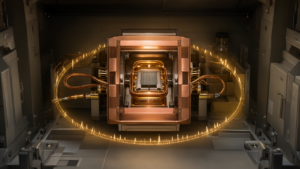
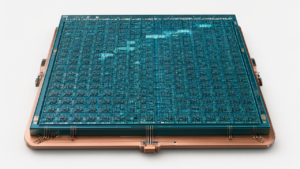
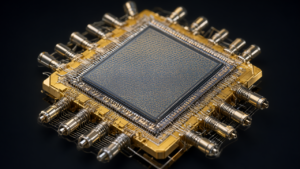
- The research leveraged Quantinuum’s H2 trapped-ion quantum processor, seamlessly integrated with Microsoft’s advanced qubit virtualization platform. This synergy, capitalizing on the trapped-ion QCCD (Quantum Charge-Coupled Device) hardware architecture, enabled the execution of highly sophisticated quantum error correction experiments.
- Experiments revealed a dramatic reduction in logical error rates: from an approximate 0.8% for the physical qubit scheme to an impressive 0.001%, representing an improvement factor of up to 800 times. Crucially, the team successfully performed 14,000 consecutive circuit operations while maintaining logical error-free status, underscoring a significant leap in preserving quantum information coherence over extended operations.
- The study meticulously established experimental parameters for effective error suppression in complex quantum circuits. These findings indicate a strong potential for reducing the overall overhead typically associated with error correction, a vital prerequisite for scaling fault-tolerant quantum computers to millions of qubits.
- Quantinuum emphasized that these fault tolerance advancements were achieved on its commercial hardware, rather than on theoretical or prototype systems. This strategic focus aims to concretely demonstrate the feasibility of reducing the resource overhead required to scale quantum computers for real-world, practical applications.
Strategic Significance
This technological breakthrough represents a significant opening for tackling computational challenges previously considered intractable, particularly in fields such as quantum chemistry simulations, advanced materials discovery, and pharmaceutical development. The achievement of high-fidelity logical qubits will be especially impactful in applications demanding high-precision simulations. This progress is expected to accelerate the development of larger, more reliable quantum processors, thereby expediting the arrival of practical quantum applications across diverse sectors including finance, logistics, and artificial intelligence. By validating robust error correction capabilities on commercial hardware, this research marks a crucial and tangible step toward the widespread practical realization of quantum computing.
Get our weekly technology intelligence — free
Receive an infographic that lets you judge at a glance whether each field’s analysis report is worth reading.
Subscribe Free — Weekly Tech Intelligence
By subscribing, you’ll receive Troy-Technical’s weekly technology intelligence newsletter.
- Your email and selected fields are used only to deliver the newsletter.
- We never share your information with third parties.
- You can unsubscribe anytime via the link in each email.
See our Privacy Policy for details.
Takes about a minute · Unsubscribe anytime