Key Findings
NAN GreenMet, an Indian venture founded by Vedanta group executive Navin Agarwal, has announced a strategic partnership with Belgium’s Silox to construct a large-scale lithium-ion (Li-ion) battery recycling facility in Andhra Pradesh, India. This advanced plant aims to efficiently recover valuable metals such as lithium, cobalt, nickel, and manganese from spent Li-ion batteries using hydrometallurgical processes. With a final target processing capacity of 40,000 tonnes of battery material annually, this initiative is expected to play a crucial role in meeting the critical mineral demands of India’s burgeoning electric vehicle (EV) industry.
Technical Details
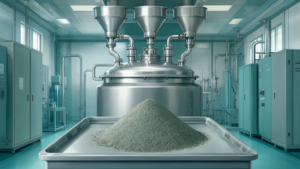
The hydrometallurgical process to be employed at the recycling facility involves pre-treating spent Li-ion batteries, followed by dissolving the metals in specific acid solutions, and then chemically separating and refining them. This method offers several advantages over pyrometallurgical processes (which involve melting batteries at high temperatures), including lower energy consumption and the ability to recover high-purity metals.
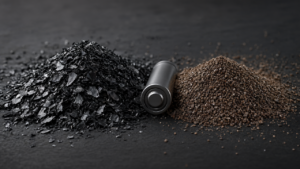
- Targeted Metals: Recovery will focus on lithium, cobalt, nickel, and manganese, which are key components of EV batteries and are experiencing high global demand.
- Processing Capacity: The ultimate goal is to process 40,000 tonnes of used battery material annually, establishing substantial recycling capacity to address India’s growing battery waste challenges.
- Process Efficiency: Hydrometallurgy enables high recovery rates and the production of high-purity metals, ensuring that the recovered materials are suitable for direct reuse in new battery manufacturing.
- Environmental Considerations: The process aims to minimize environmental impact through the use of closed-loop chemical systems and efficient wastewater treatment.
The deployment of this technology is critical for India to enhance its competitiveness within the global battery recycling value chain.
Background & Industry Context
India’s EV market is expanding rapidly, and a corresponding increase in spent batteries is anticipated. Currently, India heavily relies on imports for most of its critical minerals like lithium, cobalt, and nickel, making its economic growth potentially vulnerable to supply chain instability. The partnership between NAN GreenMet and Silox represents a crucial step towards reducing this import dependency and establishing a “circular economy” within the country. This will help secure a stable supply of raw materials and support the sustainable development of the EV industry.
Strategic Significance & Outlook
The construction of this large-scale recycling facility in Andhra Pradesh represents a groundbreaking development for India’s EV sector. Once operational, the plant will enable the recovery and reuse of valuable metals domestically, significantly strengthening India’s critical mineral supply chain. In the long term, India has the potential to become a regional hub for battery recycling, attracting spent batteries from both domestic and international sources, thereby establishing broader influence. This project is garnering international attention as a vital infrastructure investment supporting the transition to a sustainable future.
Get our weekly technology intelligence — free
Receive an infographic that lets you judge at a glance whether each field’s analysis report is worth reading.
Subscribe Free — Weekly Tech Intelligence
By subscribing, you’ll receive Troy-Technical’s weekly technology intelligence newsletter.
- Your email and selected fields are used only to deliver the newsletter.
- We never share your information with third parties.
- You can unsubscribe anytime via the link in each email.
See our Privacy Policy for details.
Takes about a minute · Unsubscribe anytime