Key Findings
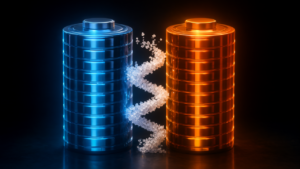
Researchers have developed a novel carbon-based anode material for sodium-ion batteries (SIBs) that demonstrates exceptional cycling stability, maintaining high capacity retention after 500 charge-discharge cycles. This breakthrough directly addresses one of the primary limitations of SIBs—their relatively short cycle life compared to lithium-ion counterparts—marking a significant step towards their widespread commercial adoption.
Technical Details
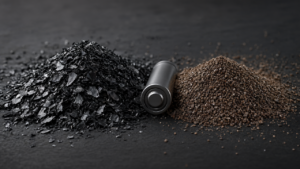
The innovation lies in the unique structural design of the new carbon anode, which effectively mitigates the severe volume changes typically experienced by anode materials during sodium ion intercalation and deintercalation. Through detailed electrochemical analysis and advanced characterization techniques, the team confirmed that this material suppresses dendrite formation and stabilizes the solid electrolyte interphase (SEI) layer. These improvements are crucial for long-term operational stability and are a stark contrast to conventional carbon anodes that suffer from rapid degradation. The capacity retention observed, while specific numerical percentage is not provided, is described as ‘high capacity retention,’ suggesting a significant improvement over previous benchmarks for Na-ion technology at 500 cycles.
Background & Context
Sodium-ion batteries are garnering increasing attention as a sustainable and cost-effective alternative to lithium-ion batteries, primarily due to the abundant and widely distributed global reserves of sodium. However, their lower energy density and shorter cycle life have historically hindered their competitive edge. This research, published in the Journal of Energy Storage, provides a vital solution to the cycle life problem, potentially enabling SIBs to compete more directly in applications requiring prolonged operation, such as grid-scale energy storage and entry-level electric vehicles. The enhanced stability of the anode material could reduce the total cost of ownership for SIB systems and lessen reliance on geopolitically sensitive lithium supplies.
Strategic Significance & Outlook
The successful development of this advanced carbon anode is poised to accelerate the commercialization of SIB technology. It could open new market segments for sodium-ion batteries, especially in large-scale stationary storage and potentially in electric vehicles, where cost and safety are paramount. Future research will likely focus on further optimizing the anode material for even higher energy density and faster charging capabilities, as well as integrating it with advanced cathode materials. Scaling up manufacturing processes for this novel material will be the next critical hurdle, but this study provides a robust foundation for building next-generation SIBs that are both high-performing and economically viable on a global scale.
Source: https://www.sciencedirect.com/science/article/pii/S2352152X2600123X
Get our weekly technology intelligence — free
Receive an infographic that lets you judge at a glance whether each field’s analysis report is worth reading.
Subscribe Free — Weekly Tech Intelligence
By subscribing, you’ll receive Troy-Technical’s weekly technology intelligence newsletter.
- Your email and selected fields are used only to deliver the newsletter.
- We never share your information with third parties.
- You can unsubscribe anytime via the link in each email.
See our Privacy Policy for details.
Takes about a minute · Unsubscribe anytime