Key Findings
Professor Rakesh Kumar Sharma and his research team have published a detailed journal article on the latest advancements in functionalized nanomaterials-based biosensing for the precise monitoring of food and waterborne pathogens. This research aims to leverage the power of nanotechnology to provide innovative solutions for rapid and highly sensitive detection of pathogens in environmental contexts.
Technical/Clinical Details
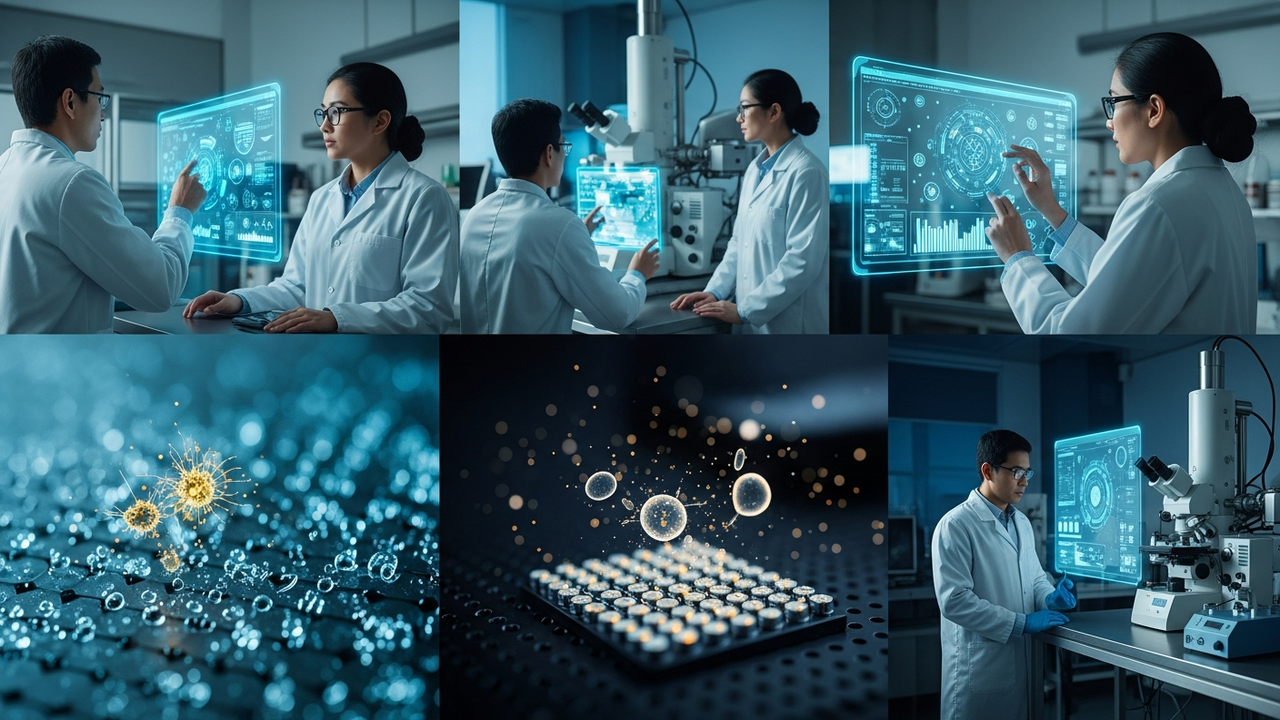
This review article elaborates on how various functionalized nanomaterials, such as gold nanoparticles, quantum dots, and graphene-based materials, are employed to enhance the sensitivity, selectivity, and response time of biosensors. These nanomaterials offer a platform for specific interactions with target biomolecules of pathogens (e.g., DNA, RNA, proteins). Their nanoscale structures possess a high surface-area-to-volume ratio and unique physicochemical properties, which amplify detection signals and enable accurate sensing of pathogens even at very low concentrations. By integrating with detection principles like fluorescence, electrochemistry, and surface plasmon resonance (SPR), faster and more cost-effective on-site monitoring than traditional methods is becoming increasingly feasible.
Background & Context
Contamination by food and waterborne pathogens poses a severe global public health threat, leading to millions of illnesses and significant economic losses annually. Conventional pathogen detection methods predominantly rely on time-consuming culture-based techniques or expensive laboratory-based molecular methods. However, these methods have hindered rapid responses, especially during outbreaks of food poisoning or waterborne diseases. The advancement of functionalized nanomaterials-based biosensing addresses these challenges by enabling real-time, highly sensitive pathogen detection in various settings, including food processing facilities, water treatment plants, and environmental monitoring stations.
Strategic Significance & Outlook
The research by Professor Rakesh Kumar Sharma’s team provides a crucial foundation for the development of next-generation food safety and water quality management systems. Future research will focus on developing multiplex sensors capable of detecting multiple pathogens simultaneously, miniaturizing and making devices portable, and further validating their robustness and reliability with actual food and water samples. Widespread adoption of this technology is expected to significantly contribute to early warning of pathogen outbreaks, enhance food supply safety, and improve global public health. This work demonstrates the immense potential of nanotechnology in the biosensor field.
Source: #
Get our weekly technology intelligence — free
Receive an infographic that lets you judge at a glance whether each field’s analysis report is worth reading.
Subscribe Free — Weekly Tech Intelligence
By subscribing, you’ll receive Troy-Technical’s weekly technology intelligence newsletter.
- Your email and selected fields are used only to deliver the newsletter.
- We never share your information with third parties.
- You can unsubscribe anytime via the link in each email.
See our Privacy Policy for details.
Takes about a minute · Unsubscribe anytime