Key Findings
In the comparative analysis of real-time monitoring technologies for bioprocess manufacturing, Raman spectroscopy has been highlighted for its superior selectivity over Near-Infrared (NIR) spectroscopy. Specifically, for monitoring crucial metabolites such as glucose and lactate in cell cultures, Raman offers clearer data due to minimal interference from water molecules. This characteristic is paramount for deepening process understanding and significantly enhancing quality control throughout the manufacturing lifecycle.
Technical/Clinical Details
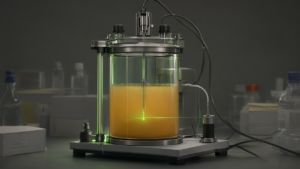
Raman spectroscopy measures molecular vibrational spectra, providing precise information about specific chemical bonds. Water exhibits a weak Raman scattering signal, making the technique highly suitable for detecting trace metabolites within aqueous cell culture media. Conversely, while NIR spectroscopy provides information on the overall sample composition, its strong water signal can limit its selectivity for specific metabolites in complex bioprocess fluids. For both technologies to achieve accurate real-time quantitative analysis, the development of sophisticated chemometric models (multivariate statistical models) is essential to interpret complex datasets. These models are constructed by establishing correlations between spectral data and reference analytical data. Furthermore, the integration of probes into bioreactors presents key engineering challenges, including ensuring sterilization compatibility to prevent contamination and designing robust probes capable of withstanding harsh process environments.
Background & Context
The U.S. FDA and European EMA actively advocate for the adoption of Process Analytical Technology (PAT) in biopharmaceutical manufacturing, positioning it as an indispensable element for achieving Quality by Design (QbD) principles. PAT, by enabling real-time process monitoring and control instead of traditional offline analysis, contributes to improved manufacturing efficiency, ensured product quality consistency, and cost reduction. As the importance of real-time monitoring grows, understanding the advantages and disadvantages of each technology and selecting the optimal tool for specific applications becomes a critical industry challenge.
Strategic Significance & Outlook
The integrated and complementary utilization of Raman and NIR spectroscopy is poised to shape the future of bioprocess monitoring. Combining Raman’s superior selectivity with NIR’s broader applicability will yield more comprehensive real-time datasets. Moreover, the synergy of these spectroscopic data with AI and machine learning algorithms will accelerate the development of advanced digital twin models capable of early anomaly detection and predictive process control. This evolution is expected to transition next-generation biopharmaceutical manufacturing into a more automated, robust, and cost-efficient enterprise.
Get our weekly technology intelligence — free
Receive an infographic that lets you judge at a glance whether each field’s analysis report is worth reading.
Subscribe Free — Weekly Tech Intelligence
By subscribing, you’ll receive Troy-Technical’s weekly technology intelligence newsletter.
- Your email and selected fields are used only to deliver the newsletter.
- We never share your information with third parties.
- You can unsubscribe anytime via the link in each email.
See our Privacy Policy for details.
Takes about a minute · Unsubscribe anytime