Key Findings
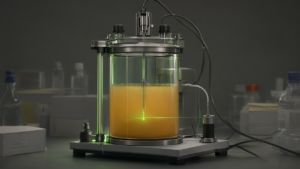
In the scale-up of bioreactors, the integration of real-time monitoring tools is emerging as an indispensable element. Electrochemical sensors, optical sensors, Process Analytical Technology (PAT) instruments such as Raman and Near-Infrared (NIR) spectroscopy, and capacitance probes for measuring live cell density are collectively enabling more detailed process visibility and control. These tools maximize their value, especially when combined with digital twin technology and Computational Fluid Dynamics (CFD) models, which are crucial for predicting spatial variations in large-scale cultures.
Technical/Clinical Details
Real-time monitoring tools continuously measure parameters such as pH, dissolved oxygen, temperature, and concentrations of key metabolites (e.g., glucose, lactate) within the bioreactor. Capacitance probes non-invasively measure live cell density by leveraging the dielectric properties of cell membranes, providing real-time insights into culture progression. This data is then integrated into digital twin models that simulate the physical and biological processes within the bioreactor, predicting behavior during scale-up. CFD models fluid flow, mixing, and mass transfer, helping to identify spatial heterogeneities common in large-scale reactors and optimize their design. Closed-loop control systems, which utilize real-time gas composition and metabolite data, automatically adjust feed rates and aeration conditions to maintain optimal cell growth and product yield.
Background & Context
In biopharmaceutical manufacturing, particularly for advanced therapies like cell and gene therapy products, there is an urgent need to reduce production costs and accelerate time-to-market while ensuring product quality and safety. Scaling up is essential for increasing production capacity, but unpredictable process variations during scale-up can elevate quality risks and prolong development timelines. Real-time monitoring and digital twin technologies offer powerful solutions to address these challenges, ensuring process consistency and reproducibility. These approaches align with Quality by Design (QbD) principles advocated by the FDA and EMA, supporting the implementation of more efficient and robust manufacturing strategies.
Strategic Significance & Outlook
Further integration of real-time monitoring tools, digital twins, and AI/machine learning will accelerate the transformation of bioreactors into ‘smart factories.’ This will enhance the overall automation level of processes and minimize the need for human intervention. In the future, these technologies are expected to contribute to predictive maintenance, autonomous process optimization, and automated regulatory compliance, forming the foundation for next-generation biopharmaceutical manufacturing. This evolution is key to delivering innovative therapies to patients more quickly and affordably.
Source: https://cellbase.com/blogs/news/bioreactor-scale-up-real-time-monitoring-tools
Get our weekly technology intelligence — free
Receive an infographic that lets you judge at a glance whether each field’s analysis report is worth reading.
Subscribe Free — Weekly Tech Intelligence
By subscribing, you’ll receive Troy-Technical’s weekly technology intelligence newsletter.
- Your email and selected fields are used only to deliver the newsletter.
- We never share your information with third parties.
- You can unsubscribe anytime via the link in each email.
See our Privacy Policy for details.
Takes about a minute · Unsubscribe anytime