Key Findings
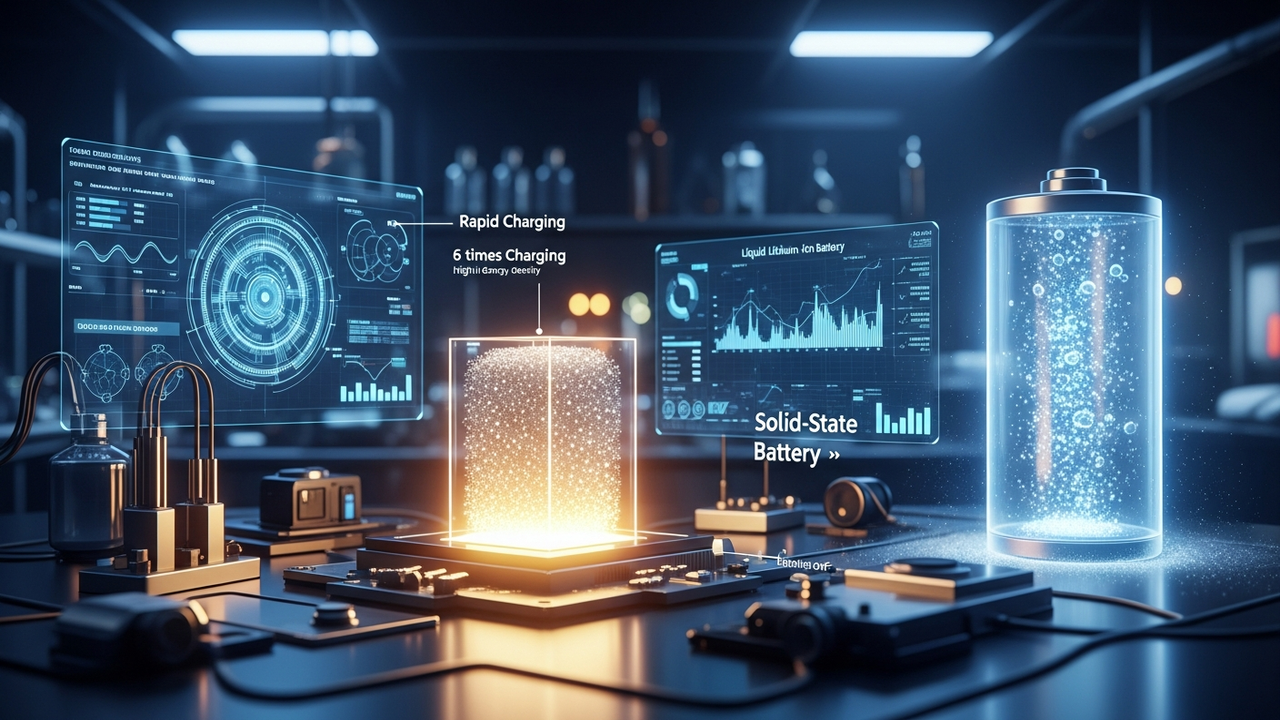
Solid-state batteries are demonstrating significantly improved performance over traditional liquid-ion batteries, including ultra-fast charging capabilities up to six times faster and higher energy density. Crucially, they enhance safety by eliminating flammable liquid electrolytes and offer superior performance at high temperatures, paving the way for revolutionary advancements in various applications.
Technical / Clinical Details
The primary advantages of solid-state batteries stem from their solid electrolyte, which allows for a denser packing of charged ions, achieving similar or better performance than liquid-state batteries in a smaller form factor. This solid nature inherently improves thermal stability and eliminates the risk of thermal runaway associated with flammable liquid electrolytes, thereby dramatically enhancing safety. Furthermore, the ability to charge up to six times faster than conventional lithium-ion batteries represents a significant leap for electric vehicles and portable electronics. However, the technology is not without its challenges. Operationally, solid-state batteries require constant mechanical pressure to maintain optimal contact between the electrodes and the solid electrolyte, which complicates packaging and adds to system cost. Performance degradation at temperatures below 50 degrees Celsius is another notable limitation, restricting their efficacy in colder climates without additional thermal management. Additionally, current solid-state designs generally exhibit shorter lifespans compared to mature lithium-ion technology, a critical factor for long-term applications.
Background & Context
Solid-state batteries are heralded as the next generation of energy storage, promising to overcome the inherent limitations of conventional lithium-ion batteries, particularly in terms of safety and energy density. The electric vehicle industry, in particular, views solid-state technology as a key enabler for extending range and drastically reducing charging times. Despite the clear advantages, the high manufacturing costs and significant technical hurdles have prevented widespread commercialization.
Strategic Significance & Outlook
Industry forecasts predict that solid-state batteries will enter mass production within the next 3-5 years, with intensive research and development efforts aimed at addressing current limitations. Innovations in materials science and manufacturing processes are crucial to improving low-temperature performance, managing mechanical interface issues, and extending cycle life. Successful deployment will unlock transformative applications in electric vehicles, drones, medical devices, and wearable technology, fundamentally reshaping the energy landscape.
Source: https://www.sinexcel-re.com/blog/solid-state-batteries-pros-cons-advantages-disadvantages/
Get our weekly technology intelligence — free
Receive an infographic that lets you judge at a glance whether each field’s analysis report is worth reading.
Subscribe Free — Weekly Tech Intelligence
By subscribing, you’ll receive Troy-Technical’s weekly technology intelligence newsletter.
- Your email and selected fields are used only to deliver the newsletter.
- We never share your information with third parties.
- You can unsubscribe anytime via the link in each email.
See our Privacy Policy for details.
Takes about a minute · Unsubscribe anytime