Key Findings
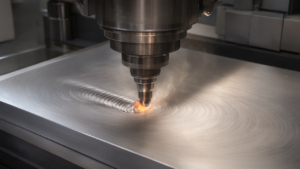
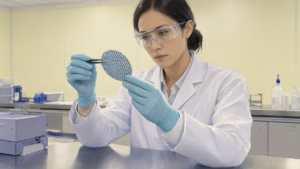
Research aimed at building a ‘world model’ in the field of corrosion science is gaining momentum, strongly advocating for the necessity of generative material models that account for corrosion-specific properties and mechanisms. Existing generative AI models developed by DeepMind, such as GNoME (Graph Networks for Materials Exploration) and MatterGen, have already demonstrated their capability in generating stable inorganic materials. There is significant potential for these models to revolutionize the design of corrosion-resistant materials by being fine-tuned with corrosion-related constraints.
Technical / Clinical Details
A ‘world model for corrosion science’ refers to an AI-based integrated framework capable of comprehensively understanding, predicting, and designing optimal corrosion-resistant materials across various environmental conditions. Generative AI models like GNoME and MatterGen learn crystal structure patterns and stability from vast materials databases, enabling them to generate novel, previously unknown stable materials. When applying these models to corrosion science, corrosion-specific information—such as environmental parameters (e.g., pH, temperature, salt concentration, redox potential), material microstructure, and composition—is added as conditions to the model. This allows AI to design materials likely to exhibit superior corrosion resistance under specific conditions. For example, it becomes possible to predict the corrosion behavior of metals in marine or high-temperature/high-pressure environments and generate candidate alloy compositions or coating materials capable of withstanding those conditions.
Background & Context
Corrosion inflicts severe economic losses and safety risks across all sectors, including industrial infrastructure, transportation systems, energy facilities, and medical devices. Estimated annual losses to the global economy run into trillions of dollars, making countermeasures an urgent priority. Traditional development of corrosion-resistant materials has largely relied on trial-and-error experimentation and empirical rules, proving to be time-consuming and inefficient. While theoretical methods like first-principles calculations are employed, fully modeling the complex multi-scale phenomena of corrosion remains challenging. Applying generative AI to corrosion science is expected to overcome this traditional bottleneck, offering a new paradigm for designing corrosion-resistant materials more rapidly and effectively.
Strategic Significance & Outlook
The realization of a generative AI ‘world model’ in corrosion science will revolutionize material design and lifetime prediction. Moving forward, models like GNoME and MatterGen are expected to enhance their ability to model more complex corrosion mechanisms (e.g., stress corrosion cracking, pitting corrosion, corrosion fatigue) and multi-component interactions. Furthermore, advanced integration with experimental robotics systems capable of autonomously synthesizing and evaluating AI-predicted materials could lead to fully automated systems, akin to ‘corrosion-resistant material factories.’ This will contribute to longer infrastructure lifespans, reduced maintenance costs, efficient resource utilization, and lower environmental impact, becoming an indispensable technology for achieving a sustainable society. The efficiency of materials research is a key determinant of the pace of innovation.
Source: #
Get our weekly technology intelligence — free
Receive an infographic that lets you judge at a glance whether each field’s analysis report is worth reading.
Subscribe Free — Weekly Tech Intelligence
By subscribing, you’ll receive Troy-Technical’s weekly technology intelligence newsletter.
- Your email and selected fields are used only to deliver the newsletter.
- We never share your information with third parties.
- You can unsubscribe anytime via the link in each email.
See our Privacy Policy for details.
Takes about a minute · Unsubscribe anytime