Key Findings
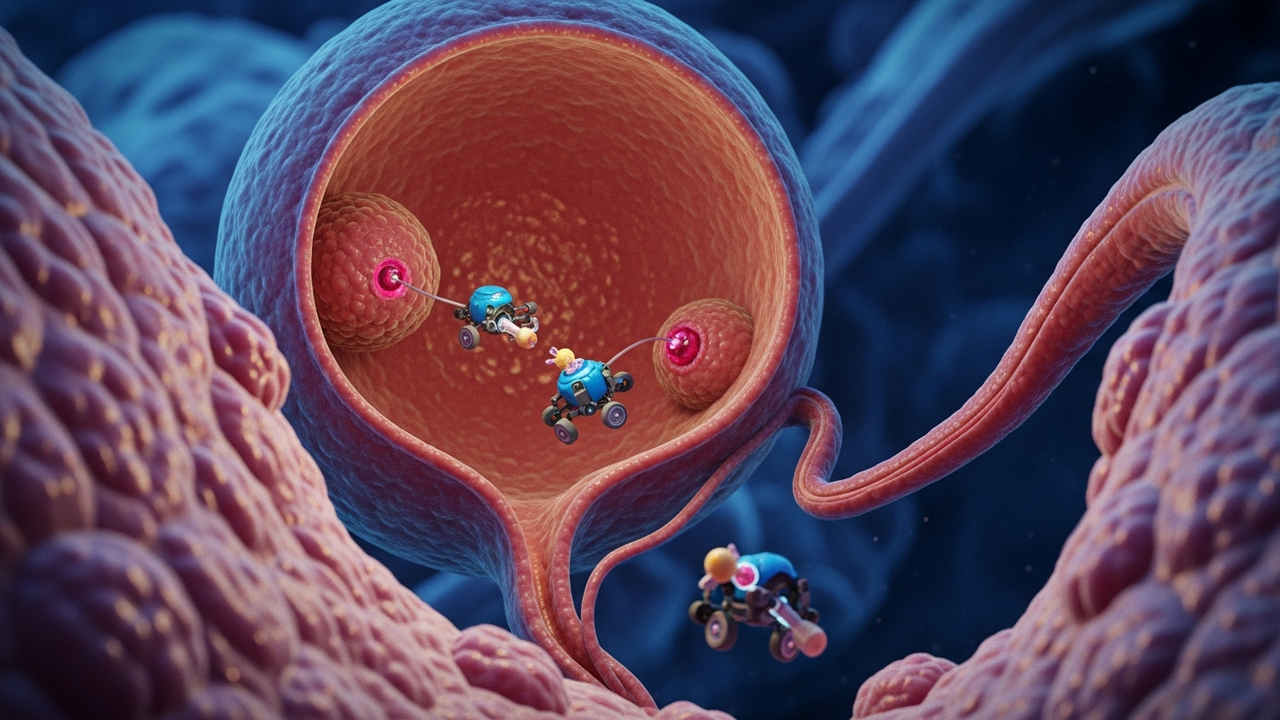
Published in Nature Nanotechnology, a groundbreaking study unveils an AI-powered system that uses magnetic biohybrid microrobots for highly precise, spatiotemporally controlled drug delivery within the bladder. This deep learning-guided image-feedback system enables non-invasive, real-time navigation of microrobots, leading to dramatically enhanced tissue penetration and therapeutic efficacy in a murine bladder tumor model. This advance addresses a critical challenge in oncology: achieving targeted drug concentrations while minimizing systemic side effects.
Technical & Clinical Details
The core innovation lies in the synergistic integration of deep learning algorithms with a high-resolution imaging system that provides live feedback. Microrobots, propelled and steered by external magnetic fields, are precisely guided to the tumor site. Upon reaching the target, they are triggered to release therapeutic agents in a controlled manner, akin to a ‘precision strike.’ This approach significantly reduces the systemic exposure to potent chemotherapy drugs, thereby mitigating adverse effects commonly associated with conventional intravenous administration. The ability to monitor the drug delivery process in real-time non-invasively is a crucial safety and efficacy feature for future clinical translation, indicating a potential for comparable or superior therapeutic outcomes with reduced drug dosages.
Background & Context
Targeted drug delivery for solid tumors has long been hampered by inefficient tumor penetration and significant systemic toxicity. Microrobots have emerged as a promising avenue to overcome these limitations, yet their precise navigation and controlled drug release within complex biological environments remained a formidable technical hurdle. This research breaks through these barriers by leveraging advanced AI and biosensing technologies, paving the way for a new generation of drug delivery platforms. It particularly embodies the concept of ‘theranostics,’ where diagnostics and therapeutics are integrated into a single, intelligent system.
Strategic Significance & Outlook
The AI-guided microrobot system holds immense potential for broad application beyond bladder cancer, extending to various other solid tumor types where localized drug delivery is critical. Future work will focus on improving navigation capabilities in more complex physiological settings, expanding compatibility with diverse therapeutic agents, and ultimately, progressing towards human clinical trials. This technology is poised to redefine precision medicine, offering the promise of improved patient outcomes and quality of life by transforming how therapeutics are delivered.
Source: #
Get our weekly technology intelligence — free
Receive an infographic that lets you judge at a glance whether each field’s analysis report is worth reading.
Subscribe Free — Weekly Tech Intelligence
By subscribing, you’ll receive Troy-Technical’s weekly technology intelligence newsletter.
- Your email and selected fields are used only to deliver the newsletter.
- We never share your information with third parties.
- You can unsubscribe anytime via the link in each email.
See our Privacy Policy for details.
Takes about a minute · Unsubscribe anytime