Key Findings
Tianmu Lake Institute of Advanced Energy Storage Technologies (TIES), a prominent battery supplier for Chinese EV manufacturer Nio, has unveiled new “liquid-solid hybrid” battery cells with capacities of 314Ah and 588Ah. This innovative technology is designed to circumvent key bottlenecks in the mass production of all-solid-state batteries. The primary breakthrough lies in its in-situ solidification manufacturing process, which allows these advanced cells to be produced on existing lithium-ion battery production lines with only minor modifications, potentially accelerating market deployment dramatically.
Technical / Clinical Details
The liquid-solid hybrid battery developed by TIES represents an intermediate technology between fully solid-state batteries and conventional liquid-electrolyte lithium-ion batteries. Specific technical aspects include:
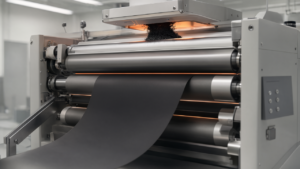
- In-Situ Solidification Manufacturing: This process involves solidifying the electrolyte within the battery cell during manufacturing. This significantly simplifies the complex steps typically involved in producing solid electrolytes and forming stable interfaces with electrodes.
- High Capacity Cells: Achieving high cell capacities of 314Ah and 588Ah directly contributes to higher energy density at the battery pack level, thereby extending the range of electric vehicles. The 588Ah cell, in particular, offers substantial benefits for larger EVs and commercial vehicles.
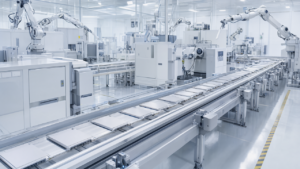
- Compatibility with Existing Infrastructure: The ability to manufacture these hybrid batteries without extensive retooling of existing lithium-ion production facilities reduces initial investment and shortens the time-to-market. This presents a highly practical approach, especially in light of warnings from industry leaders like CATL that full solid-state battery mass production is still a distant prospect.
This hybrid approach effectively bypasses the challenges associated with interfacial resistance and manufacturing complexity inherent in fully solid electrolytes, while still achieving some of the high energy density and safety benefits targeted by all-solid-state designs.
Background & Context
The electric vehicle (EV) market continues to demand longer driving ranges and faster charging times, making advancements in battery technology indispensable. While all-solid-state batteries are considered the ultimate solution, their complex manufacturing processes and high costs remain significant barriers to mass production. Liquid-solid hybrid batteries, such as those developed by TIES, are gaining attention as pragmatic “bridge solutions” to fill this gap. Leading EV manufacturers like Nio are partnering with TIES to leverage these battery innovations to secure a competitive edge in the market.
Strategic Significance & Outlook
TIES’s liquid-solid hybrid battery cells hold the potential to deliver high-performance and safe batteries to the EV market without waiting for the full commercialization of all-solid-state technology. Their low barrier to entry, by maximizing the use of existing production infrastructure, suggests rapid market penetration. If successful, this technology could concurrently improve EV price competitiveness and performance, contributing to the broader adoption of electric vehicles. Its impact, particularly within the Chinese market, and future adoption cases and performance data will be closely observed.
Get our weekly technology intelligence — free
Receive an infographic that lets you judge at a glance whether each field’s analysis report is worth reading.
Subscribe Free — Weekly Tech Intelligence
By subscribing, you’ll receive Troy-Technical’s weekly technology intelligence newsletter.
- Your email and selected fields are used only to deliver the newsletter.
- We never share your information with third parties.
- You can unsubscribe anytime via the link in each email.
See our Privacy Policy for details.
Takes about a minute · Unsubscribe anytime