Key Findings
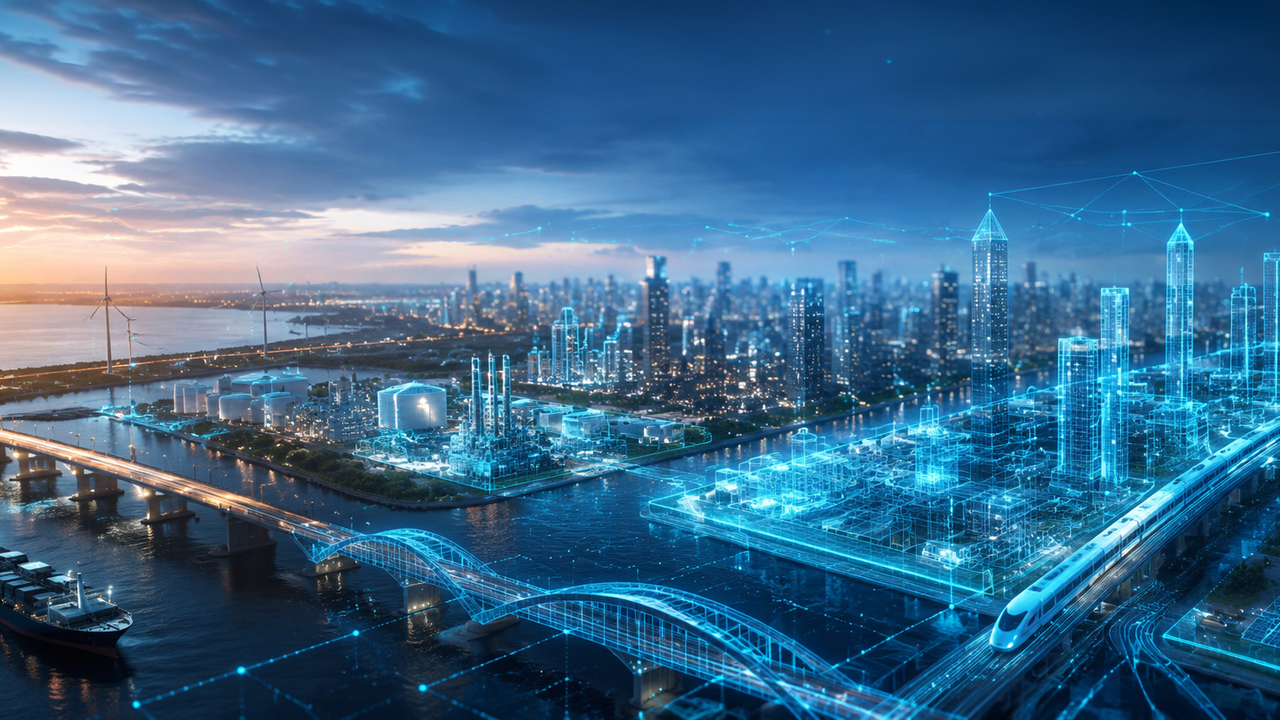
Digital twin technology is making revolutionary strides across diverse sectors, from urban development to manufacturing, ushering in an era where dynamic digital replicas of physical assets are linked with real-time data for performance monitoring, behavior prediction, and testing of modifications. Notably, NASA’s Michoud Assembly Facility (MAF) serves as a prominent example, showcasing how this technology contributes to optimizing manufacturing processes and enhancing reliability. This clearly demonstrates the transformative potential digital twins offer to industry, acting as a key technology that enables increased efficiency, cost reduction, and risk mitigation, while fostering data-driven, intelligent decision-making.
Technical / Clinical Details
A digital twin is a virtual model that faithfully replicates a physical object or system in the digital space. By synchronizing data between the real and virtual worlds in real-time, it enables various simulations, analyses, and predictions. Its main technical components include:
- Digital Replica of Physical Assets: Complex machinery, factory equipment, and urban infrastructure are replicated in the digital space using CAD models, physics simulation models, and operational data. This replica accurately reflects the design, structure, function, and properties of the physical object.
- Real-time Data Integration: Real-time operational data collected from sensors, IoT devices, SCADA systems, etc., is continuously fed back into the digital twin. This ensures that the digital twin always accurately reflects the current state of the physical object and can reproduce dynamic behaviors.
- Performance Monitoring and Diagnostics: Through the digital twin, the performance of physical assets can be monitored in real-time to detect abnormalities or signs of potential failure early. This enables predictive maintenance, reducing downtime and improving operational efficiency.
- Behavioral Prediction and Optimization: When combined with AI and machine learning algorithms, digital twins can predict future behaviors or simulate performance under specific scenarios. This allows for the formulation of optimal operational strategies and the evaluation of the impact of new design changes on the entire system, such as predicting manufacturing line bottlenecks or optimizing energy consumption.
- Change Testing and Risk Assessment: Various changes (e.g., component replacement, software updates, process modifications) can be virtually tested on the digital twin without affecting the physical system. This minimizes risk while identifying optimal improvements and verifying their effectiveness before implementation.
At NASA MAF, digital twins are utilized in the manufacturing of complex products like space launch systems to model the entire production process and identify potential issues in advance, thereby reducing manufacturing errors and improving product reliability.
Background & Context
With the advancement of Industry 4.0, manufacturing faces urgent challenges in improving productivity, stabilizing quality, and reducing costs. Furthermore, efficient management and optimization are essential for addressing aging urban infrastructure and realizing smart city initiatives. Digital twin technology has garnered significant attention recently as a powerful solution to these challenges. In high-tech sectors like aerospace and automotive, the use of digital twins across the entire product lifecycle—from design to manufacturing, operation, and maintenance—is accelerating. NASA’s adoption of this technology is a testament to its high reliability and practicality, strongly encouraging its adoption across other industries.
Strategic Significance & Outlook
Digital twin technology will continue to evolve rapidly and expand its application scope. In the future, integration with more advanced AI and machine learning models is expected to progress, potentially enabling digital twins to autonomously learn and make decisions. Concepts such as ‘twin of twins’ and ‘digital thread,’ where multiple digital twins collaborate, will also advance, allowing for the optimization of large-scale systems like entire supply chains or cities. This is predicted to bring about revolutionary changes in various fields, including smart city development, strengthening manufacturing resilience, maximizing energy efficiency, and enabling personalized medicine. Digital twins will further advance the fusion of the physical and digital worlds, becoming a foundational technology for building a more efficient and sustainable future society.
Get our weekly technology intelligence — free
Receive an infographic that lets you judge at a glance whether each field’s analysis report is worth reading.
Subscribe Free — Weekly Tech Intelligence
By subscribing, you’ll receive Troy-Technical’s weekly technology intelligence newsletter.
- Your email and selected fields are used only to deliver the newsletter.
- We never share your information with third parties.
- You can unsubscribe anytime via the link in each email.
See our Privacy Policy for details.
Takes about a minute · Unsubscribe anytime