Key Findings
Researchers have successfully demonstrated a novel dual-engineering strategy to mitigate lithium dendrite growth in all-solid-state batteries (ASSBs), a pervasive issue hindering their widespread adoption. This approach involves a two-pronged attack on lithium argyrodite (LPSC) solid electrolytes: bulk modification with polyvinylidene fluoride (PVDF) and interfacial stabilization via atomic layer deposition (ALD). The combined effect drastically reduces dendrite formation and significantly enhances electrolyte stability, marking a crucial step towards safer and more reliable ASSB technology.
Technical / Clinical Details
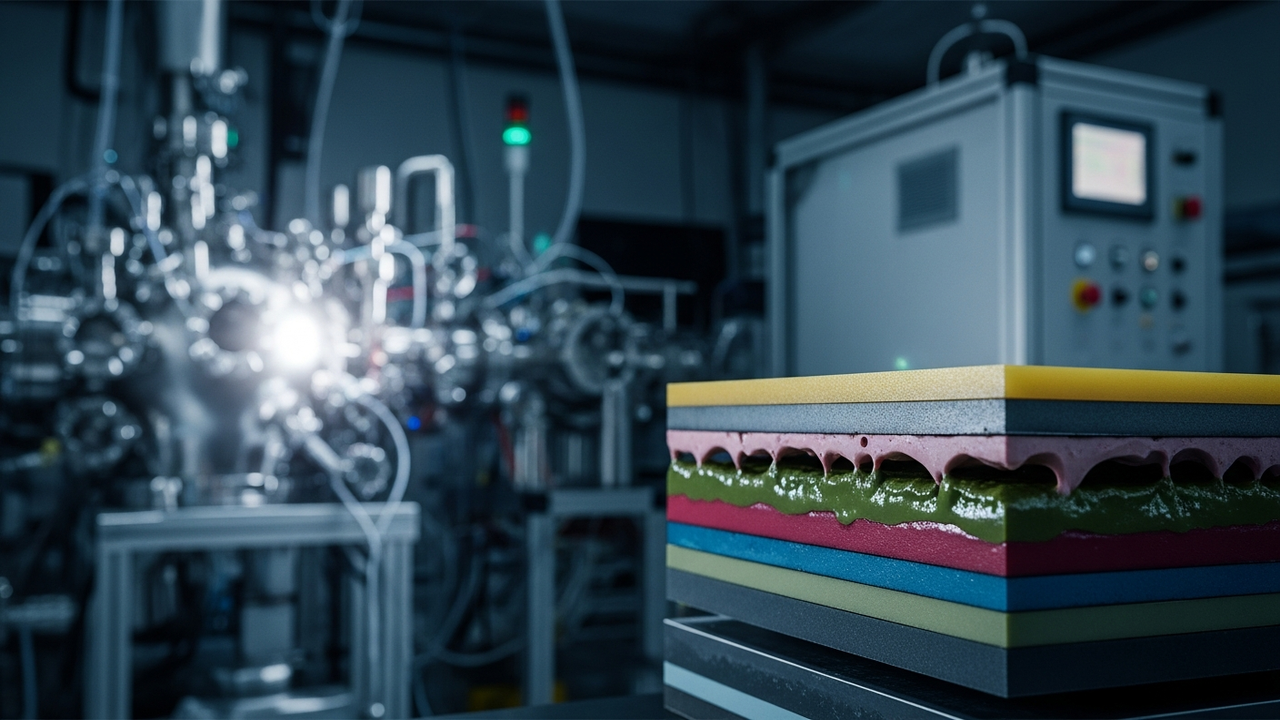
The core of this innovation lies in addressing both the bulk properties of the solid electrolyte and its interface with the lithium metal anode. LPSC was chosen for its high ionic conductivity. The bulk modification involved incorporating PVDF into the LPSC matrix, which is believed to enhance the mechanical resilience of the electrolyte, making it more resistant to dendrite penetration while promoting more uniform lithium ion transport. Subsequently, an ultrathin protective layer was applied to the electrolyte-anode interface using ALD. This ALD layer acts as a barrier, suppressing parasitic reactions and guiding homogenous lithium deposition, thereby preventing the localized stress concentrations that trigger dendrite nucleation and growth.
- Bulk Modification: PVDF integration improves the mechanical robustness of the LPSC electrolyte, enhancing its resistance to lithium dendrite intrusion.
- Interfacial Stabilization: The ALD layer minimizes interfacial impedance and prevents direct contact between lithium metal and the solid electrolyte, crucial for long-term stability.
- Advanced Characterization: The efficacy of the dual strategy was rigorously evaluated using state-of-the-art techniques such as tracer-exchange nuclear magnetic resonance (NMR) spectroscopy and 6/7Li magnetic resonance imaging (MRI). These methods provided direct visualization of lithium ion transport pathways and dendrite evolution, clearly showing the significant suppression of dendrite growth in the modified electrolytes compared to unmodified counterparts.
Background & Context
Lithium dendrite formation is a critical obstacle to the commercialization of ASSBs, which promise higher energy density and enhanced safety over conventional lithium-ion batteries by eliminating flammable liquid electrolytes. Dendrites can penetrate solid electrolytes, leading to internal short circuits, thermal runaway, and premature battery failure. Current strategies often focus on either bulk electrolyte properties or interface engineering in isolation. This dual-functional approach offers a more comprehensive solution by tackling both aspects simultaneously, potentially overcoming the limitations of single-strategy methods. The use of argyrodite electrolytes, known for their high sulfide ion conductivity, makes this research particularly relevant to automotive applications.
Strategic Significance & Outlook
This dual-engineering strategy represents a significant advance in solid-state battery technology, offering a viable pathway to overcome the persistent dendrite problem. By demonstrating substantial reductions in dendrite formation and improved electrolyte stability, this research could accelerate the development and deployment of high-performance ASSBs in electric vehicles, grid-scale energy storage, and portable electronics. Future work will likely focus on scaling up these modifications for industrial manufacturing, optimizing material compositions, and evaluating long-term performance under various operating conditions to bring this promising technology closer to commercial reality.
Get our weekly technology intelligence — free
Receive an infographic that lets you judge at a glance whether each field’s analysis report is worth reading.
Subscribe Free — Weekly Tech Intelligence
By subscribing, you’ll receive Troy-Technical’s weekly technology intelligence newsletter.
- Your email and selected fields are used only to deliver the newsletter.
- We never share your information with third parties.
- You can unsubscribe anytime via the link in each email.
See our Privacy Policy for details.
Takes about a minute · Unsubscribe anytime