Key Findings
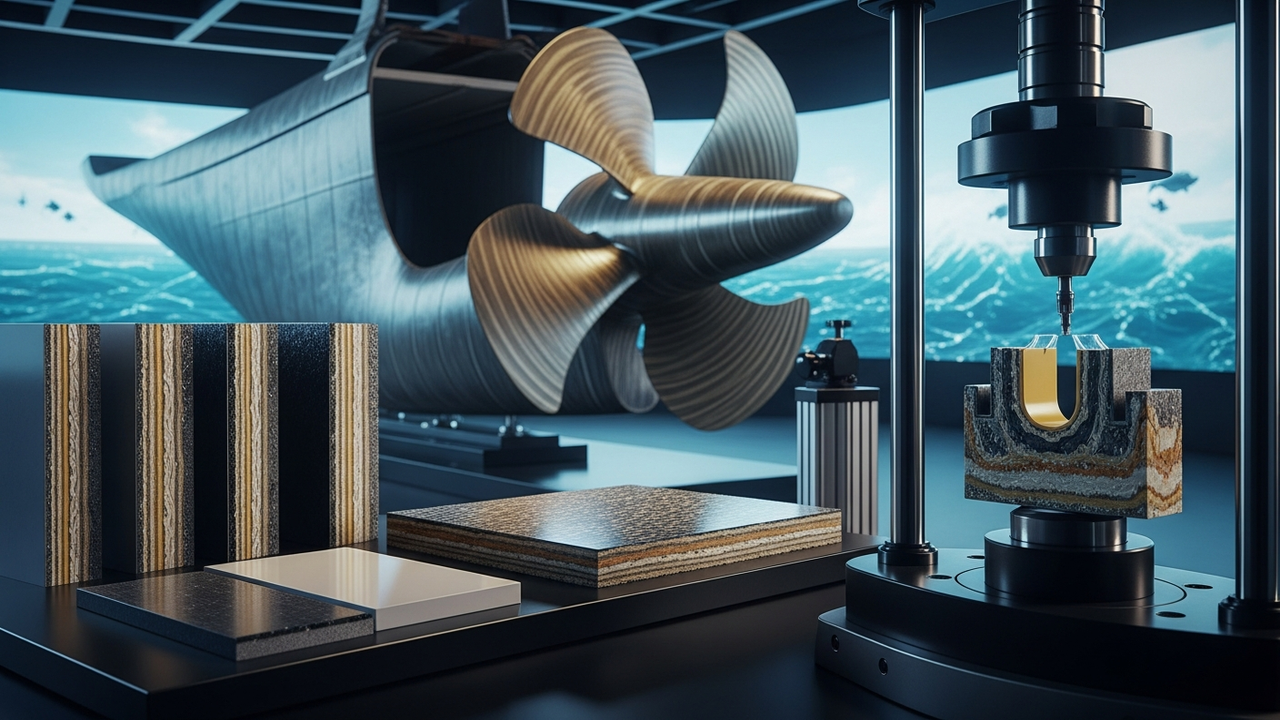
The maritime industry is increasingly adopting composite materials, particularly Fiber-Reinforced Polymers (FRP), leveraging their high strength-to-weight ratio for the construction of complex lightweight structures. This review specifically reveals a technological shift in high-performance marine applications from conventional glass fiber-reinforced polymer (GFRP) composites to carbon fiber (CFRP) or aramid fiber (AFRP) composites combined with epoxy or vinylester matrices. These advanced composites are crucial for meeting the stringent mechanical and durability requirements of harsh marine environments.
Technical Details
Historically, GFRP composites dominated traditional marine structures such as small vessels and some recreational boats due to their balanced cost and performance. However, more advanced applications—including larger commercial ships, naval vessels, offshore structures, and deep-sea exploration equipment—demand higher strength, stiffness, fatigue resistance, and superior corrosion resistance than GFRP can provide under extreme operational conditions. This is where composites reinforced with carbon or aramid fibers within an epoxy or vinylester resin matrix demonstrate their full potential. Carbon fiber composites offer exceptionally high tensile strength and stiffness, contributing to structural lightweighting and improved fuel efficiency. Aramid fiber composites, conversely, provide excellent impact absorption and fatigue resistance, making them suitable for areas requiring protection against high-energy impacts. Epoxy resins impart high adhesive strength and chemical resistance, while vinylester resins offer superior water and chemical resistance, ensuring the long-term durability of the composites in marine settings.
Background & Context
The maritime industry faces global trends of improving fuel efficiency, reducing emissions, and tightening environmental regulations. Lightweighting hulls is one of the most effective strategies to achieve these objectives, accelerating the adoption of FRPs. Additionally, novel marine structures, such as offshore wind turbine foundations and floating oil and gas platforms, require innovative materials capable of withstanding severe marine environments. FRPs offer significant advantages over traditional steel, including reduced maintenance costs, extended service life, and greater design freedom. This review provides an overview of the evolution of material selection in marine engineering and points toward future research and development directions.
Strategic Significance & Outlook
Fiber-Reinforced Polymers will play a critical role in shaping the future of the maritime industry. High-performance epoxy or vinylester-based carbon/aramid fiber composites, in particular, will become indispensable materials for designing next-generation vessels, marine energy systems, and deep-sea technologies. Further research and development should focus on more cost-effective manufacturing methods, composite recycling technologies, and establishing predictive models for long-term environmental degradation behavior. These advancements are expected to broaden the application scope of FRPs, significantly contributing to the sustainability and competitiveness of the maritime industry. Investors should observe innovative material suppliers and manufacturing technology providers in the marine composite market.
Get our weekly technology intelligence — free
Receive an infographic that lets you judge at a glance whether each field’s analysis report is worth reading.
Subscribe Free — Weekly Tech Intelligence
By subscribing, you’ll receive Troy-Technical’s weekly technology intelligence newsletter.
- Your email and selected fields are used only to deliver the newsletter.
- We never share your information with third parties.
- You can unsubscribe anytime via the link in each email.
See our Privacy Policy for details.
Takes about a minute · Unsubscribe anytime