Background: The Interconnect Challenge in Next-Gen AI and HPC
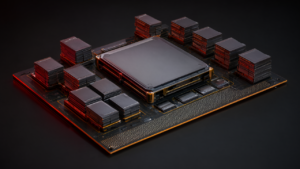
The escalating scale of AI models and the increasing processing demands of modern data centers are rapidly exposing the fundamental limits of traditional electrical signaling for chip-to-chip communication. Optical interconnects are emerging as a promising and indispensable solution for next-generation High-Performance Computing (HPC) and AI accelerators, offering high bandwidth, low power consumption, and low latency. However, achieving efficient and reliably integrated packaging of optical and CMOS devices remains a significant technical hurdle. Specifically, optimizing underfill material properties and process control is critical, as these factors directly impact the long-term reliability and manufacturing yield of these complex packages. Imec, a global leader in semiconductor R&D, is playing a crucial role in pushing the frontiers of this vital field.
Key Research Areas and Strategic Impact
To advance this critical domain, Imec is inviting applications for a PhD candidate to lead research into microfluidics and photonics packaging for optical interconnects, essential for next-generation AI and HPC systems. This project specifically targets the capillary underfill process—a crucial step in packaging integrated optical and CMOS chips—aiming to resolve critical issues that currently limit the reliability and performance of high-density optical/CMOS packages. The successful candidate will focus on overcoming several key technical challenges, including:
- Void Formation Suppression: Addressing voids generated during underfill material dispensing and subsequent curing between the chip and substrate, which are a primary cause of reliability degradation.
- Wetting Behavior and Rheology Optimization: Precisely controlling the flow and material properties (rheology) of the liquid underfill for uniform filling within the microscopic, confined geometries of advanced packages.
- Adaptation to Non-Uniform Gap Heights: Developing robust underfill processes that can reliably accommodate variations in gap height between the chip and substrate, which arise from diversifying package structures.
- High-Density, Low-Cost, High-Throughput Packaging: Improving the overall manufacturing efficiency and economic viability of integrating optical and CMOS devices to enable their widespread adoption.
By effectively solving these challenges, this research will significantly enhance the performance, reliability, and manufacturability of optical interconnects, directly contributing to alleviating critical performance bottlenecks in future AI and HPC systems. This work is expected to accelerate the commercialization of optical interconnect technology, contributing to the realization of more powerful and energy-efficient computing platforms. Furthermore, improvements in the capillary underfill process will lead to reduced packaging costs and increased production throughput, fostering broader industrial applications and positioning this research as a vital component in the advanced packaging roadmap for the semiconductor industry.
Get our weekly technology intelligence — free
Receive an infographic that lets you judge at a glance whether each field’s analysis report is worth reading.
Subscribe Free — Weekly Tech Intelligence
By subscribing, you’ll receive Troy-Technical’s weekly technology intelligence newsletter.
- Your email and selected fields are used only to deliver the newsletter.
- We never share your information with third parties.
- You can unsubscribe anytime via the link in each email.
See our Privacy Policy for details.
Takes about a minute · Unsubscribe anytime