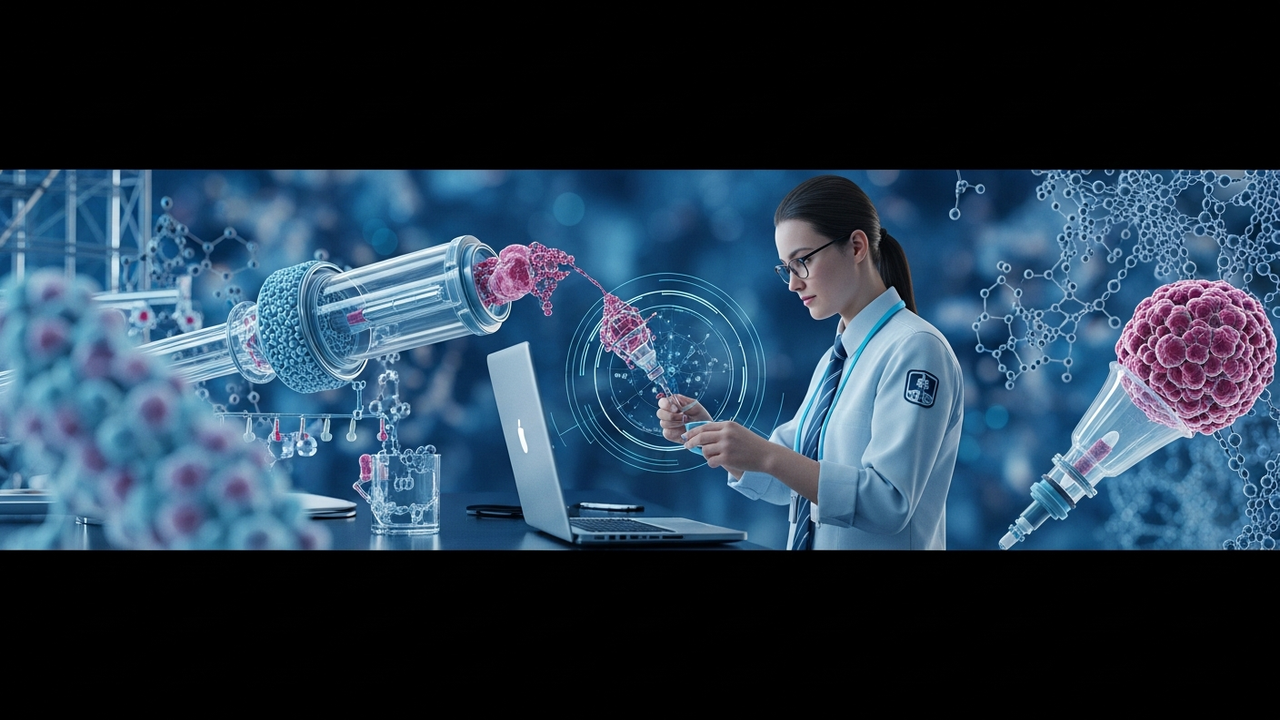
Key Findings
Nanotechnology-based Drug Delivery Systems (NDDS) have profoundly expanded their clinical impact over the past two decades, with numerous formulations approved for treating a variety of diseases including cancer, infectious diseases, and inflammatory conditions. These systems fundamentally improve core pharmacokinetic properties such as drug solubility, absorption, stability, and bioavailability, enabling targeted delivery to specific tissues or organs and thus overcoming many limitations of conventional therapeutic approaches.
Technical / Clinical Details
NDDS utilize various nanocarriers—such as liposomes, polymeric nanoparticles, micelles, and dendrimers—to encapsulate drugs or modify their surfaces. This approach leads to several significant improvements in drug performance:
- Enhanced Solubility: Dispersing poorly soluble drugs at the nanoscale dramatically increases their solubility within biological systems.
- Improved Bioavailability: Protecting drugs from degradation in the gastrointestinal tract and optimizing absorption pathways boosts their systemic circulation and utilization efficiency.
- Increased Stability: Drugs are shielded from oxidation and enzymatic degradation, enhancing the overall stability of the pharmaceutical formulation.
- Targeted Delivery: By functionalizing the nanocarrier surface with specific molecules (ligands), drugs can be selectively concentrated at diseased sites, such as cancer cells or inflamed tissues, thereby reducing off-target effects on healthy cells.
These capabilities maximize therapeutic efficacy and minimize adverse reactions, proving particularly valuable for highly toxic anticancer agents and biologicals requiring precise site-specific action.
Background & Context
Traditional drug therapies have long been challenged by non-specific action due to systemic administration, low bioavailability, and resultant side effects. The rapid advancements in nanotechnology in the 21st century have dramatically shifted the paradigm of drug delivery, giving rise to the new field of nanomedicine. Many pharmaceutical and biotechnology companies have invested heavily in NDDS development, with approved products now constituting a multi-billion-dollar market. Regulatory bodies are also actively developing guidelines for evaluating these innovative formulations.
Strategic Significance & Outlook
NDDS are expected to play a pivotal role in advancing personalized medicine. As applications increasingly tailor treatments based on individual patient genetic information and disease characteristics, significant improvements in treatment outcomes and quality of life are anticipated. However, widespread adoption necessitates overcoming challenges related to the complexity of quality control in manufacturing scale-up, generating long-term safety data, and improving cost-effectiveness. The integration of AI and machine learning for nanocarrier design optimization and the implementation of real-time quality monitoring technologies will be key to future developments.
Get our weekly technology intelligence — free
Receive an infographic that lets you judge at a glance whether each field’s analysis report is worth reading.
Subscribe Free — Weekly Tech Intelligence
By subscribing, you’ll receive Troy-Technical’s weekly technology intelligence newsletter.
- Your email and selected fields are used only to deliver the newsletter.
- We never share your information with third parties.
- You can unsubscribe anytime via the link in each email.
See our Privacy Policy for details.
Takes about a minute · Unsubscribe anytime