Key Findings
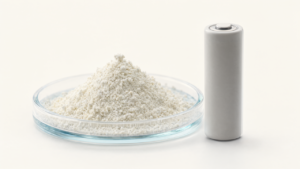
A team of researchers from an international consortium of universities has published groundbreaking findings in Nature Energy, detailing a novel halide solid electrolyte composition that exhibits an unprecedented ionic conductivity of 25 mS/cm at room temperature. This exceptional conductivity significantly surpasses that of current state-of-the-art solid electrolytes, signaling a major leap forward for the practical implementation of all-solid-state batteries.
Technical and Research Details
The developed halide solid electrolyte possesses a unique crystal structure conducive to efficient lithium-ion transport, making such high room-temperature conductivity a rare achievement. Furthermore, the material has demonstrated excellent chemical stability when interfaced with both lithium metal anodes and cathodes. This stability is crucial for suppressing detrimental side reactions and degradation at the electrode-electrolyte interface, which in turn enhances the battery’s long-term cycle life and overall safety. Traditionally, halide solid electrolytes have lagged behind sulfide-based counterparts in conductivity, making this discovery a significant overcoming of these prior limitations.
Background and Industry Context
All-solid-state batteries are lauded as the ‘holy grail’ of next-generation battery technology due to their potential for superior safety, higher energy density, and longer lifespan. However, their commercialization has been hampered by key barriers, particularly low ionic conductivity in solid electrolytes, high interfacial resistance with electrodes, and elevated manufacturing costs. This discovery of a high-performance halide solid electrolyte directly addresses the conductivity challenge, offering a new material paradigm for solid-state battery design. This opens avenues for a wide range of applications, including high-performance EVs, portable electronics, and grid-scale energy storage.
Strategic Significance and Outlook
This research breakthrough sets a new direction for all-solid-state battery R&D and is expected to stimulate further innovation in materials science and electrochemistry. The immediate priorities involve further optimization of this high-conductivity halide solid electrolyte and the development of scalable manufacturing processes. In the long term, all-solid-state batteries incorporating this material are anticipated to significantly outperform current lithium-ion batteries, dramatically extending electric vehicle ranges and providing safer energy storage solutions, thereby making a substantial contribution to a sustainable society.
Source: #
Get our weekly technology intelligence — free
Receive an infographic that lets you judge at a glance whether each field’s analysis report is worth reading.
Subscribe Free — Weekly Tech Intelligence
By subscribing, you’ll receive Troy-Technical’s weekly technology intelligence newsletter.
- Your email and selected fields are used only to deliver the newsletter.
- We never share your information with third parties.
- You can unsubscribe anytime via the link in each email.
See our Privacy Policy for details.
Takes about a minute · Unsubscribe anytime