Background
The European Union’s ambitious goal of achieving climate neutrality by 2050, a commitment shared by Romania, underscores the critical role of green hydrogen as a pivotal energy carrier. Green hydrogen is indispensable for decarbonizing industrial processes, transforming the transport sector’s fuel mix, and integrating renewable energy sources. This strategic importance is amplified by tightening international emission regulations, particularly in the aviation and maritime sectors, making sustainable solutions like Sustainable Aviation Fuel (SAF) and Hydrogenated Vegetable Oil (HVO) crucial.
Major energy companies, such as OMV Petrom, investing in large-scale green hydrogen projects are vital for accelerating national energy transitions and regional decarbonization. The commissioning of this 20 MW green hydrogen project at the Petrobrazi refinery is envisioned as a powerful catalyst for the development of Romania’s nascent green hydrogen economy, setting a precedent for future, larger-scale initiatives across diverse industrial sectors.
Key Findings
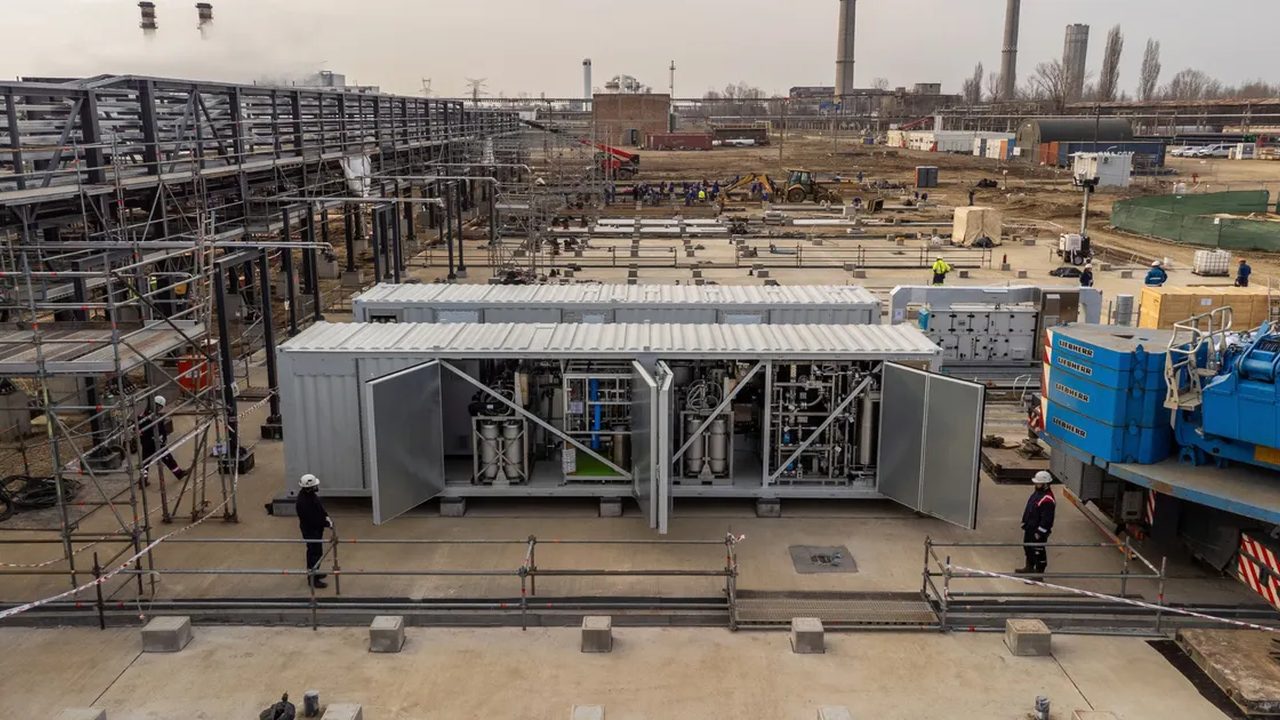
OMV Petrom has successfully completed the delivery of all necessary electrolyzer module components for its 20 MW green hydrogen project, now under construction at the Petrobrazi refinery in Romania. This milestone marks a significant leap for the company, establishing what will be Romania’s largest green hydrogen production capacity, projected to yield approximately 3,000 tons of green hydrogen annually. This output will substantially contribute to the refinery’s decarbonization efforts and the broader production of sustainable fuels.
The advanced 20 MW electrolyzer system will harness renewable electricity to split water, ensuring zero greenhouse gas emissions during green hydrogen production. This domestically produced green hydrogen is strategically earmarked to replace fossil fuel-derived hydrogen currently used within the Petrobrazi refinery, and will critically serve as a feedstock for:
- Sustainable Aviation Fuel (SAF): Directly enabling the synthesis of SAF, a key pathway to decarbonize the aviation industry.
- Hydrogenated Vegetable Oil (HVO): Producing HVO from biomass-derived oils, a renewable substitute for conventional diesel, aimed at reducing transport sector emissions.
The project’s technical and economic viability is further bolstered by approximately €21 million in financial assistance secured through Romania’s National Recovery and Resilience Plan (PNRR), demonstrating robust government support. This PNRR funding helps mitigate initial investment risks and is expected to attract further private investment, establishing this project as a model for Romania’s journey towards building a resilient, sustainable energy supply chain and stabilizing the supply of decarbonized fuels.
Get our weekly technology intelligence — free
Receive an infographic that lets you judge at a glance whether each field’s analysis report is worth reading.
Subscribe Free — Weekly Tech Intelligence
By subscribing, you’ll receive Troy-Technical’s weekly technology intelligence newsletter.
- Your email and selected fields are used only to deliver the newsletter.
- We never share your information with third parties.
- You can unsubscribe anytime via the link in each email.
See our Privacy Policy for details.
Takes about a minute · Unsubscribe anytime