Key Findings
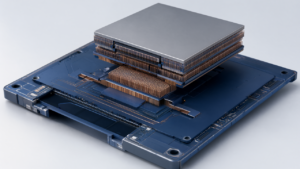
On-chip photonics technology promises to unlock faster and cooler data transmission for data centers and high-performance computing, but its manufacturability remains a formidable barrier. Crucially, the multi-layered material stack, encompassing carrier wafers, temporary bonding layers, molding compounds, and encapsulants, profoundly impacts the structural response to thermal and mechanical stresses. Package warpage, in particular, poses a significant threat to device reliability and yield. Without effective solutions to this issue, on-chip photonics cannot transition to high-volume manufacturing.
Technical Details
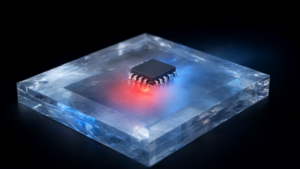
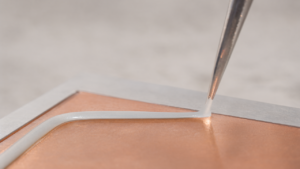
On-chip photonics, which processes and transmits optical signals directly on a semiconductor chip, offers superior speed, lower power consumption, and reduced heat generation compared to traditional electrical signals. However, integrating this technology into semiconductor packages involves layering materials with differing coefficients of thermal expansion. This creates substantial internal stresses during manufacturing thermal cycles and subsequent operational temperature fluctuations. Such stresses can lead to package warpage, compromising the reliability of micro-bump interconnections, causing optical misalignment, and ultimately leading to device failure. Current research focuses on developing low-stress adhesives and encapsulants, along with wafer-level stress management techniques, necessitating extensive material characterization and simulation. For instance, careful tuning of the Young’s modulus and coefficient of thermal expansion of adhesive layers is being explored to minimize warpage.
Background & Context
With the explosive growth of data, data transfer speeds between chips have become a critical bottleneck in high-performance computing systems like data centers and AI accelerators. On-chip photonics is seen as a next-generation technology to alleviate this bottleneck, attracting substantial investment from major semiconductor manufacturers and cloud service providers. However, achieving precise alignment of photonic chips and maintaining that alignment over time with robust material technologies are key to commercialization. Existing semiconductor manufacturing processes are optimized for electrical chips, meaning photonic integration demands new breakthroughs in material science and process engineering.
Strategic Significance & Outlook
The evolution of adhesive and encapsulant technologies for on-chip photonics manufacturing is indispensable for building the foundation of future high-performance computing and communication infrastructures. Establishing effective warpage control technologies will directly lead to improved yields and reduced costs, accelerating the adoption of the technology. Moving forward, collaboration among material scientists, packaging engineers, and device designers is expected to drive further development of innovative adhesives and encapsulants that are resistant to thermal stress and can maintain high-precision optical alignment over long periods. Success in this field holds the potential to push beyond the limits of Moore’s Law and redefine next-generation “inter-chip connectivity” technologies.
Source: https://semiengineering.com/making-on-chip-photonics-manufacturable/
Get our weekly technology intelligence — free
Receive an infographic that lets you judge at a glance whether each field’s analysis report is worth reading.
Subscribe Free — Weekly Tech Intelligence
By subscribing, you’ll receive Troy-Technical’s weekly technology intelligence newsletter.
- Your email and selected fields are used only to deliver the newsletter.
- We never share your information with third parties.
- You can unsubscribe anytime via the link in each email.
See our Privacy Policy for details.
Takes about a minute · Unsubscribe anytime