Key Findings
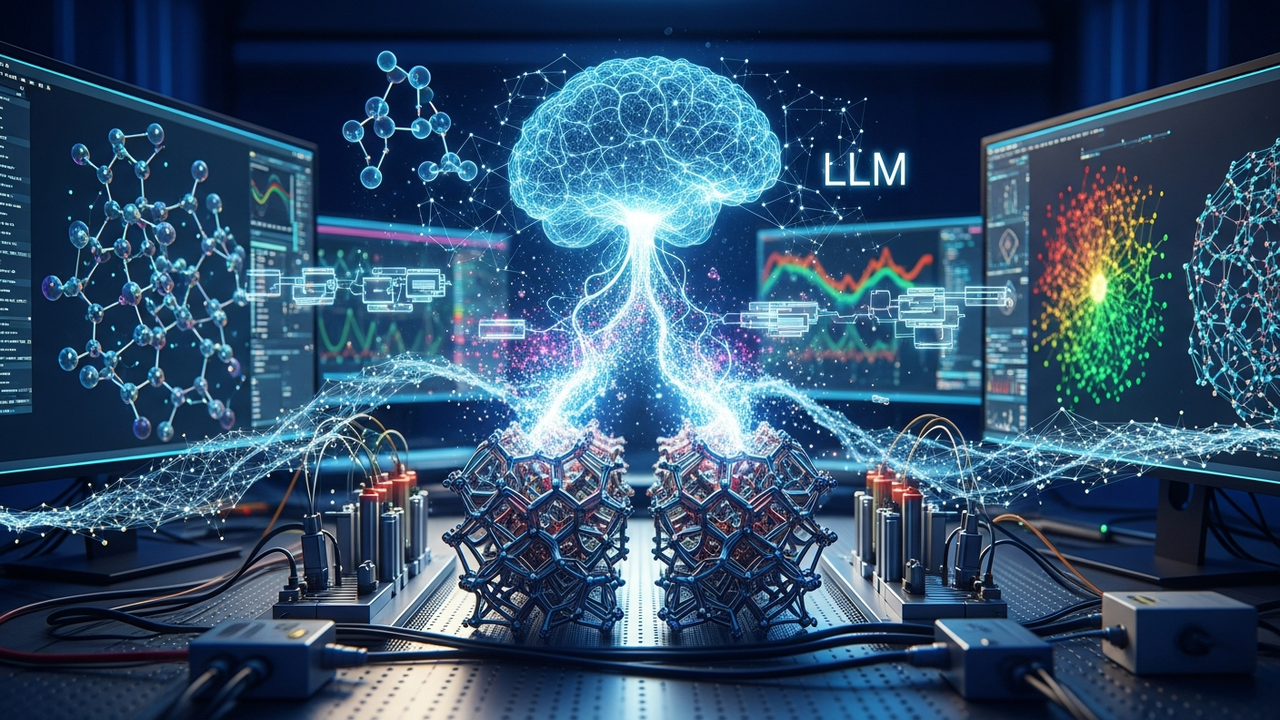
A groundbreaking study published in National Science Review (Oxford Academic) combined machine learning, specifically Graph Neural Networks (GNNs), with a Large Language Model (LLM)-driven collaborative framework to elucidate the correlation between high-entropy alloy (HEA) elemental systems and their electrocatalytic activity. This innovative methodology clearly demonstrated its feasibility and practical value in efficiently identifying high-performance HEA catalysts through high-throughput synthesis and characterization, significantly accelerating the process of catalyst discovery and optimization.
Technical / Clinical Details
In this study, data from existing HEA databases and first-principles calculations—including HEA composition, crystal structure, and electronic states—were fed into a GNN. The GNN then constructed a model to predict the potential electrocatalytic activity of HEAs based on these features. Furthermore, an LLM-driven collaborative framework was introduced, which integrates the GNN’s predictions with historical literature data and chemical knowledge to propose the most promising HEA compositions and experimental conditions for subsequent exploration. Leveraging its natural language processing capabilities, the LLM interprets complex scientific information and performs logical reasoning to efficiently narrow down the exploration space. For instance, it can predict how specific elemental combinations might exhibit activity in crucial electrocatalytic reactions such as the Oxygen Evolution Reaction (OER) or Hydrogen Evolution Reaction (HER), and explain the basis of these predictions. Candidates identified through this computational screening are then subjected to high-throughput synthesis (e.g., sputtering or co-deposition) and automated characterization (e.g., electrochemical measurements, X-ray diffraction) to validate their catalytic performance. This closed-loop approach enables faster and more efficient discovery of high-performance HEA catalysts compared to traditional trial-and-error research.
Background & Context
High-entropy alloys (HEAs), a new class of alloys composed of multiple principal elements in nearly equal proportions, are attracting significant attention not only as structural materials but also as catalysts due to their unique structures and properties. Particularly, in clean energy technologies such as fuel cells, water electrolysis, and CO2 reduction, the development of highly efficient and stable electrocatalysts is an urgent necessity. However, the compositional space of HEAs is vast, making it challenging to find promising catalysts using experimental methods alone. The fusion of machine learning and LLMs is expected to be a powerful tool for efficiently navigating this vast exploration space and accelerating new catalyst discovery. China is one of the leading countries in materials science research, and this study further strengthens its position.
Strategic Significance & Outlook
This machine learning and LLM-integrated framework holds the potential to revolutionize the discovery and optimization of HEA electrocatalysts. With more efficient exploration and high-precision predictions, R&D lead times will be significantly shortened, contributing to cost reductions and performance improvements in fuel cells and water electrolyzers. In the future, this approach is expected to be extended to other types of catalysts (e.g., photocatalysts, heterogeneous catalysts) and the design of other functional materials in materials science. This marks a significant step in how data-driven science and AI will shape the future of materials discovery.
Source: https://academic.oup.com/nsr/article/13/11/nwag161/8524004
Get our weekly technology intelligence — free
Receive an infographic that lets you judge at a glance whether each field’s analysis report is worth reading.
Subscribe Free — Weekly Tech Intelligence
By subscribing, you’ll receive Troy-Technical’s weekly technology intelligence newsletter.
- Your email and selected fields are used only to deliver the newsletter.
- We never share your information with third parties.
- You can unsubscribe anytime via the link in each email.
See our Privacy Policy for details.
Takes about a minute · Unsubscribe anytime