Key Findings
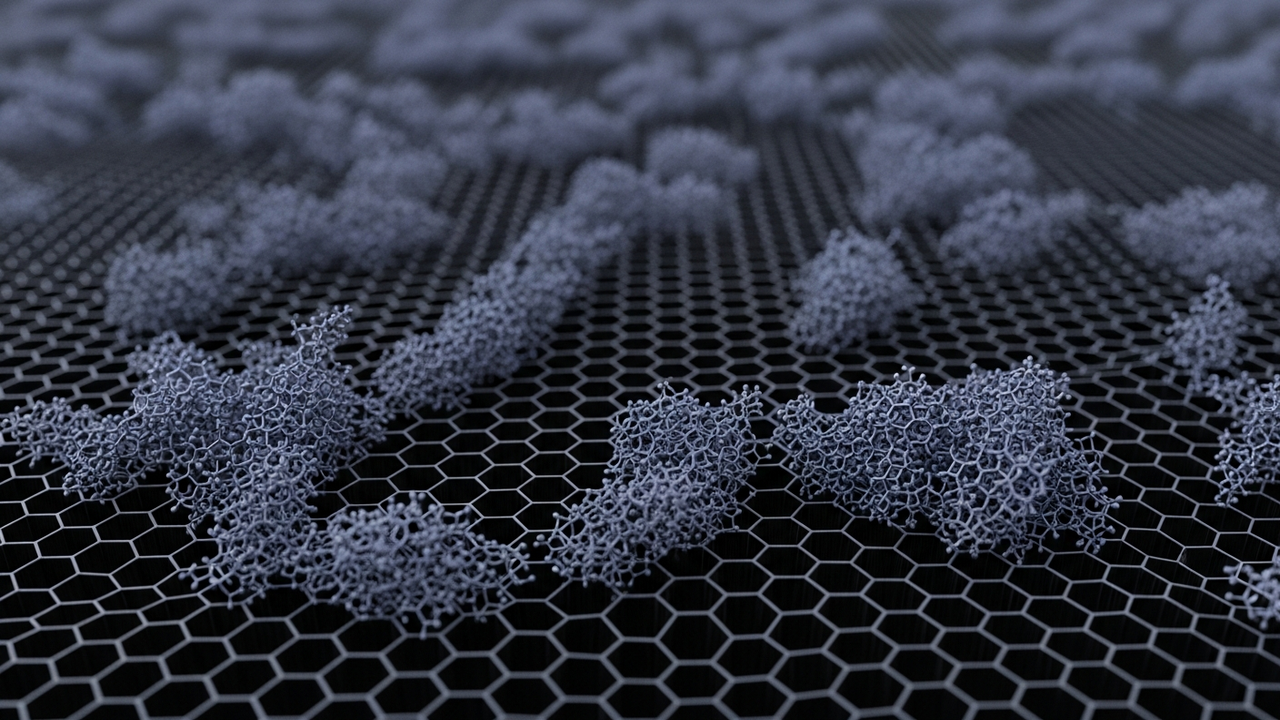
Scientists have meticulously unveiled how the primary sequence of glycine-X repeat peptides critically influences their folding and subsequent self-assembly architectures on graphite surfaces. This seminal discovery provides a novel design paradigm, enabling the bottom-up construction of desired nanoscale structures through tailored peptide sequences, which is fundamental for creating biomimetic materials with precisely controlled functions.
Technical Details
The study employed a multi-modal approach, combining atomic force microscopy (AFM), scanning tunneling microscopy (STM), and molecular dynamics simulations, to observe how various glycine-X repeat peptides (where X represents different amino acid residues) arrange themselves on graphite substrates to form specific secondary and supramolecular structures. The findings revealed that the position and type of the ‘X’ residue directly influence peptide-peptide interactions, adhesion to the graphite surface, and ultimately the morphology of the resulting aggregates, such as nanofibers, sheets, or distinct dots. Notably, the incorporation of hydrophobic amino acids promoted the formation of stable film-like structures, while hydrophilic residues tended to form more flexible networks.
Background & Context
Self-assembly is a fundamental process in nature, underlying complex biological functions from protein folding to cell membrane formation. Applying this principle to synthetic materials holds immense promise for developing advanced materials such as self-healing polymers, highly sensitive sensors, nanodevices, and sophisticated drug delivery systems. Peptides, in particular, are attractive building blocks for biomimetic materials due to their biocompatibility, ease of design, and diverse functionalities. However, establishing reliable “design rules” to ensure the formation of desired structures has been a significant challenge.
Strategic Significance & Outlook
The results of this research offer a profound understanding of the relationship between peptide sequence and nanostructure formation mechanisms, enabling unprecedented control in the design of biomimetic functional materials. This breakthrough opens the door to developing tailor-made functional materials, for instance, surfaces with specific cell adhesion properties, highly efficient light-harvesting arrays, or sensors capable of detecting specific biomolecules. This research pioneers new frontiers at the intersection of materials science, biology, and nanotechnology, with anticipated applications in regenerative medicine, bioelectronics, and environmental science.
Get our weekly technology intelligence — free
Receive an infographic that lets you judge at a glance whether each field’s analysis report is worth reading.
Subscribe Free — Weekly Tech Intelligence
By subscribing, you’ll receive Troy-Technical’s weekly technology intelligence newsletter.
- Your email and selected fields are used only to deliver the newsletter.
- We never share your information with third parties.
- You can unsubscribe anytime via the link in each email.
See our Privacy Policy for details.
Takes about a minute · Unsubscribe anytime




