Key Findings
In Q1 2026, semiconductor startups collectively raised a substantial $8.4 billion across 80 companies, bringing the total accumulated funding to approximately $10.7 billion. This investment trend reveals a crucial shift: capital is now flowing not just into AI accelerators themselves, but into a broader spectrum of enabling technologies across the semiconductor ecosystem. These include interconnects, optical I/O, memory, advanced packaging, Electronic Design Automation (EDA), power delivery, and cooling solutions, underscoring a holistic approach to next-generation chip development.
Technical / Clinical Details
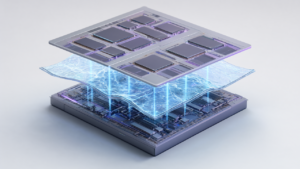
The diversification of investment reflects a growing industry recognition that traditional transistor scaling (Moore’s Law) is facing physical and economic limits. The new bottlenecks for performance, power efficiency, and data throughput are emerging in how chips communicate with each other and are integrated into a system. Advanced packaging technologies, such as 2.5D and 3D stacking, chiplets, and heterogeneous integration, are becoming critical to overcome these challenges. Innovations in optical I/O are particularly gaining traction to handle the massive data volumes and high bandwidth required by AI workloads, moving data at light speed rather than electron speed.
A pivotal development in this context is the projected expansion of TSMC’s CoWoS (Chip-on-Wafer-on-Substrate) advanced packaging capacity. Forecasts indicate a dramatic increase from approximately 35,000 wafers per month by the end of 2024 to an estimated 120,000-140,000 wafers per month by the end of 2026. This nearly four-fold expansion is a direct response to the explosive demand for AI chips, particularly from major players like NVIDIA. It signifies a crucial de-bottlenecking in the supply chain for advanced AI chips, which have historically faced constraints due to limited CoWoS capacity.
Background & Context
The increasing complexity and scale of AI models necessitate unprecedented computational power and memory bandwidth. Monolithic chip designs struggle to meet these requirements efficiently, leading to the rise of heterogeneous integration, where specialized chiplets (e.g., compute, memory, I/O) are combined within a single package. This approach demands sophisticated interconnectivity and robust thermal management, making advanced packaging a strategic differentiator in the semiconductor industry.
The global semiconductor landscape is also influenced by geopolitical considerations and the imperative for supply chain resilience. Government incentives and subsidies in various regions are further catalyzing investments in domestic semiconductor capabilities, including R&D for advanced packaging and related technologies. Investors are increasingly looking beyond mere performance metrics of individual chips to the overall system-level efficiency and integration capabilities that these enabling technologies provide.
Strategic Significance & Outlook
The strategic shift in semiconductor funding and TSMC’s aggressive CoWoS expansion mark a new era for AI-driven semiconductor innovation. Advanced packaging is no longer just a back-end process; it is a core technology driving power, performance, area, and cost (PPAC) improvements, alongside value and sustainability. The increased availability of advanced packaging capacity, particularly CoWoS, will alleviate supply chain pressures for AI accelerators, accelerating the deployment of next-generation AI infrastructure.
Continued investment in interconnects, optical I/O, and advanced cooling solutions will be vital for unlocking the full potential of chiplet architectures and heterogeneous integration. This trajectory is expected to redefine the semiconductor value chain, creating new opportunities for specialized startups and established players alike, as the industry moves towards more integrated, efficient, and powerful computing systems for the AI era.
Source: https://newmarketpitch.com/blogs/news/semiconductor-funding
Get our weekly technology intelligence — free
Receive an infographic that lets you judge at a glance whether each field’s analysis report is worth reading.
Subscribe Free — Weekly Tech Intelligence
By subscribing, you’ll receive Troy-Technical’s weekly technology intelligence newsletter.
- Your email and selected fields are used only to deliver the newsletter.
- We never share your information with third parties.
- You can unsubscribe anytime via the link in each email.
See our Privacy Policy for details.
Takes about a minute · Unsubscribe anytime