Key Findings
With the advent of the 1.6T (Terabits per second) era, three primary technologies—silicon photonics (SiPh), indium phosphide (InP), and thin-film lithium niobate (TFLN)—are locked in intense competition to become the core material, or ‘heart,’ of next-generation optical modulators. Each material possesses distinct strengths, acting as differentiators for specific applications.
Technical and Market Details
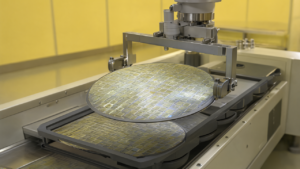
- Silicon Photonics (SiPh): Recognized as the most scalable platform due to its high compatibility with CMOS manufacturing processes. It leverages existing semiconductor foundry infrastructure, making it cost-effective and suitable for large-scale integration of optical circuits. SiPh holds advantages in mass-production applications such as data center interconnects (DCI) and Co-Packaged Optics (CPO). However, silicon itself does not emit light, necessitating heterogeneous integration with III-V semiconductor lasers.
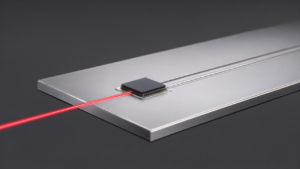
- Indium Phosphide (InP): As a direct bandgap semiconductor, InP can natively integrate highly efficient laser sources and photodetectors, making it exceptional in optical signal generation and detection. It particularly excels in long-haul coherent communication and transceivers requiring high optical output. However, manufacturing costs are higher, and integration density is more limited compared to SiPh.
- Thin-Film Lithium Niobate (TFLN): TFLN achieves superior electro-optic properties and lower propagation losses than conventional bulk lithium niobate, with high integration density through thin-film technology. Capable of ultra-high-speed modulation (hundreds of GHz and beyond) at ultra-low power consumption, TFLN holds significant potential for applications demanding the highest electro-optic modulation performance in quantum computing, LiDAR, and next-generation AI infrastructure for ultra-fast optical modules.
Background and Industry Context
The explosive growth of generative AI is dramatically increasing data center traffic and power consumption, creating ‘data bottlenecks’ that traditional electrical interconnects cannot handle. AI workloads require vast amounts of data to be moved at high speeds with low latency between GPU clusters, making optical interconnects indispensable for resolving computing power bottlenecks in the AI era. The choice of material is determined by balancing performance, cost, and manufacturing scalability, heavily depending on specific application requirements.
Strategic Significance and Outlook
Beyond the 1.6T era, these three materials will continue to evolve within their respective niche markets and key applications. SiPh is expected to establish dominance in mass production and cost efficiency, InP in high-power lasers and long-haul transmission, and TFLN in ultra-high-speed modulation and extreme performance. Advances in heterogeneous integration techniques are expected to lead to the coexistence of these materials, complementing each other’s strengths to support the evolution of various cutting-edge technologies like AI, quantum computing, and autonomous systems. The ultimate ‘winner’ will not be a single material, but rather companies that can identify the optimal combination of these materials and efficiently mass-produce them.
Source: https://www.sic-wafers.com/silicon-photonics-vs-inp-vs-thin-film-lithium-niobate-in-the-1-6t-era/
Get our weekly technology intelligence — free
Receive an infographic that lets you judge at a glance whether each field’s analysis report is worth reading.
Subscribe Free — Weekly Tech Intelligence
By subscribing, you’ll receive Troy-Technical’s weekly technology intelligence newsletter.
- Your email and selected fields are used only to deliver the newsletter.
- We never share your information with third parties.
- You can unsubscribe anytime via the link in each email.
See our Privacy Policy for details.
Takes about a minute · Unsubscribe anytime