Key Findings
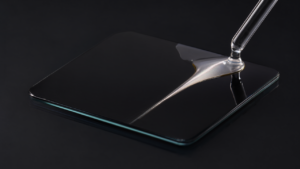
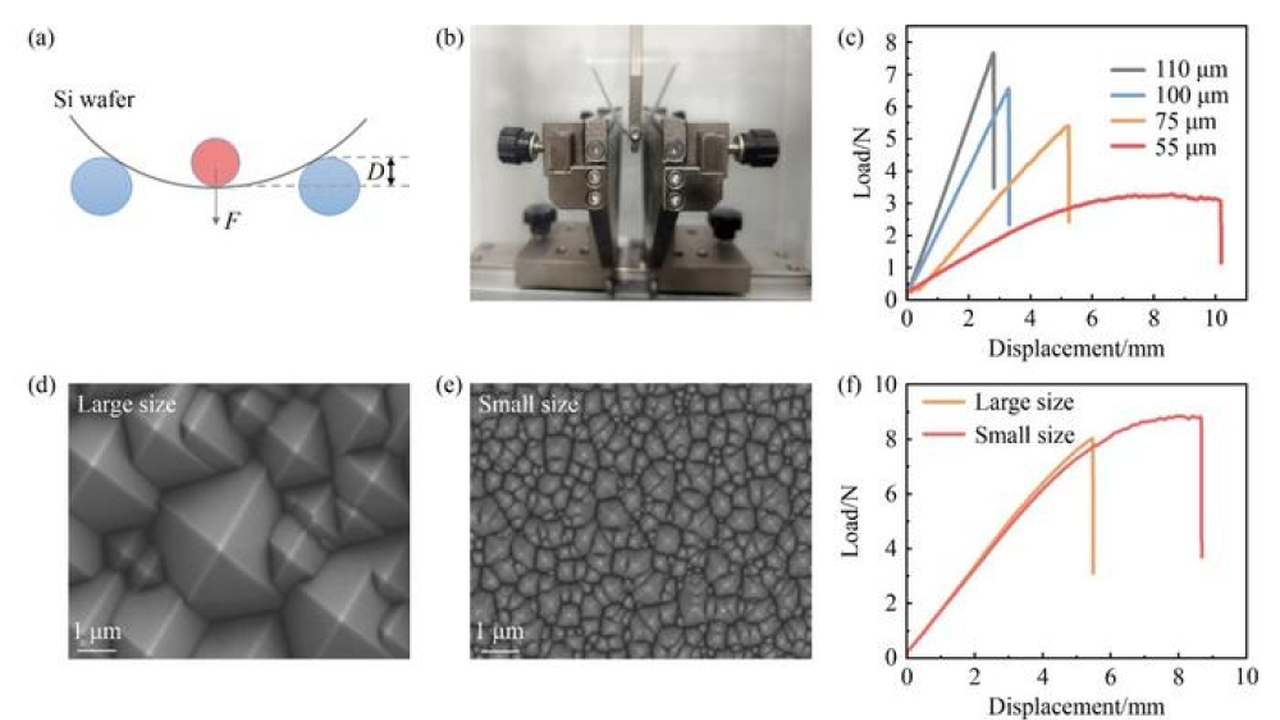
A research team at the Shanghai Institute of Microsatellite Innovation (SIMIT) has achieved a high efficiency of 30% for perovskite/silicon tandem solar cells through an innovative structural design. This breakthrough is particularly significant because it not only pushed efficiency boundaries but also substantially improved the overall mechanical performance and flexibility of the device by optimizing the thickness of the silicon bottom cell and miniaturizing the size of surface texturing pyramids.
Technical Details
The SIMIT team developed a technique to significantly reduce the thickness of the silicon wafer while forming minute texturing pyramids on its surface. These pyramids are crucial for efficiently trapping light and optimizing its transmission into the perovskite top cell. However, conventional larger pyramids typically induce substantial mechanical stress between the silicon and the overlaid perovskite layer, leading to delamination and device degradation. The SIMIT team effectively mitigated this mechanical stress by shrinking the pyramid size to the nanoscale. This stress reduction is paramount for enhancing the long-term stability and durability of tandem solar cells. Additionally, the thinner silicon wafer contributes to increased device flexibility, broadening its adaptability for various installation environments and applications, such as building-integrated photovoltaics or wearable electronics.
Background & Context
Perovskite/silicon tandem solar cells are garnering significant attention as a next-generation photovoltaic technology capable of surpassing the theoretical efficiency limits of single-junction silicon solar cells. However, achieving high efficiency while simultaneously addressing device long-term stability, particularly degradation caused by mechanical stress, has been a major hurdle for commercialization. Internal stresses arising from differences in thermal expansion coefficients between the perovskite and silicon layers, when stacked, can shorten device lifespan. SIMIT’s achievement presents a clever solution to this structural challenge through microscopic surface texturing, representing a critical technological advancement in achieving both high efficiency and reliability.
Strategic Significance & Outlook
The achievement of 30% efficiency, coupled with enhanced device flexibility and durability, provides a powerful impetus for the commercialization of perovskite/silicon tandem solar cells. Resolving issues like delamination and degradation due to mechanical stress will extend product lifetimes and improve overall reliability. This breakthrough is expected to significantly expand the application range for flexible solar cells, including building-integrated photovoltaics (BIPV), automotive applications requiring curved surfaces, and wearable devices. This technology holds immense potential to accelerate the adoption of high-efficiency solar cells and contribute substantially to global energy transition goals, fostering a more sustainable energy future.
Get our weekly technology intelligence — free
Receive an infographic that lets you judge at a glance whether each field’s analysis report is worth reading.
Subscribe Free — Weekly Tech Intelligence
By subscribing, you’ll receive Troy-Technical’s weekly technology intelligence newsletter.
- Your email and selected fields are used only to deliver the newsletter.
- We never share your information with third parties.
- You can unsubscribe anytime via the link in each email.
See our Privacy Policy for details.
Takes about a minute · Unsubscribe anytime