Key Findings
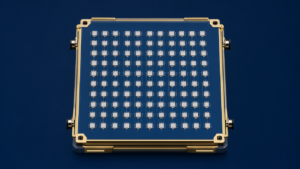
A collaborative research effort between the University of Sydney and IBM has successfully enhanced logical qubit retention to an impressive 96% on the IBM Quantum Heron r2 processor. This dramatic improvement stems from a comprehensive redesign of the error correction architecture, leading to a significant reduction in computational downtime. This achievement represents a pivotal step in tackling ‘idle noise,’ a major impediment to achieving fault-tolerant quantum computing (FTQC).
Technical / Clinical Details
Logical qubits, formed by combining multiple physical qubits to correct errors, are crucial for stable quantum information processing. Achieving 96% retention significantly boosts the reliability of quantum information. The research team identified that noise occurring during the idle states of qubits—’idle noise’—adversely affects computational accuracy and coherence times. They subsequently developed a novel error correction protocol specifically designed to suppress this noise. This protocol optimizes the processor’s control sequences and error correction circuits, dynamically canceling noise effects to minimize information loss. This advancement enables the execution of longer and more complex quantum algorithms with higher reliability, making a substantial stride towards scalable and robust quantum computation.
Background & Context
One of the foremost challenges hindering the practical application of quantum computing is the high error rate induced by environmental noise. FTQC is the ultimate goal to overcome this error problem, enabling large-scale, reliable quantum computation. While numerous research institutions and companies are developing various error correction codes and architectures, achieving such a high logical qubit retention rate is a rare feat. This accomplishment marks a significant progression in IBM’s quantum computing roadmap and reinforces the University of Sydney’s leading role in global quantum technology research, demonstrating tangible progress in bridging the gap between noisy intermediate-scale quantum (NISQ) devices and fault-tolerant systems.
Strategic Significance & Outlook
The 96% logical qubit retention rate unequivocally indicates that quantum computing is moving closer to practical applications. Future efforts will focus on further scaling this technology and integrating it with more complex error correction codes to unlock ‘quantum advantage’ across diverse fields such as molecular simulation, optimization, and machine learning. For investors and businesses, this clearer path to FTQC is likely to increase confidence and investment in the quantum computing sector. This breakthrough sets a new benchmark for future quantum hardware and software development, potentially accelerating the timeline for real-world quantum solutions.
Source: https://forklog.com/en/researchers-achieve-96-logical-qubit-retention-on-ibm-heron/
Get our weekly technology intelligence — free
Receive an infographic that lets you judge at a glance whether each field’s analysis report is worth reading.
Subscribe Free — Weekly Tech Intelligence
By subscribing, you’ll receive Troy-Technical’s weekly technology intelligence newsletter.
- Your email and selected fields are used only to deliver the newsletter.
- We never share your information with third parties.
- You can unsubscribe anytime via the link in each email.
See our Privacy Policy for details.
Takes about a minute · Unsubscribe anytime