Key Findings
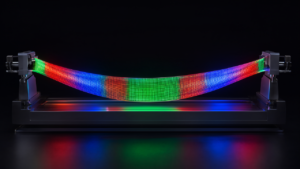
A recent study published by Emerald Publishing showcases the superior performance of hybrid carbon fiber-multi-walled carbon nanotube (MWCNT)-graphene epoxy composites. This novel composite material demonstrates significant improvements in mechanical strength, interfacial bonding, and thermally activated shape memory performance compared to traditional materials, offering a promising platform for innovative applications in aerospace, automotive, and adaptive structural materials.
Technical / Clinical Details
This research involved developing multifunctional composites by incorporating different forms of nanocarbon materials—carbon fibers, MWCNTs, and graphene—into an epoxy matrix. Carbon fibers provide high tensile strength, while MWCNTs and graphene contribute to matrix reinforcement and functionality through distinct mechanisms. MWCNTs suppress micro-crack propagation caused by epoxy resin curing shrinkage, exhibiting nanoscale crack-bridging effects. Graphene, with its high specific surface area and electrical conductivity, improves interfacial bonding and enhances thermal conductivity. This synergistic effect leads to the following key performance enhancements in the composite material:
- Mechanical Strength: Significant improvements in tensile, flexural, and impact strength, enhancing resistance to external loads.
- Interfacial Bonding: Increased adhesion between carbon fibers and the epoxy matrix, leading to higher overall material reliability.
- Thermally Activated Shape Memory Performance: The composite’s ability to recover its original shape (recovery ratio) in response to thermal stimuli (e.g., temperature increase) is substantially improved, and the time required for recovery (thermal responsiveness) is shortened. This is attributed to the efficient thermal energy transfer by nanocarbon materials and their role in promoting the phase transition of the polymer matrix.
These properties enable the material’s application as a “smart material” capable of dynamically changing its structure in response to specific external stimuli (heat).
Background & Context
Shape memory composites have garnered significant interest across diverse fields, including self-healing, smart actuators, adaptive structures, and medical devices. Particularly, the aerospace and automotive industries demand materials that combine lightweight properties with high functionality (e.g., wings that change shape during flight). However, conventional shape memory polymers often suffer from insufficient mechanical strength, slow response speeds, or responsiveness to only a single stimulus. Nanocarbon materials (MWCNTs, graphene) have been recognized as promising reinforcing agents for polymer composites due to their exceptional properties. This research demonstrates the realization of high-performance shape memory composites by hybridizing these nanocarbon materials, unlocking synergistic effects not achievable with individual components.
Strategic Significance & Outlook
This nanocarbon-reinforced epoxy composite holds immense potential to revolutionize various application areas, such as smart structures in the aerospace industry (e.g., deployable antennas, variable wings), self-healing components and lightweight structures in the automotive industry, and soft actuators in robotics. The higher recovery ratio and faster thermal responsiveness will improve device efficiency and reliability. Future challenges will include establishing large-scale production techniques for this material, improving cost-effectiveness, and evaluating long-term durability. This breakthrough is expected to accelerate the design and development of next-generation high-performance smart materials, contributing significantly to the realization of a sustainable and technologically advanced society.
Get our weekly technology intelligence — free
Receive an infographic that lets you judge at a glance whether each field’s analysis report is worth reading.
Subscribe Free — Weekly Tech Intelligence
By subscribing, you’ll receive Troy-Technical’s weekly technology intelligence newsletter.
- Your email and selected fields are used only to deliver the newsletter.
- We never share your information with third parties.
- You can unsubscribe anytime via the link in each email.
See our Privacy Policy for details.
Takes about a minute · Unsubscribe anytime