Key Findings
Kawasaki Heavy Industries has commenced demonstration tests for the world’s first centrifugal hydrogen compressor specifically designed for hydrogen liquefaction plants. This pioneering technology aims to significantly enhance both the efficiency and compactness of the liquefied hydrogen production process.
Technical / Clinical Details
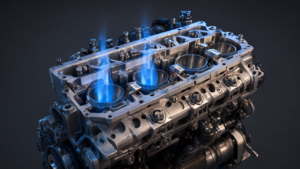
This novel centrifugal hydrogen compressor incorporates several innovative designs to address the extremely low molecular weight of hydrogen and the broad range of compression ratios required. Specifically, it combines ultra-high-speed rotating machinery with newly developed, high-efficiency impeller technology. This enables the compressor to achieve significantly higher pressure ratios compared to conventional reciprocating compressors or other centrifugal designs, while simultaneously reducing the required installation space. The demonstration tests are being conducted as part of Japan’s New Energy and Industrial Technology Development Organization (NEDO)-sponsored Green Innovation Fund project, and will verify the system’s performance, reliability, and durability under actual operating conditions.
Background & Context
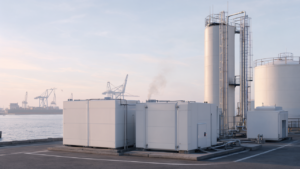
Liquefied hydrogen (LH2), due to its high energy density and storage efficiency, is anticipated to play a crucial role in the future hydrogen economy, particularly for large-scale transportation and long-distance supply. However, liquefying hydrogen requires cooling it to extremely low temperatures, a process that consumes considerable energy and necessitates large-scale equipment. The efficiency of the compressor in the liquefaction process critically impacts the overall system’s energy consumption and cost. Kawasaki Heavy Industries’ new centrifugal compressor is a key technology to overcome these challenges and substantially improve the economics of the LH2 supply chain.
Strategic Significance & Outlook
The successful demonstration of this world-first centrifugal hydrogen compressor represents a breakthrough in LH2 production technology and has the potential to accelerate its widespread adoption. It could reduce LH2 production costs, enabling it to be supplied to the market at a more competitive price. This technology will be an indispensable component for building international hydrogen supply chains involving long-distance marine transport, and for supplying LH2 to large industrial plants and the mobility sector. Through this innovation, Kawasaki Heavy Industries is expected to contribute to the development of global hydrogen infrastructure and strengthen its position as a leader in driving the energy transition.
Source: #
Get our weekly technology intelligence — free
Receive an infographic that lets you judge at a glance whether each field’s analysis report is worth reading.
Subscribe Free — Weekly Tech Intelligence
By subscribing, you’ll receive Troy-Technical’s weekly technology intelligence newsletter.
- Your email and selected fields are used only to deliver the newsletter.
- We never share your information with third parties.
- You can unsubscribe anytime via the link in each email.
See our Privacy Policy for details.
Takes about a minute · Unsubscribe anytime