Key Findings
NVIDIA, a dominant force in AI hardware, rapidly established itself as a leading provider for space-based artificial intelligence (AI) by unveiling a suite of dedicated computing platforms in March 2026, including the Space-1 Vera Rubin Module, IGX Thor, and Jetson Orin. This strategic expansion has led pioneering companies like Starcloud to adopt NVIDIA’s accelerated computing platforms for critical applications such as in-orbit data centers, geospatial intelligence, and autonomous space operations.
Technical and Application Details
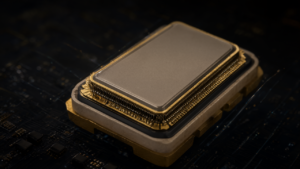
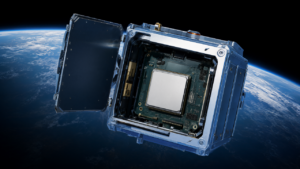
NVIDIA’s space-tailored platforms are optimized to handle AI workloads in extreme environments, combining high-performance Graphics Processing Units (GPUs) with radiation-hardened designs. Starcloud stands out as a notable example, claiming to have launched ‘Starcloud-1’ equipped with NVIDIA H100 GPUs in November 2025 and successfully trained the first large language model (LLM) in orbit. This achievement signifies a groundbreaking advancement in space-based AI processing capabilities.
- Space-1 Vera Rubin Module: Designed for advanced image processing and data analysis in space telescopes and deep-space exploration.
- IGX Thor: A robust, high-performance AI computing unit supporting onboard decision-making for autonomous spacecraft and satellites.
- Jetson Orin: A low-power platform enabling AI inference on edge devices like small satellites and robotic arms.
- Significance of On-Orbit LLM Training: Training LLMs in orbit significantly reduces latency and bandwidth constraints associated with data transfer between Earth and space. This enhances the autonomy and real-time responsiveness of space missions, allowing for continuous AI model updates and improvements without sole reliance on terrestrial infrastructure.
Background and Industry Context
The evolution of AI is revolutionizing various sectors within the space industry, including data processing, decision-making, and image recognition. Earth observation satellites, communication satellites, and space probes generate vast amounts of data daily. Efficiently processing this data and transforming it into valuable insights necessitates high-performance computing capabilities directly in orbit. NVIDIA, having established leadership in AI hardware for terrestrial data centers and autonomous vehicles, is now extending this technology into space, unlocking a new growth market.
Concepts like in-orbit data centers and edge AI have gained significant attention recently. Performing AI processing where data is generated resolves communication bottlenecks and improves mission responsiveness. The deployment of mega-constellations like SpaceX’s Starlink and Amazon’s Project Kuiper is laying the groundwork for such space AI infrastructure. Governments and space agencies worldwide are also accelerating investments in space AI technologies to enhance the autonomy and resilience of their national space assets.
Strategic Significance and Outlook
NVIDIA’s space AI platforms and the success of on-orbit LLM training by companies like Starcloud herald a new era of autonomy in space. Future space missions will be capable of executing more complex scientific experiments onboard, responding to emergencies without Earth-based commands, and navigating vast deep-space environments autonomously. This technology will not only contribute to cost reduction and efficiency improvements in space exploration but also expand the possibilities for new commercial space activities such as space resource utilization, in-orbit manufacturing, and space tourism. Ultimately, orbital AI infrastructure is expected to integrate seamlessly with terrestrial cloud computing infrastructure, becoming an indispensable part of the global digital economy.
Source: https://jrodthoughts.medium.com/the-case-for-decentralized-ai-in-space-9141b3ad3096
Get our weekly technology intelligence — free
Receive an infographic that lets you judge at a glance whether each field’s analysis report is worth reading.
Subscribe Free — Weekly Tech Intelligence
By subscribing, you’ll receive Troy-Technical’s weekly technology intelligence newsletter.
- Your email and selected fields are used only to deliver the newsletter.
- We never share your information with third parties.
- You can unsubscribe anytime via the link in each email.
See our Privacy Policy for details.
Takes about a minute · Unsubscribe anytime