Key Findings
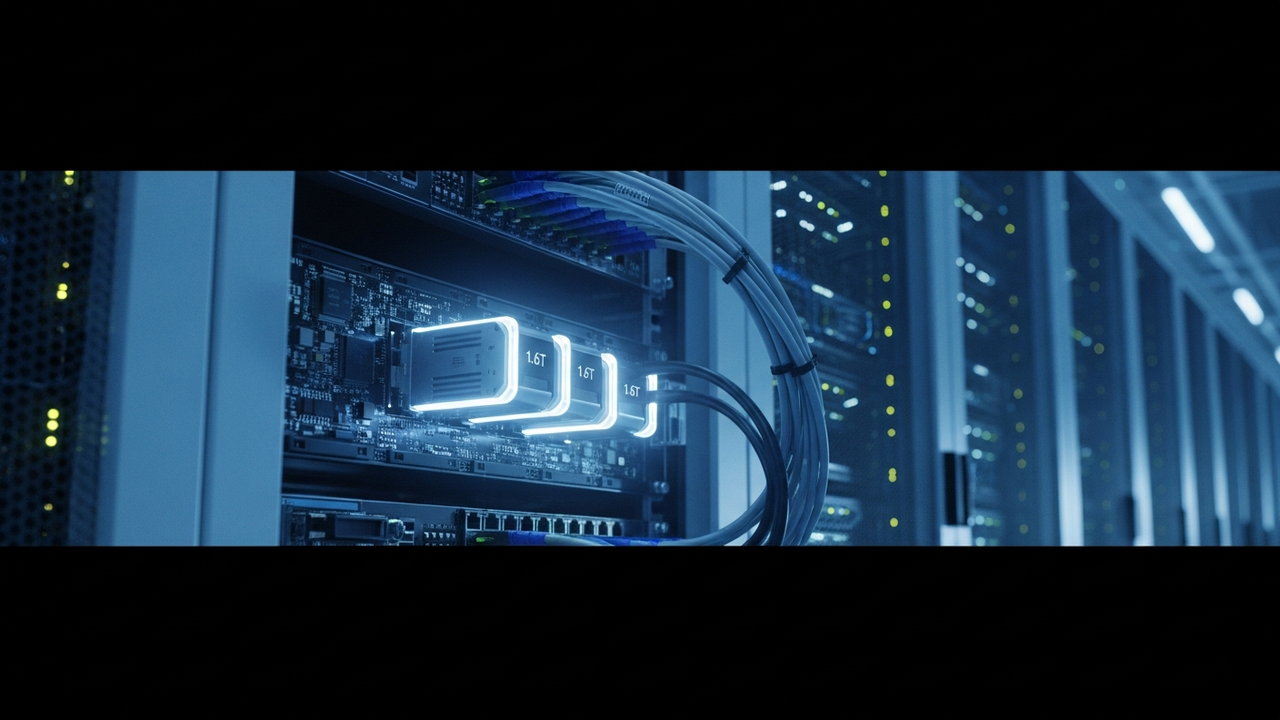
Cisco’s Bill Gartner provided a deep dive into the economic significance of 400G and beyond optical transceivers in the rapidly evolving landscape of AI data centers. He emphasized that optical devices are not a bottleneck to AI network scalability but rather a core enabler. The industry is already progressing from existing 800G to next-generation 1.6T optical devices.
Three-Tier Structure of AI Infrastructure and the Role of Optical Devices
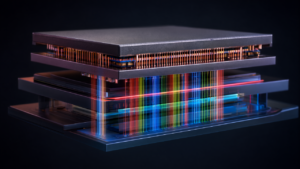
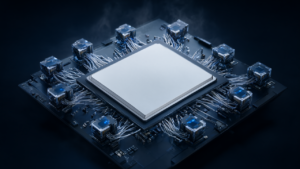
- Intra-Rack Connectivity (Scale-Up): This refers to ultra-high-speed communication between GPUs or between CPUs and GPUs within a single server rack. It demands extremely high bandwidth and low latency over very short distances. In the future, chip-level optical interconnects (Co-Packaged Optics, CPO) and optical interposers are likely to become dominant.
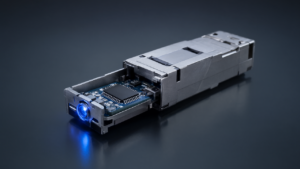
- Inter-Rack Connectivity (Scale-Out): This involves connections between multiple racks within the same data center or between adjacent data centers. Here, 400G and 800G pluggable optical devices play a primary role. These devices offer excellent bandwidth, adequate reach, and power efficiency, enabling the horizontal expansion of AI clusters.
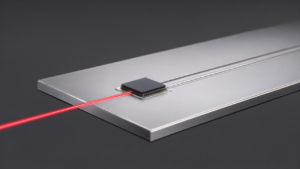
- Geographically Dispersed Data Center Connectivity (Scale-Across): This refers to long-distance connections between data centers located in different geographical locations. Coherent optical connectivity is indispensable here, facilitating wide-area, high-speed, high-capacity communication for distributed training and inference of large AI models, as well as disaster recovery.
- Transition to 1.6T Optical Devices: Gartner noted that the industry is already transitioning to 1.6T optical devices, a natural evolution to cope with the continuous increase in AI workloads. This will enable further bandwidth expansion and efficiency improvements.
Background and Industry Context
Since the advent of generative AI models, AI training and inference have demanded unprecedented data processing capabilities and network bandwidth from data center infrastructure. Traditional network architectures and copper interconnects struggle to keep pace with this surging demand, making optical communication technology an emerging solution. Data center operators are seeking ways to efficiently scale AI infrastructure while balancing performance, cost, and power consumption. Optical devices offer a cost-effective means to address these challenges.
Strategic Significance and Outlook
As AI continues its relentless evolution, the importance of optical devices will only grow. The proliferation of 1.6T optical devices will shape the next phase of AI infrastructure, enabling the realization of larger and more complex AI models. In the future, further integration and miniaturization of optical technologies (e.g., chip-to-chip optical interconnects) are expected to bring further transformation to data center design and operations. For investors, opportunities are expanding in optical communication technology providers that enable AI infrastructure scaling, particularly those leading the development of high-speed, high-capacity optical devices.
Get our weekly technology intelligence — free
Receive an infographic that lets you judge at a glance whether each field’s analysis report is worth reading.
Subscribe Free — Weekly Tech Intelligence
By subscribing, you’ll receive Troy-Technical’s weekly technology intelligence newsletter.
- Your email and selected fields are used only to deliver the newsletter.
- We never share your information with third parties.
- You can unsubscribe anytime via the link in each email.
See our Privacy Policy for details.
Takes about a minute · Unsubscribe anytime