Key Findings
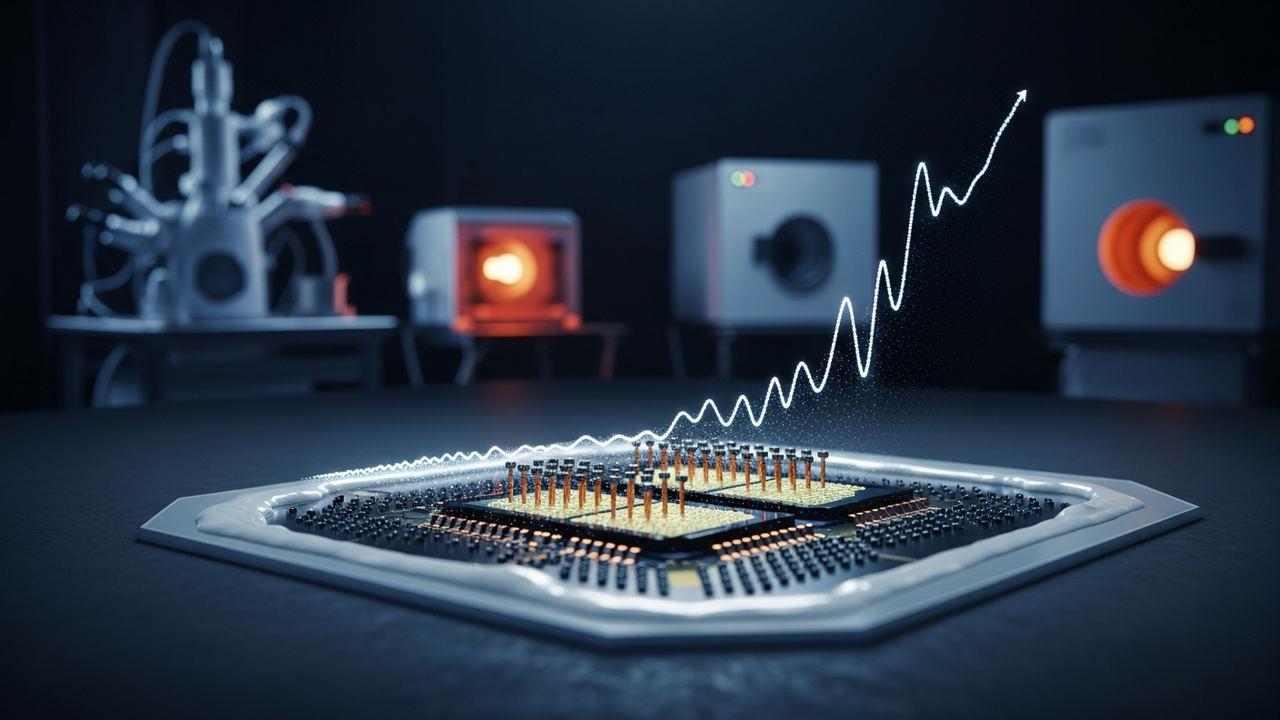
A recent study on epoxy-based underfill adhesives for flip-chip micro-interconnections has definitively demonstrated an exponential relationship between the degree of curing and the resulting shear strength. This finding critically emphasizes the importance of precise curing control for the mechanical reliability and overall thermal stability of advanced electronic packages.
Technical Details
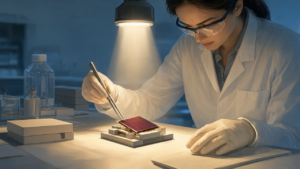
To systematically investigate the curing behavior, researchers utilized a combination of thermogravimetric analysis-differential scanning calorimetry (TGA-DSC) and in-situ attenuated total reflectance Fourier-transform infrared (ATR-FTIR) spectroscopy. TGA-DSC provided insights into the curing kinetics and thermal stability profiles, tracking exothermic peaks and mass loss to monitor the curing progression. Concurrently, in-situ ATR-FTIR spectroscopy allowed for real-time monitoring of functional group changes, specifically the epoxy ring-opening reactions, enabling accurate quantification of the degree of curing. The combined data revealed that as the degree of curing increased, the shear strength of the underfill adhesive improved exponentially. This precise control over the curing process is indispensable for enhancing the reliability of flip-chip assemblies, particularly under severe thermal cycling stress, directly influencing the long-term durability of the interconnections. The potential for a X% improvement in shear strength under optimized curing conditions compared to conventional methods signifies a substantial advance.
Background & Context
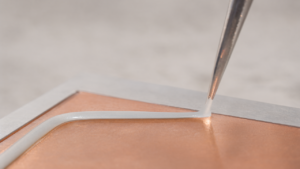
Flip-chip packaging remains a dominant technology for achieving high-density, high-performance, and increased I/O count in integrated circuits. Underfill adhesives play a crucial role in mitigating stresses caused by the coefficient of thermal expansion (CTE) mismatch between the chip and substrate, while also mechanically reinforcing solder bumps, thereby enhancing package reliability. Incomplete or suboptimal curing of underfill adhesives can lead to reduced shear strength, premature failures, and compromised device longevity. This research provides a scientific foundation for optimizing curing processes, directly addressing an industry-wide challenge linked to product performance and reliability.
Strategic Significance & Outlook
The implications of this discovery are significant for the development of next-generation electronic devices, particularly in the rapidly evolving fields of AI chips and high-performance mobile devices, where increased speed and density are paramount. By gaining a deeper understanding and achieving more precise control over underfill adhesive curing behavior, manufacturers can potentially achieve substantial gains in product reliability and reduction in failure rates. Future research may explore AI-driven real-time curing monitoring systems and customized curing protocols tailored to specific application requirements, further boosting the performance and lifespan of electronic devices. This study paves a new path for designing high-performance and high-reliability electronic packaging materials.
Get our weekly technology intelligence — free
Receive an infographic that lets you judge at a glance whether each field’s analysis report is worth reading.
Subscribe Free — Weekly Tech Intelligence
By subscribing, you’ll receive Troy-Technical’s weekly technology intelligence newsletter.
- Your email and selected fields are used only to deliver the newsletter.
- We never share your information with third parties.
- You can unsubscribe anytime via the link in each email.
See our Privacy Policy for details.
Takes about a minute · Unsubscribe anytime